 Yorkie
A bark that carries through the whole apartment, a stranger's hand swooping down on your dog, a grooming table they treat like a trap: whichever one sent you looking for Yorkie training, it makes a better starting point than a cue chosen because it sounds like training. A habit that bothers you has a clear finish line, and the pay-and-practice routine you build for it carries over to the next lesson.
This page sorts the usual Yorkie trouble spots, then covers what sits under all of them: how to pay, what this breed brings to a lesson, how a puppy begins, vet-day handling, taking cues outside and finding a trainer. Along the way you'll find the specialist guide for each topic, so nothing here has to carry a full lesson on its own.
Yorkies are bright, confident and never shy about having an opinion. A plan that leaves room for a dog who answers back is the kind that gets followed in a real household.
Starting Training From the Habit That Bothers You Most
Begin with whichever habit costs your household the most, because that is the one you will practice on without being reminded. The groups below cover the trouble Yorkies tend to get into, and each points to the guide that owns the full method instead of squeezing it into a paragraph here.
Barking and Sounding the Alarm
Barking is part of what a good little watchdog does, so silence is the wrong goal. The aim is a dog who gives one report and then checks in with you. Our guide to training quiet teaches that handoff with rewards, and the window barking guide narrows it to the dog who stands guard at the glass all day. Whichever you use, notice what sets the barking off, because the trigger shapes the setup more than the volume does.
Chasing and Digging
A sudden sprint after anything small fits a ratter's history, and it calls for a better game, not a scolding. The chase redirection guide supplies one. Digging is a separate habit with its own fix, laid out in the digging guide, which keeps a yard lesson from turning into a chase lesson. Because a small dog on the run is also a safety question, the setup outdoors matters as much as the game.
Guarding Toys and Greeting Guests
Both of these come down to what a dog does when something they care about is close: a toy, or a person coming through the door. The dog who growls over a prized toy needs the swap that toy trades teaches, so the toy stops feeling like something to defend. The dog who leaps at arrivals needs polite greetings, where four paws on the floor are what earn the attention.
Staying Calm When Home Alone
A dog who adores their people can find an empty house hard, which makes time alone a lesson in its own right rather than something a dog simply gets used to. The time alone practice guide builds absences in small pieces, so that your leaving becomes something reliably followed by your return.
Until a plan is working, management buys you time. Close the curtain on the busy window, gate the doorway that sets off the greeting, and put the guarded toy away. Each of those changes takes little effort and removes one chance for the habit to be practiced.
Choosing Rewards for Everyday Training
Every one of those guides pays the dog for a better choice, so the pay deserves some thought before the first lesson. Our trainers treat a reward as information: it tells the dog exactly what earned it, and it has to arrive while the dog can still connect the two.
Yorkies love their people and will work hard for whatever they value most on a given day, which is why a few kinds of pay in rotation keep any single one from going stale:
- Small pieces of food, soft enough to swallow in a gulp, so the dog is ready for the next try straight away.
- Praise in a warm, excited voice, which costs nothing and goes with you into any room or street.
- A quick game with a favorite toy, put away again before the toy loses its shine.
- Access to something the dog already wanted, such as a door opening for a walk or a release to greet a friend.
Rotate through the list and watch which one makes your dog light up on a given day, because the best reward on Monday is not always the best on Friday, and a reward that has stopped working is a cue to try the next one on the list.
Matching Pay to the Place
How much a reward has to be worth depends on where you are. The Animal Humane Society recommends lower-value rewards for low-distraction environments, like inside your home, and high-value rewards for high-distraction environments, like on walks outside. For a Yorkie, that means ordinary treats on the living room rug and the pay they would cross a room for once the sidewalk fills up with competition.
Treat size matters more than treat variety. A piece the dog has to chew is a pause in the lesson, and a pause is where attention drifts. Make each step small enough that the dog succeeds on most tries, and move to a harder version only when the easy one is smooth.
A marker word tells the dog the exact instant they got it right. Pick a short word such as "yes," say it the moment the right thing happens, and follow it with the reward, so the word becomes a promise the dog can count on.
What a Terrier Heart in a Toy Body Means for Training
Rewards land differently depending on who is collecting them, and a Yorkie collects with a terrier's confidence. Yorkies began as working ratters, and that feisty spirit is still there under the silky coat.
That history explains why a dog small enough to carry can behave as if they run the building. It is confidence, not a character flaw, and the big-dog attitude guide shows how to channel it. As Yorkie people, we count the loud opinions as part of the charm, and we plan lessons around them instead of against them.
The same dog loves their people, is intelligent and eager to please, so rewards fit them and rough handling has no place in the plan. How much of that quick mind turns into reliable behavior is the question behind how smart Yorkies are, and if you are curious how far it can go, Yorkie service dog work looks at working roles.
What Size Changes in Practice
A small body adds one more thing to watch. It is easy to pick a Yorkie up, and being lifted can feel like a reward or an escape. If a dog barks, lunges or fusses and gets scooped up every time, they learn that the behavior works, so decide ahead of time what you will do instead, such as turning away from the window or asking for a cue they already know.
Beyond that, size decides the practical details more than the method. Lessons happen close to the floor, treats stay tiny, and a harness has to fit well enough to stay put. To turn all of this into a plan for your own dog, the Yorkie personality profile guide walks through writing one.
Puppy Training in a Yorkshire Terrier's First Weeks
A Yorkie puppy arrives with the terrier spirit already in place and no manners to go with it, so the first weeks are about direction, not control. Direction here means giving a lively, curious puppy a clear picture of what earns attention and treats.
The useful work in those weeks is small and repeatable. A puppy can learn their name, get used to being touched and lifted, meet new sounds and surfaces one at a time, and collect easy wins that teach them paying attention to you pays. Introduce new things slowly and in a calm, happy mood, because the goal is a puppy who finds the world interesting rather than overwhelming.
Three guides cover the ground in more detail. The first-week puppy guide walks through the earliest days, Yorkie puppy basics covers the everyday treat-and-praise approach, and the potty training guide owns house training, which is its own project with its own setbacks.
Resist the urge to start everything at once. A puppy learning a name, handling, a door routine and a potty spot in the same afternoon has several lessons blurring into one, so pick what your household needs first and let the rest wait its turn.
Handling Practice for Yorkshire Terrier Grooming and Vet Days
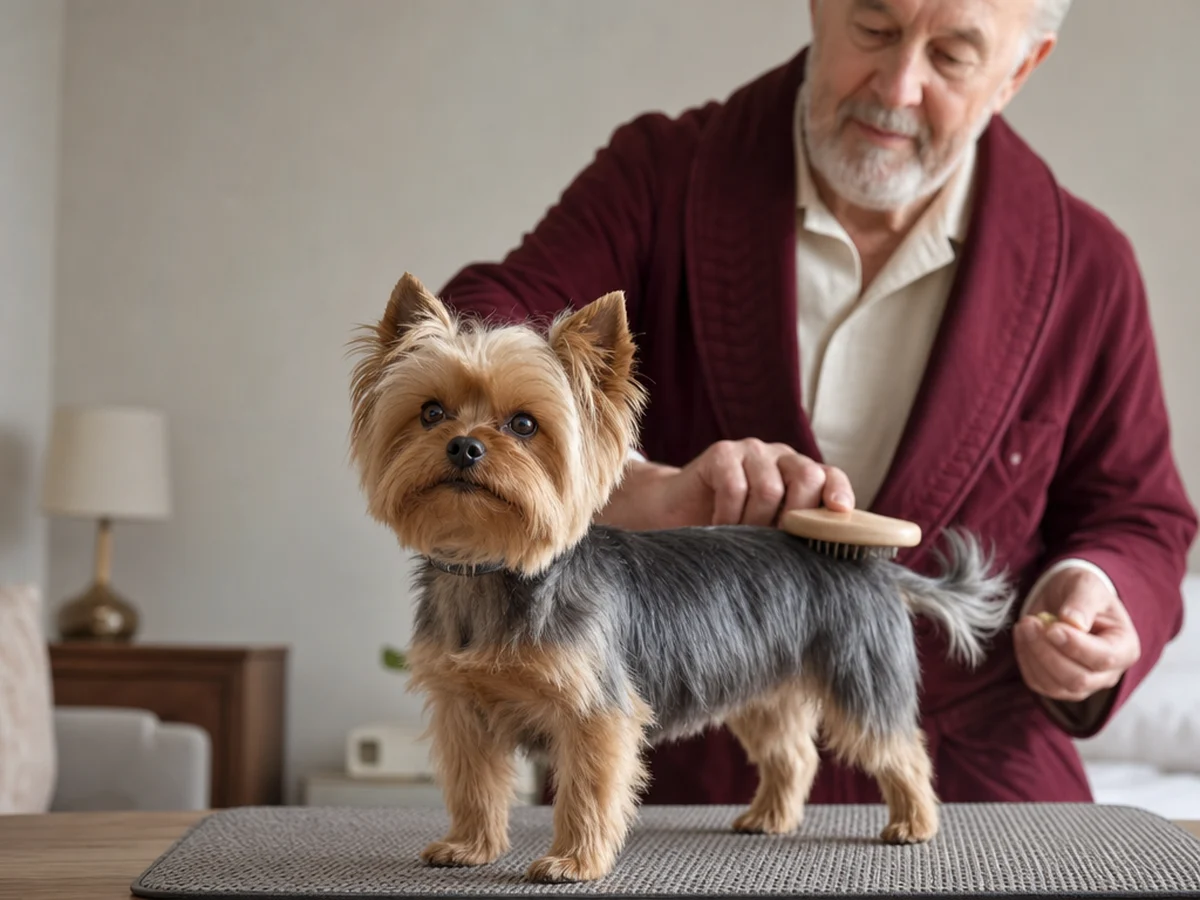
Puppy or adult, a Yorkie ends up on two tables where strangers do the touching, the groomer's and the vet's, and a long silky coat keeps the first one on the calendar for life. Neither visit is a surprise, which means neither has to be met cold.
Regular veterinary visits are part of looking after any dog, and they double as practice for being handled by someone new. The grooming practice guide builds the full circuit of body zones, tools and consent signals at home, so this section stays with the part that happens around the appointment itself.
A short run of rehearsals at home makes the appointment a familiar sequence in a different building. Work through them in this order, and pause on any step where your dog stops taking treats:
- Stand your dog on a steady surface that sits higher than the floor, and reward them for standing still on it.
- Touch the places a veterinarian will check, such as ears, paws and mouth, one at a time, with a treat after each touch.
- Ask a friend to make the same touches while you hand over the treats, so a stranger's hands start to predict something good.
- Wait together in a quiet spot with other people moving nearby, rewarding calm the way a clinic waiting room will ask for it.
Repeat the sequence until your dog eats comfortably through all of it, and the real visit will have a good chance of feeling like more of the same. If a step gets shaky, make it easier for a while before you move on.
What to Bring and What to Watch
On the day itself, Cornell University's vet-visit advice suggests small, soft treats that can be broken into smaller pieces and given throughout the appointment. That suits a Yorkie's mouth and turns the exam into a string of paid moments. Appetite doubles as a gauge: when a dog stops eating or refuses treats, Cornell says it often indicates their stress levels are too high, so tell the clinic team and let them adjust.
Before a first visit, tell the groomer or clinic team what your dog has practiced and which treats work, and ask them to go at the pace your dog allows. That short handoff gives them a head start and keeps the appointment on the same terms as your practice.
Taking Everyday Cues Out Into the Wider World
Once a Yorkie can be handled calmly indoors, the next test is the same dog in a place where everything smells and sounds interesting. Cues that were solid in the kitchen may need to be learned again in new surroundings, and that is expected, not a setback.
When your dog has mastered the basics in their quiet space, the American Animal Hospital Association says to introduce small distractions such as toys, other pets, and people, then move to other locations, such as your yard or driveway, and finally to public places like the park or pet supply store. A Yorkie's alert nature makes each step its own lesson, so give every new place some easy wins first.
Gear belongs on the same ladder. A harness that fits well and a leash that feels like nothing are skills the dog learns indoors first, and the harness and leash lessons guide takes them step by step. The first commands guide holds the cues themselves, so this page only decides when they leave the house.
The first trip outside should be a lesson that happens to be outdoors, not a walk with training sprinkled in. Stand near the door, ask for something your dog already knows, pay well, and head back in while it is still going smoothly. Add a busier spot only when your dog is still taking food in the one you are in.
Finding Help That Fits a Yorkshire Terrier
Some habits outlast a good plan, and then the question changes from what to do to who should be doing it with you. The answer depends on the problem, your schedule and how the helper treats a dog who gets something wrong.
MSPCA-Angell's trainer guide says typical obedience-type problems can usually be handled by taking a group class, which is less expensive than private training. If you don't have the time to attend a series of group classes and want someone to work with you at home, a qualified trainer can do just that, and either way you should make sure the trainer does not require any special collars.
For a Yorkie, add a few questions of your own. Ask what the trainer uses as pay and what they do when a dog gets something wrong, and listen for food, toys and patience rather than punishment. Ask how they work with small dogs, and whether you will practice with your own dog during the session instead of watching someone else do it.
A sudden change in behavior goes to your veterinarian before it goes to a trainer, because the cause may not be a training problem at all. After that, a reward-based professional can take over the parts that practice at home has not solved.
Why Training Happens Away From the Habit
Every habit in this guide turns up at an awkward moment: the doorbell is ringing, the groomer is waiting, something small has just run past the window. That is a poor time to teach anything, which is why the lessons above all take place somewhere else.
A Yorkie who is already barking, lunging or guarding is rarely in a state to pick up a new idea. Rehearse on an ordinary calm afternoon instead: ring the bell yourself, set the toy down on the rug, ask for the cue in a quiet room, and pay for the right answer while everything is easy.
Then let the real moment arrive and see how much carries over. If the habit wins, the next lesson goes back to an easier setting with better pay, and the moment itself becomes the test of the practice, never the place to do it.
 Training basicsHow to Choose a Yorkie Trainer
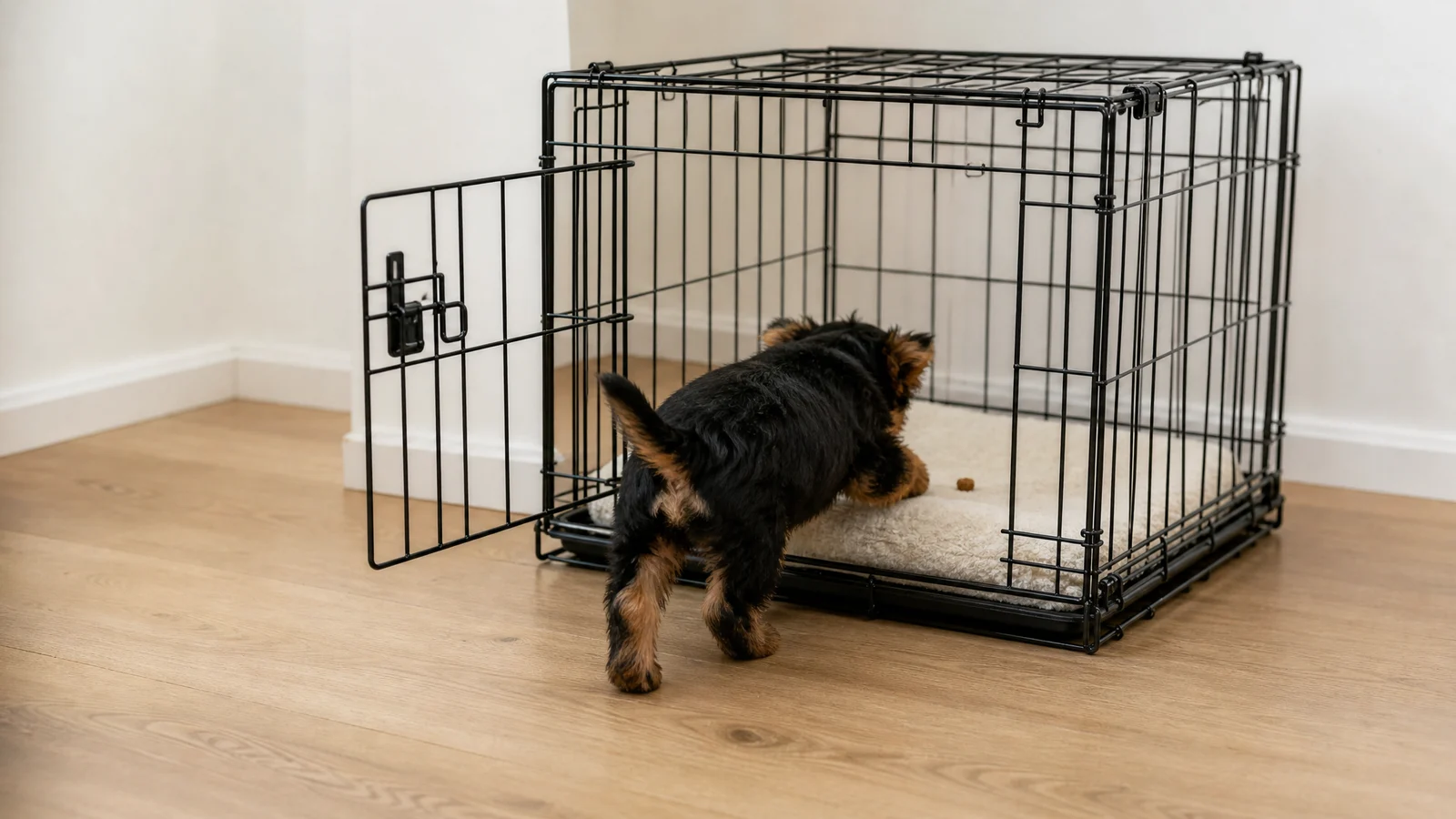 Puppy trainingHow to Crate Train a Yorkie Puppy
 Puppy trainingHow to Socialize a Yorkie Puppy