 Yorkie
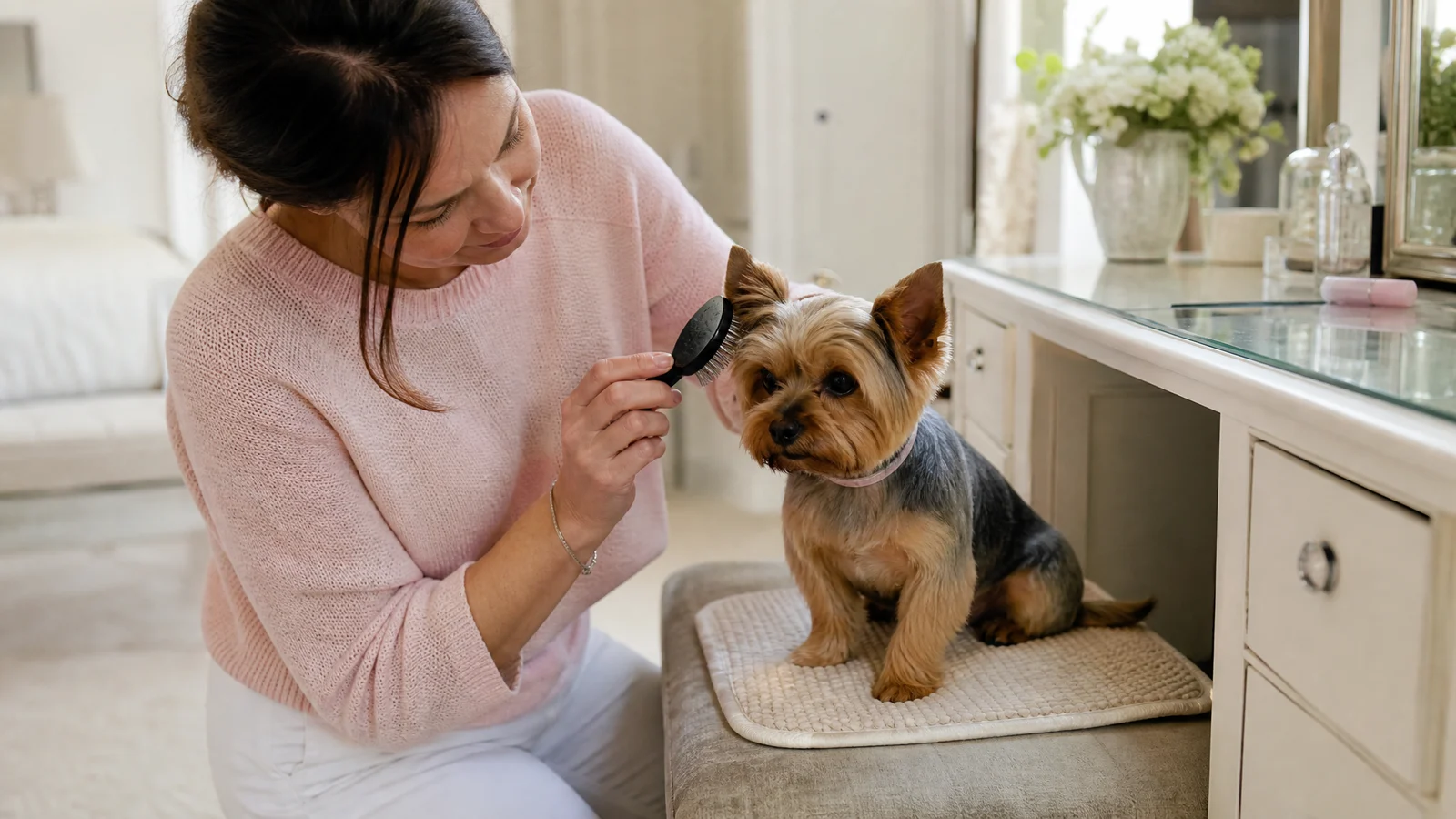
A Yorkshire Terrier's long, silky coat changes the training job. Grooming is not an occasional brush dragged quickly over the back. The dog may need frequent combing, face handling, foot care, and professional appointments, so cooperation has to survive many small contacts across the whole body.
That cooperation grows from choice and predictable pauses. We begin with balance because secure feet make every later touch easier. This guide covers a secure surface, separate tool introductions, body-zone coat work, and a simple start signal before contact. The same circuit then transfers from short home sessions to a groomer's table.
This care guide focuses on the training around coat work, not a show trim or medical treatment. It ends with observable signs that practice is becoming comfortable and signs that a groomer or veterinarian should help.
Yorkshire Terrier Grooming Starts Underfoot
Begin with footing. A small dog can feel insecure on a slick counter or a towel that slides. Use a stable, non-slip surface at a height where the handler can work without bending over the dog. Keep the edge well away from the dog's feet and maintain gentle physical security without pinning them in place.
Practice simply arriving and leaving before any brush appears. Reward four paws on the surface, then release to the floor or a safe step. If the dog must be lifted, support the chest and rear, place them softly, and reward after the feet are stable.
| Prepare | Why it matters | First training use |
|---|---|---|
| Non-slip mat | Prevents sliding during small weight shifts | Reward standing and turning comfortably |
| Brush and comb | Different sensations need separate introductions | Show one tool, feed, and put it away |
| Soft cloth | Supports gentle face and eye-area practice | Touch the shoulder before moving toward the head |
| Several tiny rewards | Allows frequent payment without a long meal | Deliver after each comfortable handling unit |
Plan the care unit before lifting the dog onto the surface. Choose one zone, one tool, and one stopping point. A written plan prevents an easy shoulder brush from quietly expanding into face, feet, and tangle work after the dog has already used their patience.
Set out only the tool used in that session. A pile of equipment can predict a long procedure before the dog has learned the first step. A simple surface and one clear task make the beginning easier to recognize.
Introduce Yorkie Grooming Tools Without Coat Work
Tool training begins before a stroke touches hair. Present the brush at a distance, mark calm attention, feed, and remove it. Repeat from a few positions. The brush should become ordinary information rather than the warning that restraint is about to begin.
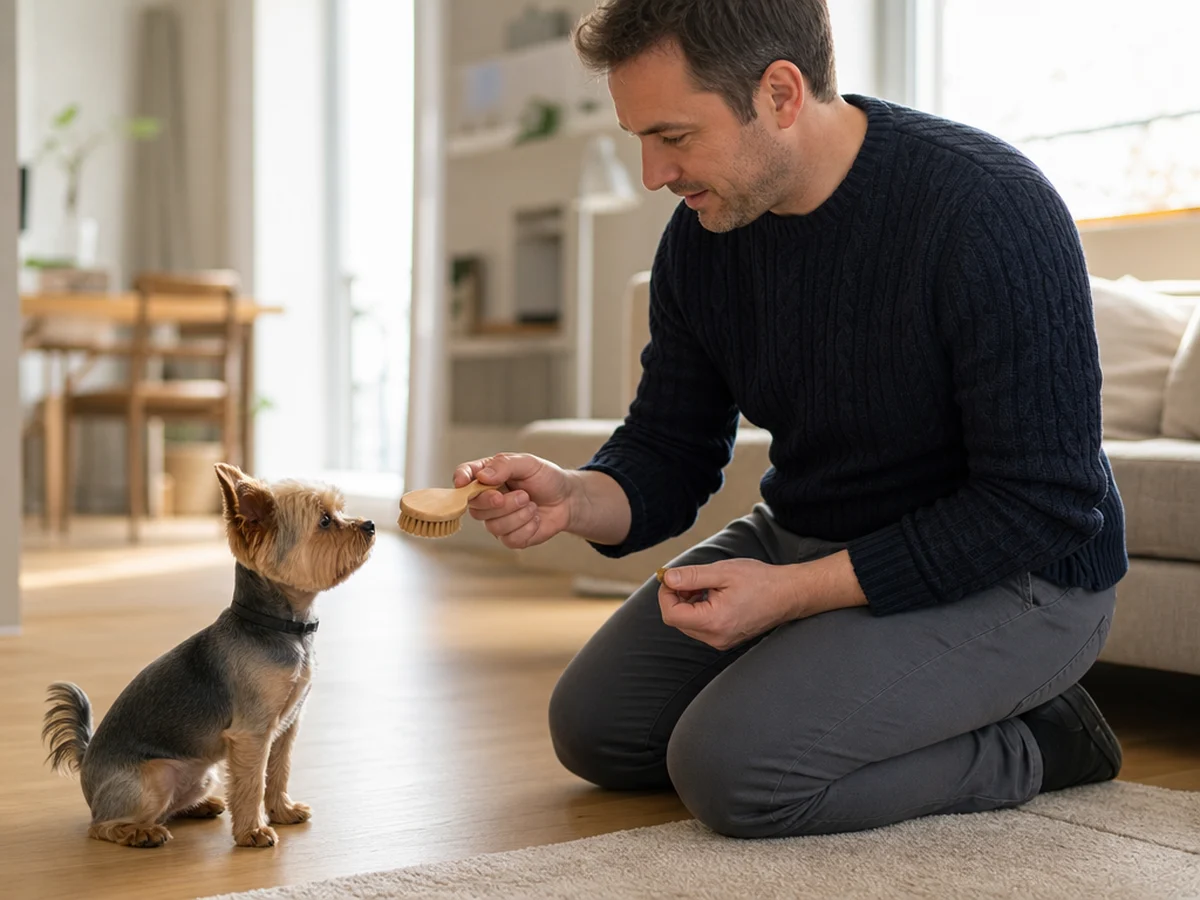
Next, touch the dog's shoulder with the back of the brush, reward, and pause. Progress to one light stroke only when the dog stays soft and returns willingly. Do the same introduction for a comb, cloth, or other item instead of assuming comfort with one object transfers to all of them.
The RSPCA grooming guidance recommends slow, rewarded introductions to tools, care products, and the grooming environment. That sequence suits a Yorkie whose regular coat care creates many chances either to build trust or to spend it too quickly.
Separate Sound From Touch
If a tool clicks, sprays, or vibrates, teach that feature away from the body. Make the quietest version happen at a distance, reward, then stop. Only reduce distance while the dog can eat and choose to remain near the setup.
Do not combine a new sound, firm hold, unfamiliar surface, and coat contact in one repetition. When the dog reacts, too many simultaneous changes make it difficult to identify what needs a smaller step.
Build One-Stroke Fluency
One brush stroke followed by a reward is a complete training unit. Change the location of the stroke only after the original one is easy. Later, add another stroke before payment, but keep pauses frequent enough that comfort remains visible.
A snag is not a training test. Support the hair above it, reduce pulling, and stop if you cannot work gently. The dog should not have to tolerate discomfort to prove they understand the grooming routine.
Work the Yorkshire Terrier Coat by Zones
Dividing the body into zones prevents a session from quietly growing too long. Choose one small area, complete comfortable work there, and release. Return later for another zone. This gives the dog a predictable finish and gives the handler a useful record of where sensitivity appears.
Back and Sides
These broad areas are often the easiest starting point. Brush in the direction the coat lies and use the free hand to steady hair rather than hold the dog down. Reward after a short pass, then allow a position change.
Watch the skin and the dog's posture as carefully as the hair. A sudden flinch, repeated glance, or shift away can indicate a snag, pressure, or fatigue. Pause before trying a lighter pass.
Chest and Legs
Leg work changes balance. Ask for a comfortable stand and handle one limb briefly without pulling it outward. A supported foot lift, reward, and return to the mat may be enough for an early session.
The ASPCA's handling advice pairs gradual leg and foot contact with praise and treats. Build that comfort before expecting combing around moving joints or longer foot care.
Face and Head
Bring the hand into view beside the cheek before moving closer to the head. Begin with a cheek or chin touch, then introduce a cloth separately. Keep food delivery clear of the tool path so the dog is not chewing while delicate face work happens.
Long facial hair can make a quick job feel intrusive. Use bright light, stable footing, and very small care units. If the dog repeatedly turns away, return to shoulder contact instead of following the head with the tool.
Tail and Rear
Announce the approach with a familiar touch at the side, then move back gradually. Reward for standing while the hand reaches the area before adding any brush movement. Keep the dog facing a safe direction on the surface.
Stop if the dog sits repeatedly, tucks tightly, or tries to leave. Those responses are information about the current step. They are not reasons to hold the position longer.
Use a Start Button for Yorkie Grooming
A start button is a simple position the dog can offer before handling begins. A chin resting in an open palm, a nose touching a target, or four paws standing on the mat can fill that job. Choose a behavior the dog can comfortably leave.
Present the start position, wait for the dog to offer it, make one brief contact, then stop and reward. If the dog lifts the chin or leaves the target, the tool pauses. Invite another repetition only after resetting the equipment and giving space.
This does not make necessary care disappear. It creates communication during practice, which usually makes necessary handling more efficient. The site's Yorkie puppy training timetable includes short handling conversations. The grooming circuit develops that conversation into a repeatable adult skill.
- Continue when the dog returns to the start position, takes food normally, and keeps the body loose during contact.
- Make the step smaller when the dog hesitates, watches the tool continuously, shifts weight away, or needs repeated invitations.
- End the session when the dog cannot settle after a pause, repeatedly tries to leave, or behaves very differently during a once-easy touch.
Release while the dog is still successful. Ending after a comfortable repetition protects the start button. Continuing until they must withdraw teaches that the signal does not actually control the pause.
Transfer Yorkshire Terrier Grooming to Appointments
Home fluency needs several handlers and positions before an appointment. Practice with the dog facing left and right, with the handler seated and standing, and with a second familiar adult delivering rewards. Keep the tool and body zone easy while those context details change.
A dog may work comfortably with one person at home and still find a new room, new hands, and unfamiliar equipment difficult. Transfer each part deliberately. Ask the groomer what surface, holding positions, and tools the dog will encounter so home practice resembles the appointment without pretending to perform professional work.
- Visit the location for rewards and a calm exit when the business allows a low-pressure introduction.
- Practice the familiar mat and start position with no coat work in the new setting.
- Let the professional begin with an easy body zone and a short handling unit when practical.
- Share the dog's pause signal and the specific places where home practice remains difficult.
- Schedule another easy exposure instead of waiting until the coat requires a long, demanding appointment.
Best Friends recommends low-pressure visits to a clinic or grooming setting where the dog can have a positive experience and leave without a procedure. Their handling guide supports separating comfort with the place from the harder care event.
Regular vet visits are part of responsible coat and skin care. A veterinarian should assess sudden sensitivity, skin changes, painful movement, or a sharp change in tolerance. Training can improve predictability, but it should not be used to work through possible pain.
Read Yorkshire Terrier Grooming Progress
Progress appears in the beginning, middle, and recovery of the session. The dog approaches the mat, offers the start position, remains able to eat, and returns after a pause. The handler can complete a small zone with less retreat or tension across several sessions.
Keep a simple zone record after each session. Note the surface, tool, area touched, number of comfortable contacts, and the dog's recovery after release. That record reveals whether progress belongs to the whole routine or only to one familiar combination.
Difficulty is also specific. A dog may accept the brush on the back but avoid the comb near a leg, or work at home but struggle in the salon. Record the tool, body zone, surface, handler, and earliest sign of concern. Change one of those pieces rather than making the entire session longer.
This article offers general grooming-training information. Ask your veterinarian about skin, movement, or pain concerns and use a qualified groomer for coat care beyond comfortable home practice.
Ask a reward-based groomer for help when coat condition exceeds what short home sessions can safely handle. Ask the veterinarian about discomfort, sores, sudden guarding, or a major behavior change. When the body is comfortable, return to the easiest successful contact and rebuild the consent circuit one clear unit at a time.
 BehaviorRedirecting a Yorkshire Terrier's Chase Instinct to Better Games
 BehaviorHelping a Yorkshire Terrier Stay Calm When Home Alone
 BehaviorWhy Your Yorkie Digs and How to Redirect It