 Yorkie
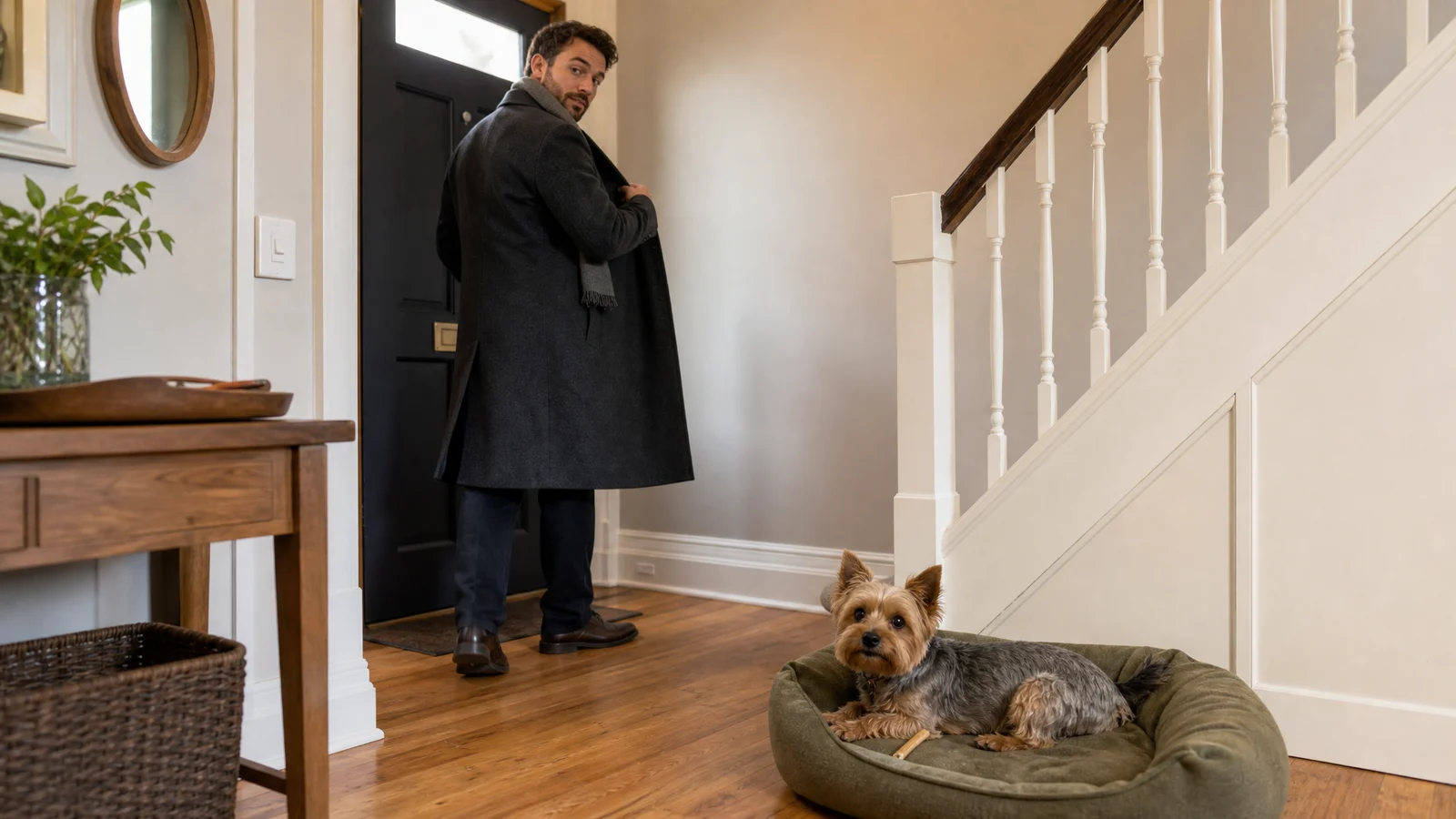
How long should a Yorkshire Terrier practice being alone at first? Start with a duration short enough that the dog stays comfortable, even if that means only stepping behind a barrier and returning. A schedule based only on the clock misses the dog's actual response.
Yorkies can be closely attached to their people, but shadowing is not automatically separation anxiety. We use the dog's behavior, not an arbitrary schedule, as the measuring tool. This guide covers a calm resting baseline, small barrier separations, departure details, and video evidence. Those observations decide whether the next absence should grow, stay the same, or become easier. The first success is comfort, not a dramatic duration.
Open a Yorkshire Terrier Time-Alone File
Record what happens before, during, and after a brief separation. Sound is only one part of the file. It is whether they could return to ordinary behavior without escalating. One glance at the barrier followed by resting tells a different story from continuous pacing, scratching, or frantic attempts to follow.
Observe several everyday situations before designing departures. Can the dog remain on a bed while you cross the room? Can they finish a food toy when you step out of sight? Do they recover after a door closes? These small samples reveal a starting point with less risk than leaving the home to find out.
- Note the exact barrier, room, resting place, and activity available during each sample.
- Record the earliest change in posture, eating, movement, or sound instead of waiting for the loudest behavior.
- Write down how quickly ordinary behavior returns after the person comes back.
- Keep health, schedule, exercise, visitors, and unusual household noise in the same log when they change the picture.
Do not create a crisis for the sake of complete data. End the sample at the first sustained concern and make the next version easier. The file exists to protect the dog from repeated distress, not to prove they eventually stop.
Separate Preference From Distress
A dog may prefer company, follow a person to the door, and then settle. Another may be unable to eat, pace continuously, vocalize without recovery, eliminate, or try to escape. Duration alone does not distinguish these pictures. Body language and recovery do.
Some dogs settle when they can hear a person in the next room but become concerned when household sound disappears. Others react first to the gate, door movement, or departure objects. Note which event changes the body before assigning the problem to time alone as a whole.
Owners often notice different responses to different people, rooms, and departure routines. Treat that variation as useful evidence. A Yorkshire Terrier who rests behind a gate while someone remains home may still need a much smaller starting point for a completely empty house.
Rule Out a Sudden Health Change
Regular vet visits matter for behavior as well as physical care. Pain, sensory changes, digestive trouble, urinary urgency, or age-related changes can alter time-alone behavior. A sudden new problem deserves veterinary evaluation before the household assumes the dog needs stricter training.
Serious separation problems may also require coordinated medical and behavior support. AVSAB's humane training statement notes that fear and separation anxiety can require veterinary care alongside behavior modification.
Yorkshire Terrier Time-Alone Baseline
Choose a time when ordinary needs have already been met. A dog who needs the bathroom, movement, food, or recovery from a busy event cannot provide a clean time-alone baseline. Start after a familiar routine rather than at the most difficult point of the day.
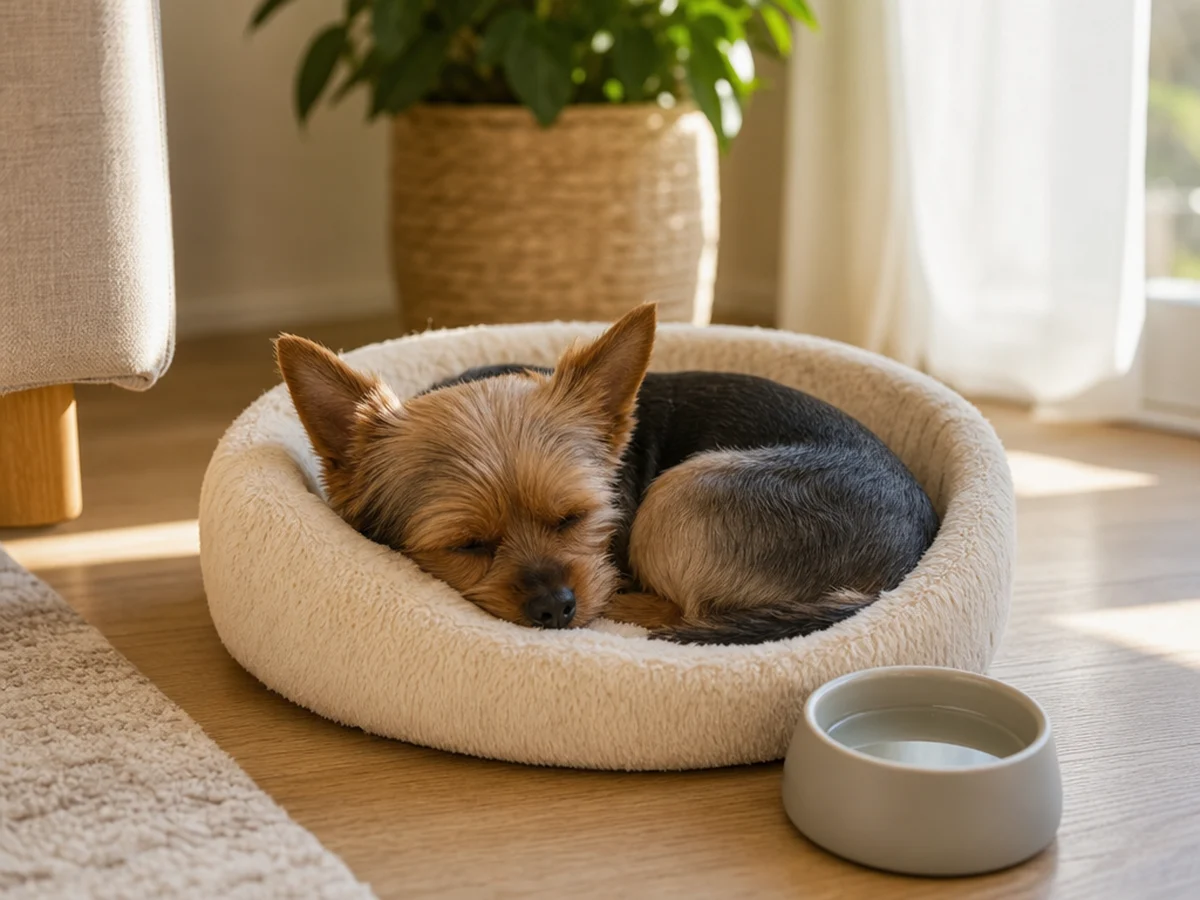
Create a resting place the dog already chooses while people are present. It may be a bed, mat, or safe pen area with comfortable footing and normal access to water. Practice there during quiet household activity before attaching it to departures.
Reward settling without hovering over the dog. Deliver a small reward between the front paws, then resume ordinary activity nearby. Sometimes offer a safe chew or food toy while you remain in the room. The dog learns that the station supports rest, not only the moment everyone disappears.
The site's Yorkie training guide channels a bold terrier through clear routines and useful outlets. Time-alone work uses the same principle in a quieter form: predictable rest and small choices replace conflict over constant following.
Test Enrichment Before Depending on It
Offer the planned food activity while you stay nearby. Check that the dog uses it safely and that the item does not create frustration or guarding. An activity that is abandoned as soon as you move is not yet strong enough to carry a separation.
Choose enrichment that does not require constant human help. A puzzle that rolls under furniture or a chew the dog cannot use comfortably will add frustration. Test the exact item in the exact resting area while remaining nearby.
Food is information as well as enrichment. A dog who normally eats but stops during one setup may be telling you that the step is too difficult. Remove pressure, return, and shorten the next absence.
Time Alone Across Barriers
Begin with a visible boundary. Step across a gate or doorway, pause briefly, and return before concern grows. Keep greetings ordinary. The important event is that separation begins and ends without a dramatic change in the room.
Repeat the same easy duration until the dog's response is predictable. Then change one feature. You might take one more step away, remain out of sight a little longer, or close the door partway. Do not change distance, visibility, sound, and duration together.
Use a Barrier Ladder
- Move a few steps away while staying fully visible and return to ordinary activity.
- Cross an open doorway for a moment while the dog can still see part of your body.
- Pass briefly out of sight, then return before the dog leaves the resting place.
- Move a door partway, open it again, and remain home with the dog afterward.
- Close the door for a comfortable sample only after earlier rungs remain easy.
Move down the ladder after a difficult repetition. The goal is not to finish the planned rung. It is to build a history of separations the dog can process. Several calm easy samples teach more than one long absence followed by an exhausted recovery.
Keep cue language minimal. A repeated reassurance speech can become another departure signal. Use the same calm setup, provide the resting activity, and let your movement carry the information.
Yorkshire Terrier Home-Alone Departures
The household schedule also needs a training lane and a real-life lane. Planned samples stay within the dog's comfortable duration. Necessary errands longer than that require a sitter, friend, or other arrangement so daily life does not repeatedly undo the lesson.
Departure details can become triggers before anyone leaves. Shoes, keys, bags, coats, and a changed voice may predict a difficult absence. Handle those items at ordinary times without departing so they lose some of their special power.
Put on shoes, sit down, and read. Pick up keys, move them to another surface, and continue making dinner. Open the door, step back inside, and settle. These are not tricks. They separate routine household actions from the full absence chain.
When the details no longer create concern, combine only a few of them with an easy barrier sample. Keep the first out-of-home departure shorter than the dog's successful in-home work. A front door, hallway sound, elevator, or vehicle can make the same clock duration much harder.
Keep Returns Quiet and Useful
Return before the dog is distressed, enter calmly, and allow a moment of ordinary movement before offering attention. If the dog rushes or jumps, scatter several rewards on the floor or walk together to the resting area. The return should help the body settle rather than create another spike.
Do not withhold contact as a test. Calm acknowledgment is compatible with independence. What matters is that departures and returns become predictable parts of the day instead of emotional alarms.
Video Review of Time-Alone Practice
Test the camera before the dog is alone. Check the angle, sound, connection, and any indicator light so equipment changes do not become part of the departure surprise. Keep cords and devices outside the dog's reach.
A camera shows what happens after the door closes. Position it to capture the resting place, exit route, and likely pacing path. Use it during short planned samples, then review behavior instead of assuming silence means comfort.
| Video evidence | Meaning for this setup | Next sample |
|---|---|---|
| Eats, pauses, then rests | Current duration appears comfortable | Repeat before adding one small change |
| Watches the exit but body stays loose | Dog notices without escalating | Keep duration and vary only a minor detail |
| Stops eating and patrols the exit | The threshold may have been crossed | Shorten and return to an easier barrier |
| Continuous vocalizing or escape attempts | Practice is causing serious distress | Stop planned absences and seek professional help |
Review the beginning and the full recovery, not only the middle. A dog may settle briefly and then escalate, or protest once and quickly resume normal activity. Note the complete shape before deciding to add time.
When vocalizing occurs, note its timing and shape. One brief sound followed by eating is different from repeated calling that grows louder and accompanies pacing. Pair the audio with posture and movement before changing the plan.
The ASPCA's separation guidance advises avoiding absences that exceed the duration a dog can currently handle. Arrange company or other support when a necessary trip would be much longer than current training.
Choose Help for Yorkshire Terrier Time Alone
This article provides general training information. A veterinarian should evaluate sudden changes or significant distress and can help coordinate an appropriate behavior plan.
Seek help promptly when the dog cannot eat during easy samples, vocalizes continuously, eliminates despite ordinary house-training success, injures themselves, damages exit points, or shows little recovery after the person returns. Stop stretching duration while that support is arranged.
Begin with the veterinarian and share the video and log. For specialist behavior care, the veterinary behavior directory explains board certification and helps owners understand professional titles. A qualified reward-based trainer may assist with the training plan, while a veterinarian handles medical assessment and any treatment decisions.
The site's Yorkshire Terrier barking guide can help identify sound-triggered alerting that happens even while people are home. Keep that work separate from absence practice so the log shows which condition actually changed.
Time-alone progress is the dog's ability to remain comfortable, not the household reaching an arbitrary number on schedule. Keep the clearest easy baseline, repeat it across normal days, and let video evidence decide when one small change is ready.
 BehaviorWhy Your Yorkie Digs and How to Redirect It
 BehaviorWhen Your Yorkshire Terrier Growls Over a Toy: Happy Trades
 BehaviorFour Paws Down: Teaching Yorkshire Terriers to Greet Politely