 Yorkie
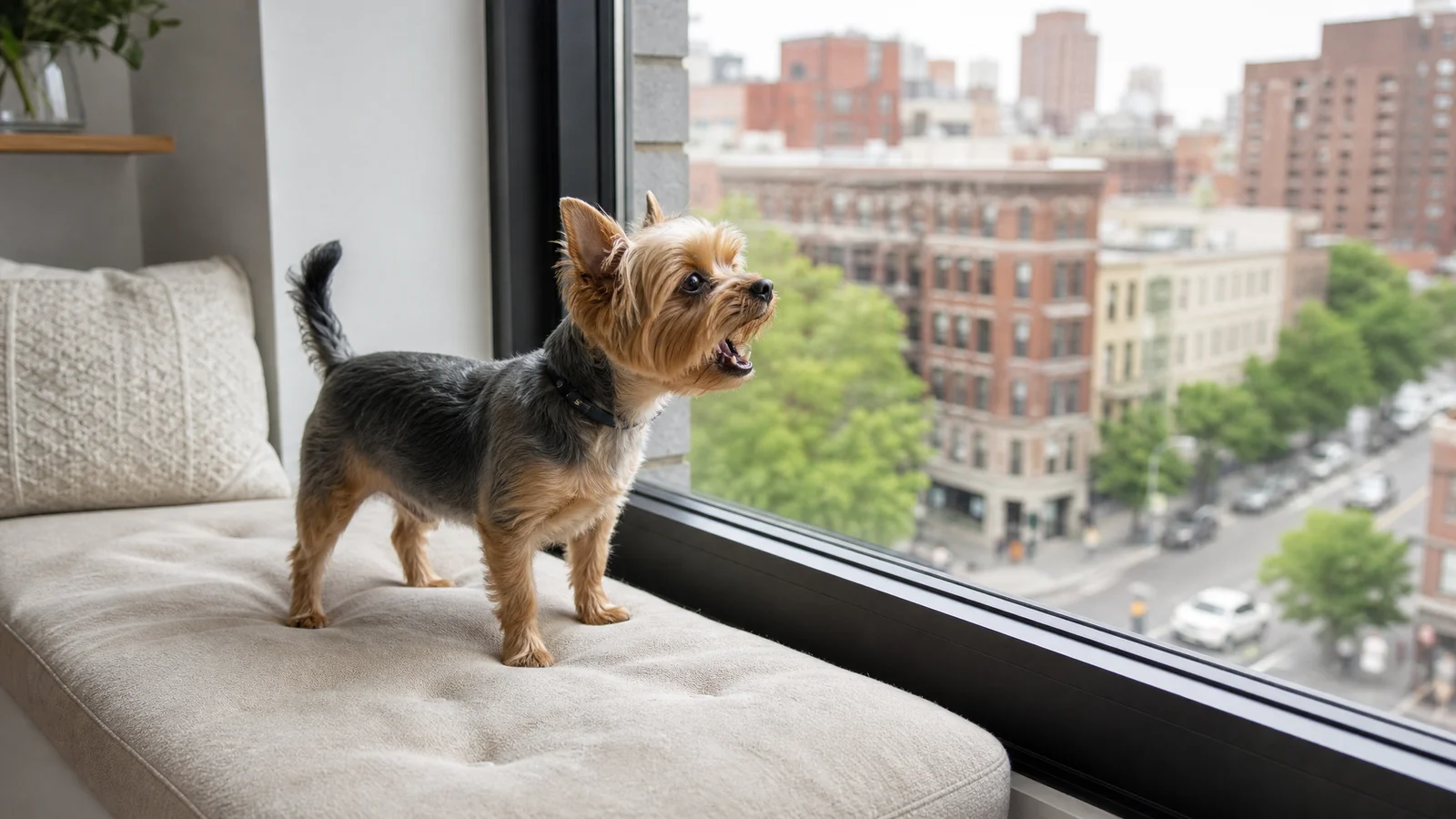
To train a Yorkie not to bark, reward quiet and teach a replacement behavior instead of punishing the barks. You are not removing a trait. You are giving a very alert little dog a better job to do when something happens.
The breed is why this needs a plan. Published breed ratings put the Yorkshire Terrier at 4 of 5 for barking and 5 of 5 for watchdog nature, so sounding the alarm is the default setting. Handled badly, that becomes constant noise, tense neighbors and a dog worn out by their own vigilance. Handled well, you get a dog who alerts once and then looks to you.
Read on for how to sort out which barks you have, set up treats and triggers, mark quiet, build a doorbell routine around a mat, and stretch the quiet over two weeks.
Barking Is Built Into the Yorkshire Terrier
Before any plan makes sense, it helps to know what you are working with. Beneath the silky coat is a feisty, old-time terrier, spirited and confident in a tiny body. A dog bred to notice small movements will notice the delivery truck, the neighbor's cat and every passing leaf, and will usually say so.
Alerting is this breed's default, so the plan is to reward quiet and teach a replacement behavior. A dog who sounds the alarm is doing what their breeding shaped them to do, and they can learn that a calm pause or a look at you pays better than a long burst of barking. Praise and treats work far better with this breed, and reward-based training makes the behavior you like more likely to come back.
Timing is the part that surprises owners. Many Yorkies stay quiet for months or even years and then suddenly find their bark, while very young puppies often manage only an occasional single bark and a soft growl. Littermates can differ too, so a quiet young dog is not guaranteed to stay quiet. We reward calm early, before barking turns into a habit.
The same trait has a gentler side. Some Yorkies run to the door and look at you instead of barking, and many are only occasional barkers. If your dog also acts like the biggest dog in the room, our piece on the big-dog attitude explains what sits behind the alarm.
Which Kind of Barking Are You Working On?
Barking is a category, not a single behavior, and the plan changes with the cause. Listen for several days and note when, where and why the barking happens. Then pick the one bark that bothers you most, because starting with one keeps the work clear for your dog and honest for you.
Alert Barks
Much Yorkie barking is tied to what they see and hear from windows, yards and the street, including passersby, animals, other dogs and ordinary outside sounds. These barks can happen at any hour, and some dogs bark at random night sounds while staying silent all day. Because this is the alerting instinct at work, managing the view and rewarding quiet is the right fit.
Demand and Boredom Barks
Some barking shows up when a Yorkie is left alone in a room, penned beside a desk, or crated while the family is home. That points to a need for company or something to do. A scent game such as nose work, where treats hidden in open boxes let your dog find and self-reward, can help as much as any cue.
Be careful with distractions here. Some owners suspect that a toy offered in the middle of barking taught their dog that barking earns playtime, so hand over the toy only after the quiet has started.
Excitement and Startle Barks
Spinning with barks at greetings is excitement, and barking at a sudden scare is something else. Several owners trace the first bark to a startling event, and some dogs bark mainly when scared or in distress rather than at routine things. Excited barks respond to calm and rewards, while startle barks respond to gentle, positive exposure to the new thing at a distance your dog can handle.
Setting Up Rewards Before the Barking Starts
Stage one happens before your dog barks at all, because rewards handed out in a scramble teach very little. A short stretch of preparation lets you pay within moments of a quiet that is easy to miss. The setup has a few pieces:
- Soft, tiny treats your Yorkie can swallow at once, kept within reach in the rooms where barking happens, since a slow chew breaks the training rhythm.
- A quiet spot with a low, flat mat or bed, away from the window, where your dog can settle with the street out of sight.
- A written list of your triggers, such as the doorbell, the front window, passing dogs and night sounds, so you can choose one and manage the rest.
- Managed sightlines, like lowered blinds or frosted window film, so triggers appear less often while your dog builds skill.
- For night-sound barking, a fan or white noise machine, which some owners find stops the barking and is easy to pack for travel.
Pick a marker as well. A short word like yes or the click of a clicker both work. Before you use it for real training, pair it with food: sound the marker, then give a treat within 3 seconds. Repeat that pairing several times in a calm, quiet spot, following the basics of clicker training. Once the sound reliably predicts a treat, it tells your dog exactly which moment earned the reward.
Meet your dog's other needs on training days as well. Yorkies have plenty of energy and a real appetite for mental work, so a steady walk and a puzzle or scent game beforehand make quiet much easier to offer.
Marking Quiet to Reduce Yorkshire Terrier Barking
Stage two teaches what quiet means and that it pays. You are not demanding it yet, you are catching it. Yorkies are intelligent and eager to please, so this stage often shows progress sooner than owners expect.
- Start where barking is mild, such as a sound from another room, with your marker and treats ready.
- When your dog barks, say quiet once in a calm, even voice.
- The instant there is a pause, even a single breath, mark it and give a treat. You are paying for the silence, not the bark.
- Keep feeding tiny treats in a steady stream while the quiet holds, then end the session while it is still going well.
This follows the standard approach to teaching a quiet cue, where a calm word and a steady stream of small treats prompt silence. Expect the cue to take several days or more to sink in.
Say the word only once per bark. A cue repeated over and over becomes part of the noise. If your dog keeps barking through every attempt, the trigger is too strong, so drop to an easier version and rebuild from there.
What Do You Do About Doorbell Barking?
Visitors are the trigger most owners name first, so stage three applies marked quiet to the door and gives your dog a job: go to the mat. A replacement behavior works better than silence alone because a busy dog has less room to bark.
Setting Up the Mat Routine
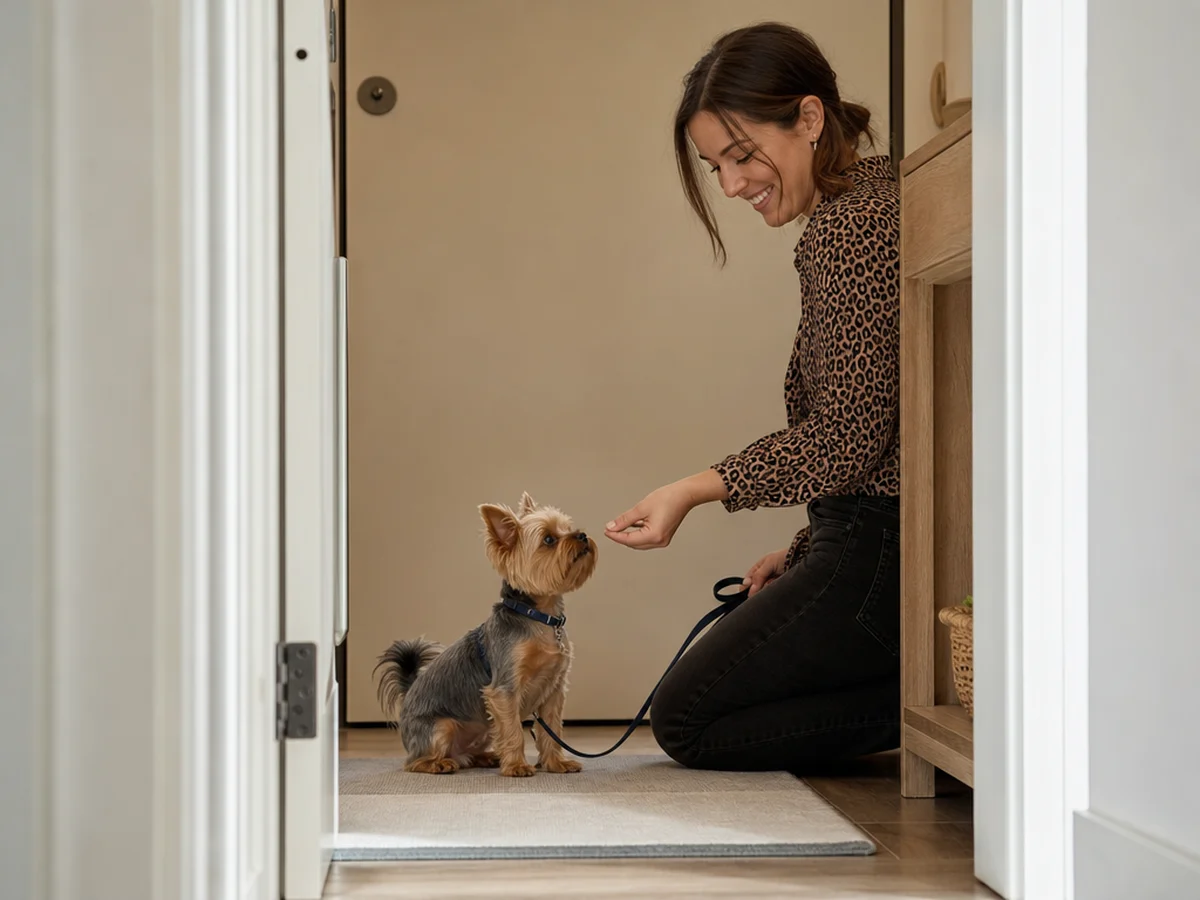
Start the mat lesson away from the door. Pay your Yorkie for putting paws on it, next for settling into a down, and finally for staying put while you walk around the room. Keep the mat flat and low, since limiting jump height protects small knees, so skip a tall step or sofa as the station.
Next, make the doorbell predict the mat. Have a helper ring or knock, mark the moment your dog looks at the sound without barking, and send them to the mat for treats. If your Yorkie is one of those who run to the door and look at you instead of barking, reward that look warmly, because it is a calm alert in the making.
Handling the Real Doorbell
With real visitors, begin with familiar people and a door you can control. A short alert bark is natural and fine. Mark the pause that follows, cue the mat, and pay well while the guest comes in.
If your dog barks out of fear, pick them up calmly without fuss and keep your voice low and even. Calm, low-key reassurance gives a startled dog nothing more to react to. Ask guests to ignore your Yorkie until they settle, then let them say hello and reward that calm greeting.
Stretching Barking-Free Quiet Into Longer Stretches
Stage four makes the quiet last. Once your dog goes quiet on cue at the door, ask for a little more before the treat, then a little more, and vary the wait so it stays interesting. A dog who never knows exactly when payment comes tends to keep trying.
Add distractions one at a time, in order of difficulty: a quiet street sound, a person walking by outside, a dog on the sidewalk, then the window view with the blinds open. Each new layer deserves a return to easy repetitions and a reward for the first calm look. Work toward the settings that matter most in your home, whether that is evenings or the front window.
Backslides are normal and simply tell you the step was too big. Go back to the last level that worked, reward generously, and look for a cause such as a startling event, a new neighbor or time spent alone. Barking that starts suddenly or sounds distressed is worth raising at your regular vet visits.
Steady quiet also keeps options open. A Yorkie who alerts once and settles suits roles like therapy work better, and our look at a Yorkie as a service dog covers what those roles ask. Even constant barkers can improve, and some owners of such dogs see training bring the barking down to acceptable levels.
Two Weeks to a Quieter Yorkshire Terrier
Quiet is trained, not forced. A Yorkshire Terrier will always have an alarm, so the goal is a dog who sounds it once, then looks to you for the next step and is paid every time they do. Having worked with this breed's barking for a long time, we see the households that succeed keep paying for quiet long after it looks reliable.
The next two weeks follow a simple plan. Week one stays on a single trigger, and week two stretches the quiet into real life:
- Early in week one, set up treats, the marker, the mat and the managed view, and pair the marker with food.
- Midweek, capture quiet at your chosen trigger in several short sessions, marking and treating each pause.
- At the end of week one, add the mat for that same trigger and keep other triggers managed rather than trained.
- Early in week two, lengthen the wait before the treat and vary it.
- Midweek, add one real-life distraction at a time, such as a person outside or a dog passing.
- At the end of week two, try the real doorbell and visitors, then repeat whatever step felt shaky.
Keep rewarding calm after it seems solid, because Yorkies who stay silent through their first months can still find their bark later. Keep up regular vet visits, daily exercise and mental games, and your Yorkie will need far fewer reasons to sound the alarm.
 Puppy nippingTraining Your Yorkie Puppy Starts With Treats and Praise
 BehaviorWhy Your Yorkie Acts Like a Big Dog
 Coat brushingFirst Commands Every Yorkie Dog Can Learn With Treats