 Yorkie

Imagine interviewing your Yorkie about training without expecting spoken answers, and you would ask what draws them closer, what makes them pause, which games hold attention, and how quickly they recover after a surprise. Their choices, posture, movement, and voluntary return to the lesson would supply the replies in a language the whole household can observe clearly together.
This profile interview turns personality into an individual plan rather than a breed stereotype. Yorkshire Terriers are described as spirited, intelligent companions, yet no description can predict every dog. We explore connection, confidence, persistence, and recovery across four rounds. Read on to build a flexible portrait that changes with settings, rewards, and experience.
Yorkshire Terrier Personality Interview One
Begin where your dog feels comfortable and offer several ordinary ways to connect, and you might sit nearby, invite a hand target, roll a toy, or place a treat for them to find. Observe which invitation starts interaction and which one your dog ignores.
Connection Opens the Conversation
Some dogs approach for food, some for motion, and others for warm social contact, and record the first choice without ranking it. A dog who prefers a search game is not less affectionate, and a dog who leans against you is not automatically ready for a formal cue.
The UKC standard describes the breed as intelligent, lovable, spirited, and companionable, and use that broad portrait as background only. Your interview should discover how companionship appears in this individual and which form supports learning today.
Repeat the invitation at a different calm time before treating the first choice as a preference, and recent play, meals, sleep, and household activity can influence the answer. A profile becomes more useful when it records conditions alongside the behavior instead of treating one moment as identity.
Rewards Keep the Exchange Going
Offer one easy behavior with one reward, take a brief pause, then try another reward on the same behavior, and notice speed, body looseness, and whether your dog returns. The best payment is the one that strengthens participation, not the one you expected to matter.
Build a three-part menu for quiet rooms, active play, and distracting places. Include food, toys, praise, sniffing, and access to something safe your dog wants. Preferences are answers that can change. Ask again instead of turning yesterday’s favorite into a permanent personality trait.
Note how the reward is delivered. Food placed gently may support quiet attention, while a tossed piece can invite movement and reset the interaction. A toy may energize one dog and overwhelm another. The response tells you whether the delivery belongs in this conversation.
Yorkshire Terrier Temperament Interview Two
Personality becomes most visible when the picture changes, but novelty should remain gentle and optional, and place an unfamiliar safe object at a comfortable distance or move a familiar exercise to another room. Let your dog choose whether to investigate, watch, or stay away.
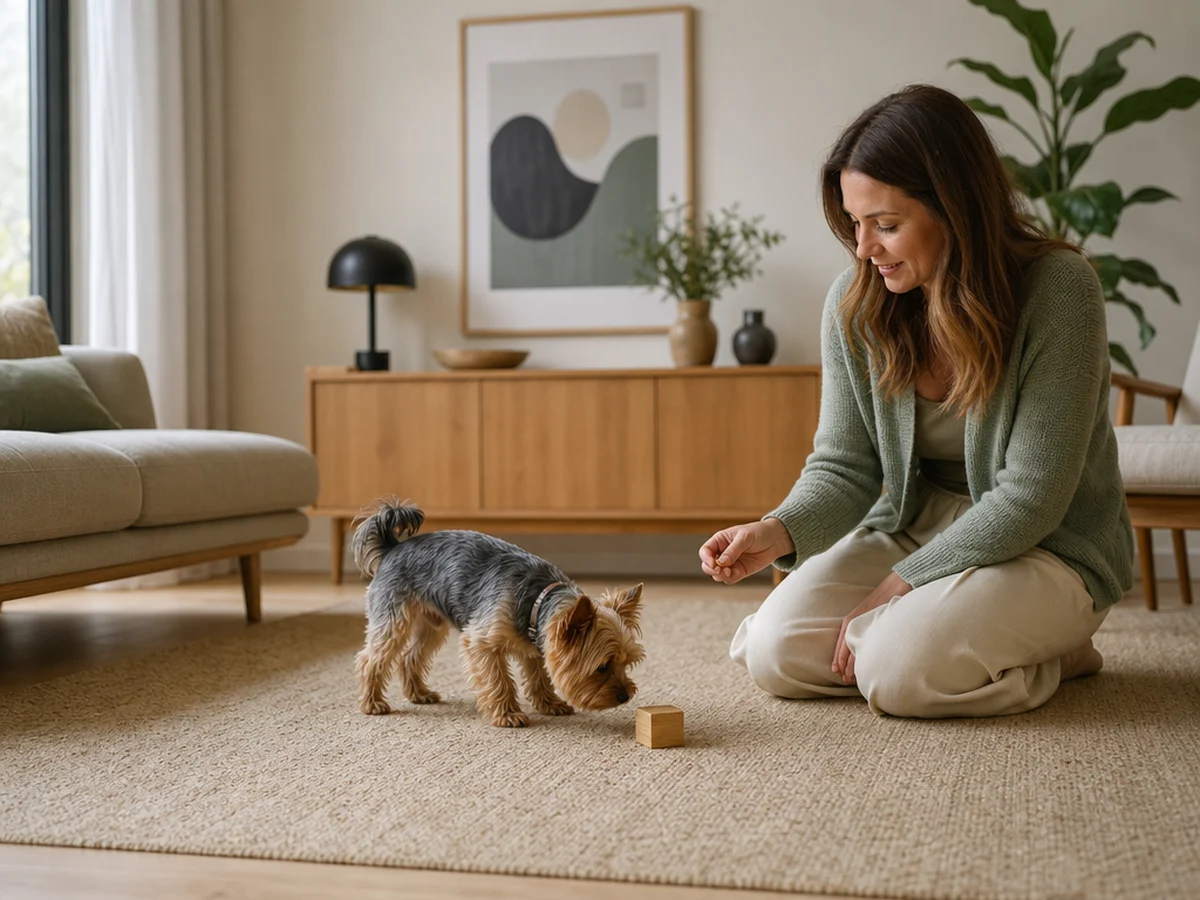
Do not push the object closer or lure a worried dog into contact. Reward looking, relaxed movement, and voluntary approach. A retreat is information, not misbehavior. More distance can restore choice and allow curiosity to return on its own schedule.
Arrange an easy exit before the object appears, and open space lets the dog curve away, circle back, or observe from another angle. When leaving works, approach carries more meaning because the dog was not trapped into remaining near the novelty.
Confidence Can Look Bold or Careful
Bold investigation and careful observation can both lead to confident learning, and watch for a loose body, normal breathing, and the ability to take a reward or disengage. Speed alone is a poor measure because rushing forward may reflect excitement rather than comfort.
A feisty reputation can tempt people to assume every Yorkie welcomes every challenge. Avoid that shortcut. The national club values sound temperament, while an individual plan still needs the dog’s current response. Confidence grows through safe choices, not labels.
Requests for Space Belong in the Profile
Turning away, slowing down, moving behind you, refusing food, or leaving may ask for distance. Respond early by reducing the challenge. When subtle communication works, your dog has less reason to escalate into barking, struggling, or snapping.
Pain or discomfort can also change social behavior. The ASPCA overview notes that an otherwise friendly dog may behave aggressively when in pain. A sudden or marked personality shift deserves veterinary attention before you treat it as a training problem.
Keep regular veterinary visits part of the profile because comfort influences behavior. Record when, where, and during which movement a change appears. That information helps a veterinarian assess the situation, while the training plan should stay comfortably below any point that worries the dog.
Yorkie Trainability Interview Three
Persistence is not the same as obedience. Give your dog a safe, solvable task such as finding food among open boxes or touching a new target. Watch how many different strategies appear, whether help is requested, and how readily they try again after an unrewarded attempt.
The First Idea Sometimes Fails
A persistent dog may repeat one action, offer several alternatives, or pause to study you. Mark a promising step before frustration builds. If your dog leaves, simplify the problem by moving the target closer or rewarding a glance. Rejoining is a valuable success.
Do not call repetition stubbornness until you inspect your feedback. Perhaps the old action was rewarded many times, while the new criterion is invisible. Make the difference clear and pay the first correct variation promptly. Better information often changes what looked like a fixed trait.
Repetition Can Build or Drain Interest
Ask for a familiar response a few times with genuine rewards, then alter one small feature. Some dogs enjoy a steady rhythm, while others engage more when position, reward delivery, or the route to the action changes. Accuracy and willingness should guide the pattern.
If interest fades, finish with an easy success instead of demanding one more attempt. Brief, upbeat practice protects the value of returning. The intelligence report provides a neutral way to record when place, repetition, and payment change performance.
- Record the first action your dog offers.
- Notice whether the reward starts another attempt.
- Lower difficulty before frustration grows.
- End when voluntary participation is still strong.
These observations are not a personality test with a passing score. They help locate the useful teaching edge between obvious and impossible. That edge can move from day to day, so a patient interviewer checks again rather than forcing yesterday’s plan.
Every profile needs a recovery section because daily life includes visitors, noises, missed cues, and surprising movement. Arrange only mild challenges that your dog can handle. The purpose is to observe return to comfort, not provoke a dramatic reaction for the sake of a test.
Reward-based structure gives the interview boundaries. AVSAB guidance explains that humane methods still include routines and guidelines while teaching without fear, intimidation, or pain. Clear choices make personality easier to read because coercion is not distorting the response.
Recovery Has an Individual Pace
After a mild interruption, look for orienting back to you, sniffing normally, taking food, exploring, or resting. Recovery has no required speed. Compare your dog with their own ordinary pattern and lower the next challenge if tension lingers.
Build a recovery ritual from familiar elements. Create distance, use a practiced hand target, scatter a few treats, or return to a quiet mat. The ritual should help your dog regain agency. It should not hold them near something they are trying to avoid.
Support Can Change the Answer
Repeat an easy version on another day with one support added, such as greater distance or a higher-value reward. If comfort improves, the support belongs in the plan. If it does not, stop and reconsider the setup rather than deciding the dog needs firmer handling.
Personality is partly stable and partly responsive to context. A dog may be playful at home, cautious in a clinic, and focused in a quiet class. Keep those answers side by side. Flattening them into one adjective loses the conditions that make successful training possible.
Profile clues across daily life. Continue the interview outside formal sessions.
Observe choices outside formal lessons. Notice where your dog rests during household activity, whether they bring toys to people, and how they approach a familiar doorway. Daily patterns broaden the profile without manufacturing pressure or turning every interaction into an assessment.
Look for exceptions as carefully as repeated tendencies. A dog who usually avoids novelty may approach one softly moving object, and that exception can reveal a comfortable pace or distance. Useful profiles explain conditions rather than collecting adjectives that sound permanent.
Bring the interview notes together only after you have observations from connection, novelty, persistence, and recovery. Keep each answer attached to its setting. A preference seen in the living room may not appear outdoors, and both results can be accurate.
Yorkshire Terrier Temperament Profile Becomes a Plan
Write the profile in pencil. Summarize your interview with preferences and conditions instead of verdicts. Write “chooses search games indoors and needs distance from fast arrivals,” not “friendly but stubborn.” The first statement suggests rewards, setup, and a training edge. The second invites assumptions.
- name the rewards that support willing participation
- record the settings where confidence is easiest
- note early requests for space
- choose one support to test next
Choose one adjustment for the coming week. You might begin lessons with a search, shorten repetitions, or increase distance from a trigger. Use reward-based puppy training for early foundations, then keep updating the plan as your dog gains experience.
End the interview by returning to a favorite activity with no test attached. Connection is not merely a tool for obtaining compliance. It is the setting in which learning becomes safe, understandable, and worth repeating for both members of the partnership.
Your finished profile should remain open to revision. Ask the same questions in fair settings, notice new answers, and preserve the dog’s right to step away. Training the Yorkie you have means listening closely enough to let behavior, not a stereotype, write the next question.
Review the profile after a new class, household change, or maturation. Keep what still predicts behavior and revise what no longer fits. A living profile gives everyone in the home a shared language for support.
We use the finished profile as a planning page, not a verdict. Before each lesson, choose one supported reward, one comfortable setting, and one achievable question. Afterward, add what the dog showed you and let that evidence refine the next invitation.
The interview is complete when training becomes kinder and more precise. It should show where participation is easy and which support protects confidence.
 PuppyYour 8 Week Old Yorkie Puppy: The First Training Week
 Training basicsAre Yorkies Smart? What Intelligence Means for Training
 Exercise and jobsCan a Yorkie Be a Service Dog?