 Yorkie
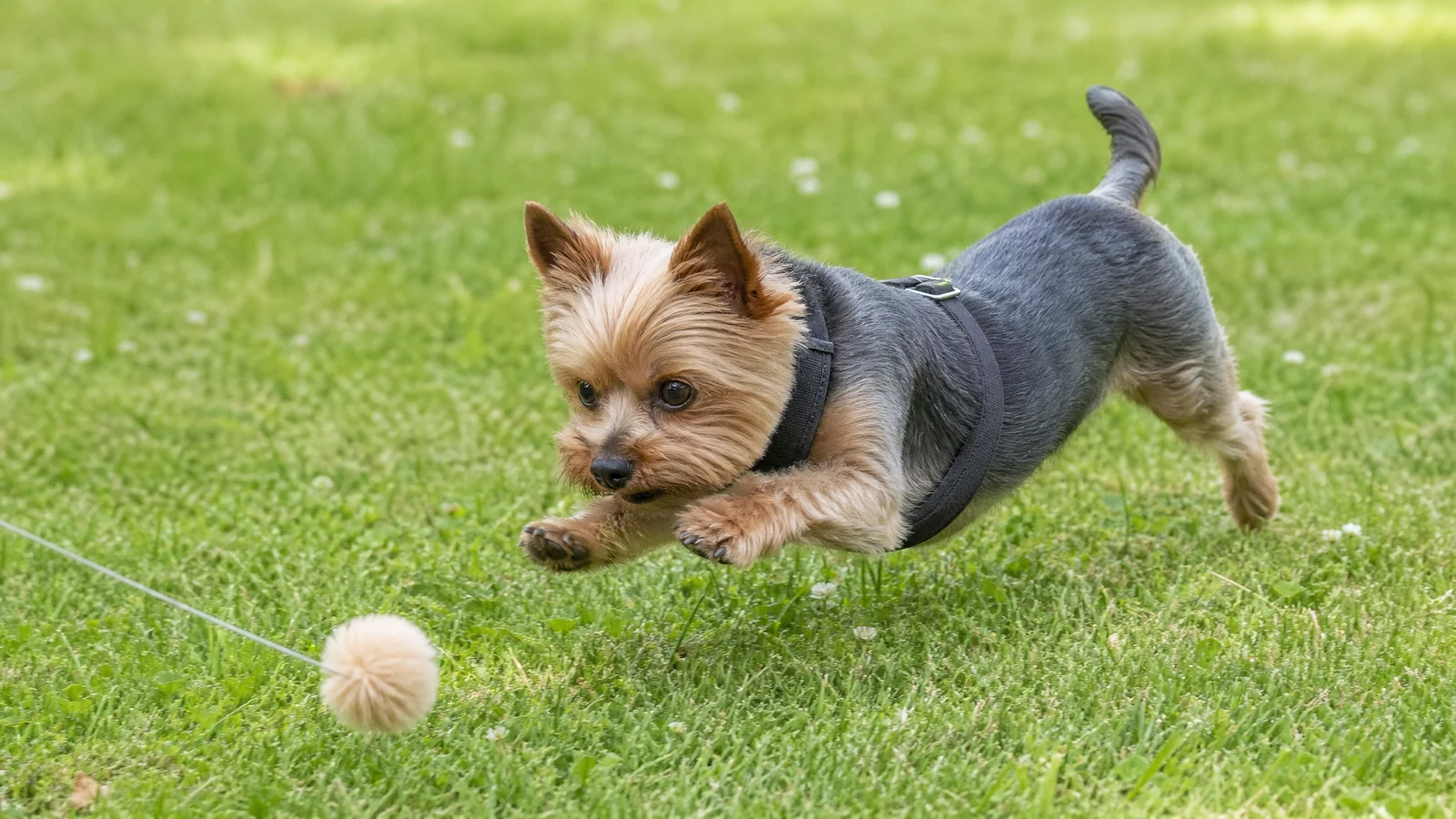
A squirrel crosses the sidewalk, and a Yorkshire Terrier who was walking beside you suddenly leans forward, locks on, and accelerates. The useful training moment happened before the lunge, when the dog first noticed movement but could still turn, eat, and travel with the handler.
That reaction is not a moral failure. Yorkies carry terrier history in a small body, and moving animals can make pursuit feel urgent. We redirect the sequence by controlling distance, securing the route, rewarding the first disengagement, and providing safer games that let the dog chase something permitted.
This guide covers trigger distance, an emergency turn, controlled chase games, and practice in three real environments. It closes with the next questions to answer before increasing freedom.
Read Chasing Critters Before the Lunge
Look for the earliest change, not the loudest one. The head may lift, the mouth may close, the stride may shorten, or the body may angle toward the animal. That first orientation gives you time to move. Once the leash is tight and the dog is vocal, learning becomes harder and safe exit becomes the priority.
We choose locations with more than one exit because a single narrow sidewalk can remove the option to create space. An open corner or driveway lets the pair arc away without stopping directly opposite the animal.
Direction matters as much as distance. A dog walking straight toward a squirrel may struggle sooner than one moving on a broad parallel path. Use curves and parked visual barriers to preserve thinking space without freezing in place.
Distance changes what the dog can do. Record the point where they can notice a critter and still respond to a familiar marker or hand target. Begin beyond that point. A tiny terrier who can eat at one distance may be unable to process the same cue several steps closer.
Four Body Pictures
A loose body and brief look mean the dog can still make a trained choice. Mark the look back and move away together. Repeat from that generous distance instead of using success as a reason to approach immediately.
A closed mouth and forward weight mean the dog is nearing the edge of the workable zone. Increase distance before asking for a cue. The handler's early movement is more valuable than a perfect response delivered under strain.
A lunge or continuous pull means the trigger is above the current lesson. Leave safely and reset elsewhere. If scanning continues after the animal is gone, choose a quiet route and end trigger work so recovery can finish.
Use these body pictures as movement decisions, not as tests the dog must pass. Cross the street, turn behind a visual barrier, or retreat along the route when the picture worsens. A successful outing can include leaving early.
Secure the Yorkshire Terrier Chase Route
Equipment supports prevention while training grows. Use a well-fitted harness, a leash in good condition, and a route that does not funnel the dog close to wildlife. Check gates and fence gaps at home because a Yorkshire Terrier can fit through spaces a larger dog would ignore.
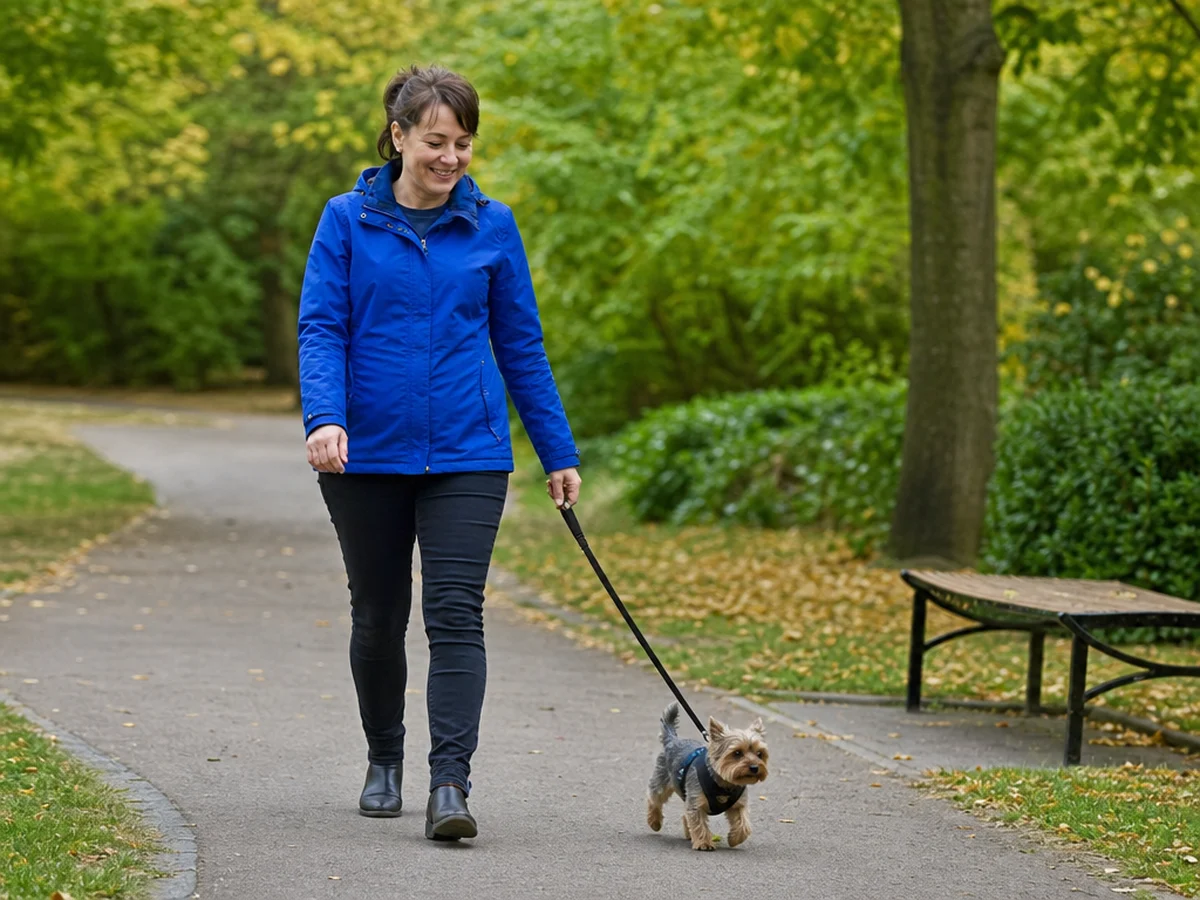
Keep enough leash to walk naturally without allowing a sudden sprint into the end. Do not wrap it around fingers or depend on a last-second grab. Choose both hands for handling when approaching a known critter area, and put phones or drinks away.
The site's leash training guide teaches equipment comfort and walking connection. Build those skills away from wildlife first. Chasing practice should not be the first place a dog learns what harness pressure or a handler turn means.
- Scan ahead for birds, squirrels, cats, and places where animals disappear behind shrubs or parked vehicles.
- Cross before the dog reaches the trigger distance rather than waiting to see whether they can cope today.
- Keep yards secure and supervise outdoor time, especially near low fencing, gaps, or dense cover.
- Use a prepared retreat path so moving away does not send the pair toward traffic or another animal.
Management is part of the training record. Every prevented chase protects the value of checking in and following the handler. Every successful pursuit makes the next moving animal more likely to trigger the same sequence.
Turning Away From Chasing Critters
Install the turn in a quiet place before using it near wildlife. Say a short cue, rotate your body, and move several steps in the new direction. Mark the dog for turning with you and deliver the reward while both of you continue moving.
Keep the motion smooth. Pulling backward while facing the trigger can create opposition and leaves the dog staring at the animal. A curved retreat gives the dog a new route and makes following easier.
Build the Turn With Ordinary Distractions
Practice around a dropped toy, a stationary person, or a mild food smell while plenty of space remains. Look for easy orientation to the distraction followed by travel with you on one cue. If you need to repeat the word, the setup is too difficult or the cue needs more quiet practice.
Reward after several moving steps, not directly beside the distraction. This places value on the retreat path. Sometimes continue into a sniff break or another enjoyable activity so the turn does not always predict the end of the walk.
The Turn Is an Exit
When an animal appears too close, leave. Do not stop at the edge of the leash to test name response, sit, and recall in sequence. The turn is an emergency route that reduces pressure. Training resumes only after the dog's body softens and attention can move normally again.
PDSA's loose-leash guidance explains that pulling may grow from arousal, a desire to investigate, or a history of reaching things by pulling. A moving retreat followed by reward gives the dog a different behavior that still leads somewhere.
Rewards for Yorkshire Terrier Chasing Disengagement
Mark the first voluntary look away from a critter. The reward arrives because the dog changed direction, not because the handler dragged them out of view. Begin far enough away for the dog to register movement and still offer a small choice. If it does not happen, increase space rather than waiting until the body stiffens.
Food may work well on one outing and poorly on another. Test value before entering the difficult stretch. Some dogs prefer several small pieces delivered while retreating. Others work for a brief toy interaction after the animal is fully out of sight.
Reward-based trainers can capture an offered look back, shape a stronger turn, and then add a cue. The AVSAB training statement describes these humane teaching tools and the use of valued reinforcers. The order matters here: notice a choice the dog can make, pay it, and only then ask for more.
Add the Handler Check-In
Reward ordinary check-ins throughout the walk, not only when wildlife appears. A dog who regularly looks toward the handler has a familiar path out of fixation. Keep some rewards for those unprompted moments.
Do not turn every glance into a command. Sometimes mark, reward, and release the dog to continue sniffing. This prevents attention from meaning that all exploration immediately ends.
Better Yorkshire Terrier Games After Chasing
Redirection works best when the replacement shares something with the original reward. A toy moving away can satisfy pursuit. A hidden object can use searching and problem solving. The game remains controlled by cues, boundaries, and a clear finish.
The AKC describes the Yorkshire Terrier's history as a ratter and recommends moderate activity with occasional short bursts such as backyard ball chasing. The breed overview supports brief active outlets rather than assuming a toy-size dog wants only lap time.
Run a Toy Chase With Rules
Begin in a secure, clear area. Ask for a short pause, release the dog to chase a toy dragged along the ground, then stop the motion and trade for food. Restarting the game can be part of the reward for releasing the toy.
Keep turns broad and low. Avoid sharp leaps, slippery floors, and collisions with furniture. End while the dog can still release and recover instead of waiting for frantic grabbing.
Build a Search Instead of a Sprint
Let the dog see a familiar toy placed behind one nearby box, then cue the search after you return to the start point. Later, use simple cardboard-box searches or a short trail across the yard. Searching stretches the activity without requiring repeated impact.
Finish with the toy in the handler's possession and guide the dog into an ordinary calm activity. The game should have a clear boundary so searching does not turn into dismantling the room.
Rehearse Chasing Critters in Three Places
A response learned in the yard may not appear automatically on a sidewalk. Treat each place as its own version. Lower difficulty when the environment changes and restore familiar rewards and distance.
- At the window: Reduce the view, mark a turn from distant movement, and finish on a mat away from the glass.
- On the sidewalk: Scan ahead, cross early, and use the moving turn before the leash becomes tight.
- In the yard: Supervise near cover, reward check-ins, and start a permitted toy chase before wildlife becomes the only available game.
Use the first clean response as the day's benchmark. If later responses slow, fatigue or accumulated excitement may be changing the picture. Increase distance and choose an ordinary sniffing route instead of demanding the morning's best performance again.
Keep notes on the animal, distance, body picture, first response, and recovery. The goal is not to approach closer on every outing. It is to create more situations where the dog notices movement and can still make a safe choice.
Regular vet visits support active training. Sudden changes in vision, hearing, movement, or comfort can alter reactions and recovery. Discuss a sharp behavior change with the veterinarian before treating it as a simple training setback.
Next Question About Chasing Critters
After several outings, ask which part still breaks first. If equipment and turns are difficult, return to puppy training away from animals. If barking carries on after the critter leaves, the site's guide to Yorkshire Terrier barking can separate alerting from sustained excitement. If the dog cannot recover or safety is uncertain, choose a qualified reward-based professional and a quieter route before increasing access.
 BehaviorHelping a Yorkshire Terrier Stay Calm When Home Alone
 BehaviorWhy Your Yorkie Digs and How to Redirect It
 BehaviorWhen Your Yorkshire Terrier Growls Over a Toy: Happy Trades