 Yorkie
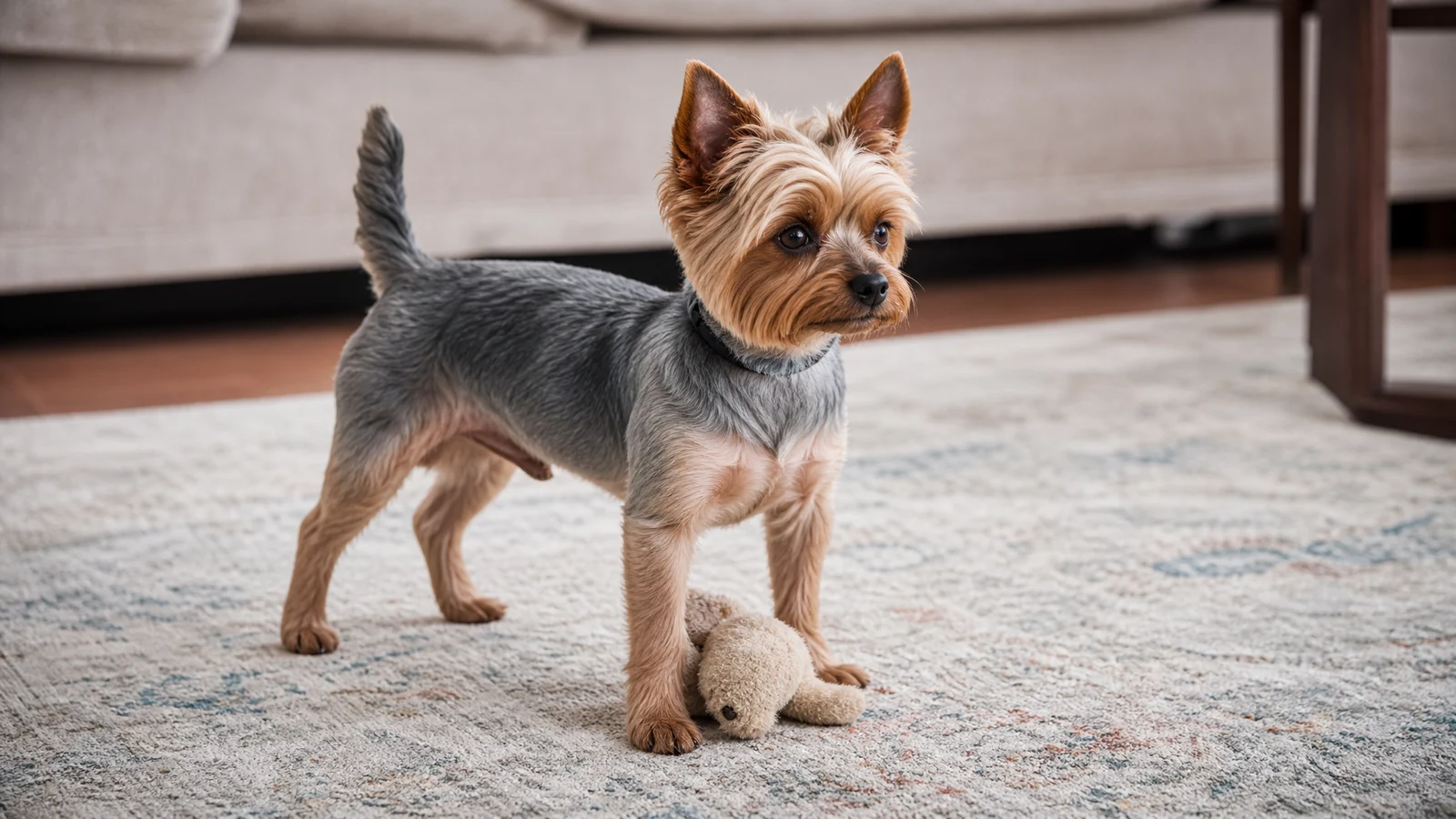
A growl over a toy is information that the Yorkshire Terrier is uncomfortable with an approach. Treating that warning as disobedience can make the next warning shorter or harder to read. The safer plan creates generous distance, prevents grabbing contests, and teaches that a person's approach predicts a worthwhile exchange.
This guide covers observation, matched item pairs, a rewarded drop, returned toys, and gradual human approaches. We use the trade laboratory to keep every change visible and reversible. It teaches a drop away from conflict, returns many toys after the exchange, and only then adds a person's approach. Stolen or dangerous objects use a separate safety procedure. The final section is a two-week experiment with clear stop rules.
Read Yorkshire Terrier Resource Guarding Toys
Begin by watching from a respectful distance. A dog may freeze, lower the head over an item, turn the body away, show a hard stare, move off with the toy, growl, or snap. Do not move closer to test how serious the warning is.
The ASPCA's resource guarding signs include body stiffening, gulping, freezing, growling, staring, snapping, and attempts to drive a person away. Toy context differs from a food bowl, but the early body signals still help a household act before escalation.
- Move children and other animals out of the area without asking them to take part in training.
- Stop chasing the dog, reaching over them, cornering them, or pulling an item from the mouth.
- Use gates and closed doors to prevent access to items that repeatedly create conflict.
- Record the object, location, people present, approach distance, and earliest body change.
A growl is a request for space. Calmly provide it and redesign the situation. The training goal is not to suppress communication. It is to change what the approach means so the dog has less reason to defend the item.
Prepare Yorkshire Terrier Toy Trade Pairs
We begin without reaching because a clean exchange lets the dog control their own movement. The handler's job is to arrange choices, observe the earliest signal, and stop before the setup becomes a contest.
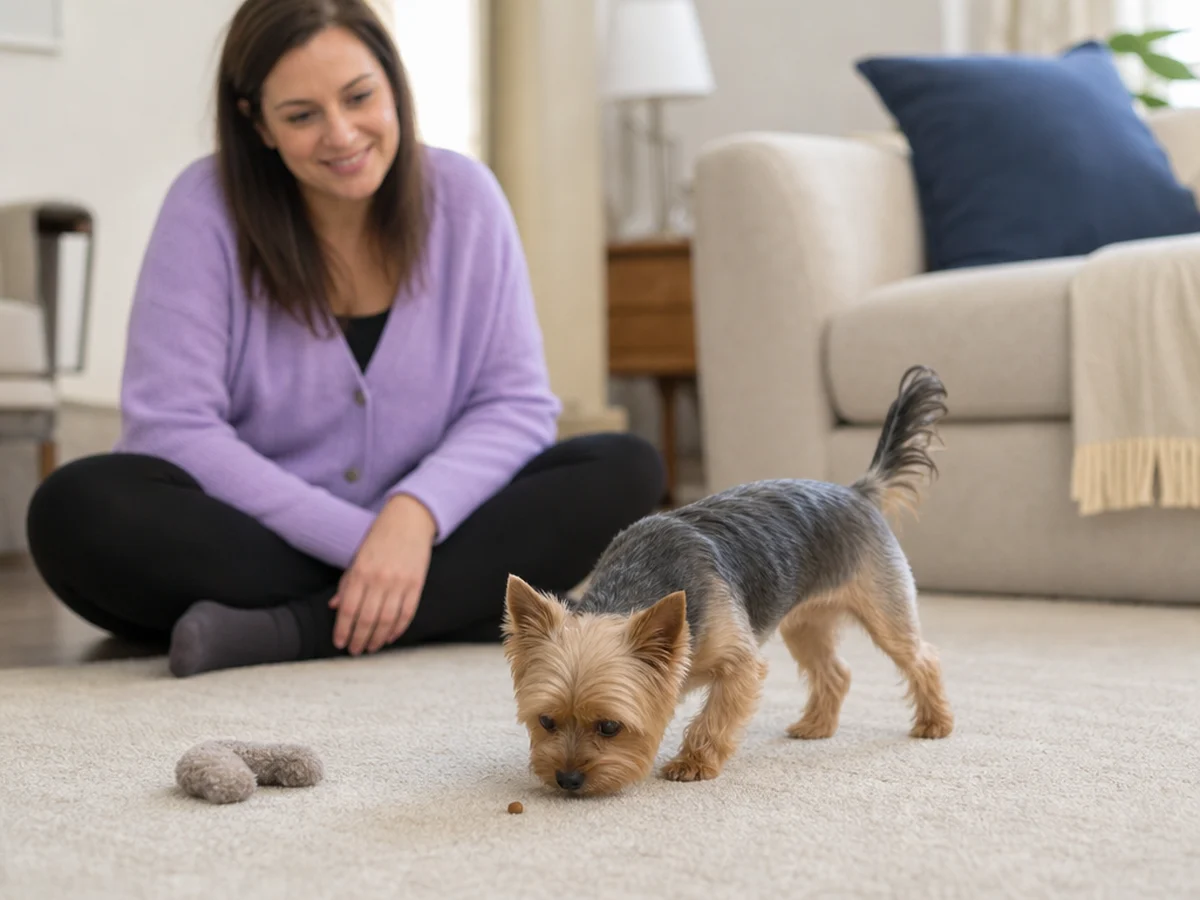
Set up the room before the dog receives an item. Clear narrow corners, remove unrelated valuables, and give the handler an open retreat route. A spacious setup prevents accidental crowding from becoming part of the exchange.
Choose two low-value toys that the dog enjoys but does not currently defend. They should be similar enough that switching does not feel like losing the only valuable object. Prepare small food rewards as backup, but begin with generous distance and easy items.
Keep highly guarded possessions out of the lesson. A favorite chew, stolen object, or rare toy is not appropriate for the first test. Fluency grows on safe exchanges before the household approaches harder material.
| First item | Trade offered | What the result tells you |
|---|---|---|
| Low-value toy | Matching toy in motion | Whether play can shift without pressure |
| Low-value toy | Food placed away from the item | Whether the dog can move off comfortably |
| Familiar toy | Better toy, then original returned | Whether giving up predicts continued access |
| Any item with stiffening | No closer approach | Current setup is too difficult for practice |
Run only one comparison at a time. If the dog stiffens when the second item appears, increase distance or choose less valuable objects. The laboratory is useful only while the dog remains able to move, eat, and communicate without escalation.
Yorkshire Terrier Resource Guarding Toy Drop
We teach the release first as a game between available choices. Nobody advances toward the dog, and nobody needs the first object back. That makes the dog's movement, not human pressure, the event that produces payment.
Practice during ordinary toy play when nobody needs to take anything. Present the second toy at a distance and move it gently along the floor. When the dog releases the first item to investigate, mark the release and let them take the new toy.
Add the word for dropping only after the release is predictable. Say it once just before presenting the trade. Avoid repeating the cue while staring at the dog's mouth. The cue should predict an available exchange, not pressure.
Start With Movement Between Equals
Two similar toys keep the first lesson playful. Move one away from the dog rather than pushing it toward their face. When they switch, pause before picking up the abandoned item so human hands do not race the dog back to it.
Restart with the opposite toy. A few smooth switches are enough. End while the dog still changes items willingly and can disengage from the game.
Add Food Without Reaching
Place or toss food a comfortable distance from the toy. When the dog moves to eat, pick up the object only if their body stays loose and the distance is safe. Often return the toy after the reward.
Humane World recommends pairing give and leave-it skills with treats and offering a trade when an item must be taken. Its resource guarding guide supports making exchange the household habit instead of relying on removal.
Return Toys After a Yorkshire Terrier Trade
Keep an item inventory for practice. Mark each toy as easy, uncertain, or currently protected from access. Move an item into training only after the easier category produces relaxed exchanges across several days.
Returning the original object changes the meaning of release. The dog learns that dropping does not always end access. After the trade, wait for relaxed attention, present the first toy again, and use a release cue.
Some exchanges will still end the activity. Make those endings clear and calm. Trade, reward, put the item away while the dog is occupied elsewhere, and transition into another worthwhile option. Do not sneak toward the object while the dog watches.
The breed's spirited intelligence appears in the UKC standard. A Yorkie can quickly learn whether people approaching toys predict loss or opportunity. Repeated return-of-property trials make the more cooperative prediction credible.
Measure the Return Test
Look for a soft body when the toy comes back, willingness to play near the handler, and easier releases across sessions. Speed alone is not the target. A fast drop followed by frantic grabbing suggests the dog still expects scarcity.
Change only one part when increasing difficulty. Use a slightly better toy while keeping distance, location, and handler familiar. If the body picture changes, return to the earlier pair.
Add Approach to Resource Guarding Toys
Approach work begins only after the drop-and-return game remains comfortable. We keep the same room, handler, and item while changing distance, which makes a difficult response easier to interpret.
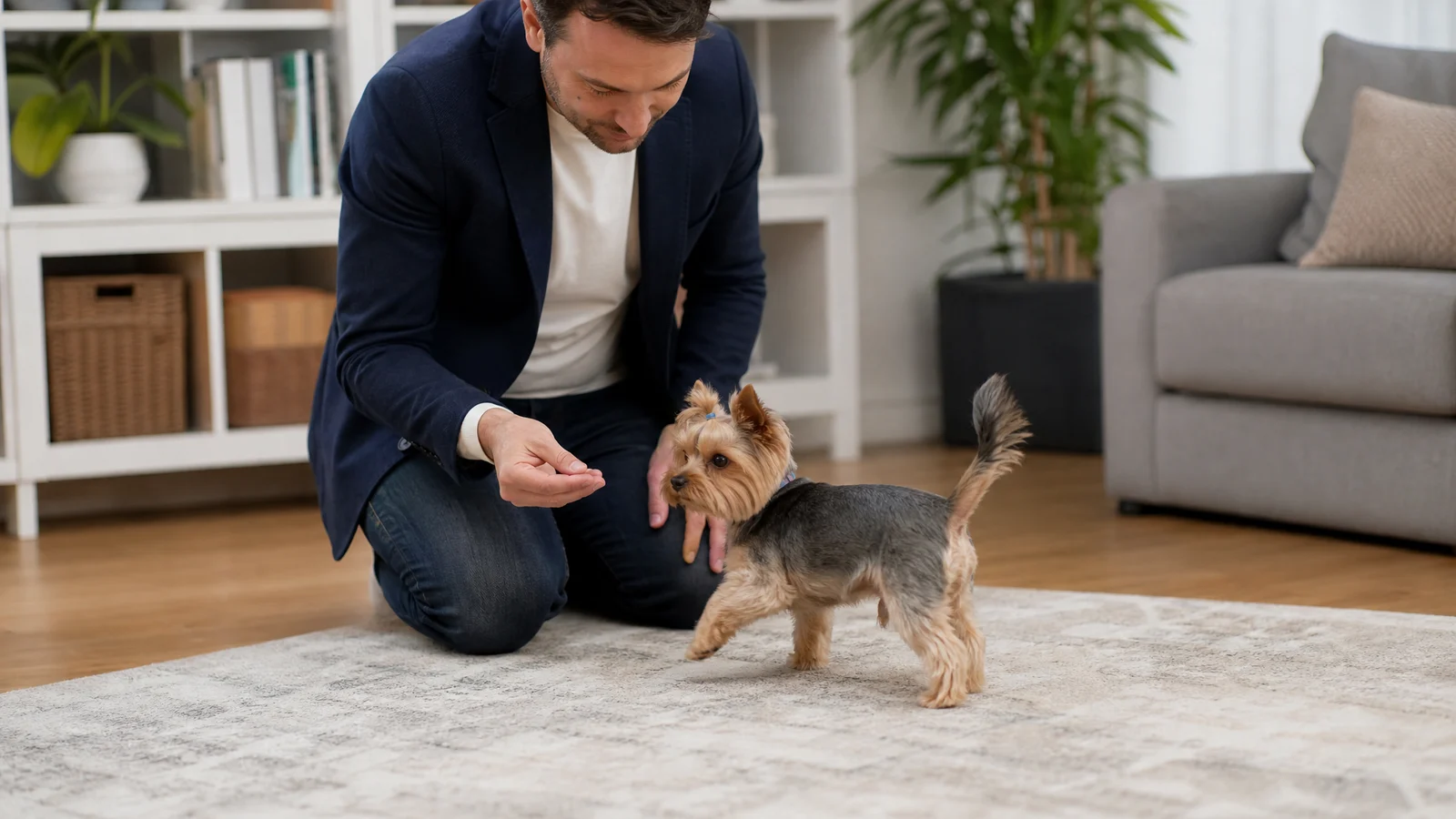
Approach is a separate lesson. Begin beyond the distance that caused any concern. Move one pace closer, send a reward behind the dog, and return to the starting point without touching the toy. The person arrives, value appears, and pressure leaves.
Repeat until the dog looks relaxed when the person begins the step. Then start a little closer or take another step, but not both. Eventually the handler can arrive beside the dog, offer a trade, and move away with or without the item according to the planned repetition.
Change People Carefully
A behavior learned with one adult may not transfer to another. New participants begin at the original generous distance and follow the same approach, reward, and retreat pattern. Children do not serve as practice helpers.
If another dog is part of the conflict, separate the dogs for toys and chews. Do not run approach practice with both present. A qualified reward-based professional can assess multi-dog resource guarding and design safer management.
Stolen Objects in Resource Guarding Toys
Prevention matters because stolen objects may be more exciting than training toys. Keep laundry, paper, food packaging, pills, cords, and small swallowable items out of reach. Close rooms and use containers the dog cannot open.
If the object is not dangerous, avoid chasing. Present a high-value trade at a safe distance and guide the dog away before collecting the item. If the object could injure or poison the dog, contact a veterinarian or emergency service for immediate guidance rather than experimenting with a training sequence.
Regular vet visits also help when guarding changes suddenly or appears alongside pain, dental trouble, appetite changes, or unusual irritability. Training should not ask a dog to tolerate an approach that may hurt.
Growling and barking serve different jobs, but both can increase when a person ignores distance. The Yorkshire Terrier barking guide helps households work on alert noise separately from possession exchanges.
The site's behavior guide for a bold Yorkie offers broader impulse-control outlets. Keep this trade work narrower. Its evidence is the dog's response to items, approaches, returns, and safe endings.
Run Two Weeks of Resource Guarding Toy Trades
Practice at a time when the dog is rested and the household is quiet. Hunger, another animal nearby, or excited visitors can change the value of an item and muddy the result. Keep those conditions out of the first comparisons.
Choose a consistent session marker, such as placing one mat on the floor, so practice has a recognizable beginning and end. Remove the marker after the planned exchange and return to ordinary toy management.
During the first week, use low-value matched toys in one quiet place. Practice switching, mark releases, return the original item often, and stop at the first stiffness or retreat. Keep children and other animals outside the training area.
- Record the item pair and the distance at which the dog remained loose.
- Note whether release happened for another toy, food, or both.
- Track whether returning the first toy reduced urgency on the next exchange.
- End each lesson with a planned transition rather than an unannounced removal.
During the second week, change one item or add one familiar adult at the original distance. Do not advance simply because the calendar changed. If growling, freezing, snapping, or escape with the object continues, restore management and bring the log to a qualified professional.
A successful trade plan makes human movement more predictable and protects the dog's warnings. The best result is not a dog who silently gives up everything. It is a Yorkshire Terrier who can release safe practice items, accept their return, and remain comfortable while the household manages valuable objects responsibly.
 BehaviorFour Paws Down: Teaching Yorkshire Terriers to Greet Politely
 Puppy trainingYour 8 Week Old Yorkie Puppy: The First Training Week
 Training basicsAre Yorkies Smart? What Intelligence Means for Training