 Yorkie
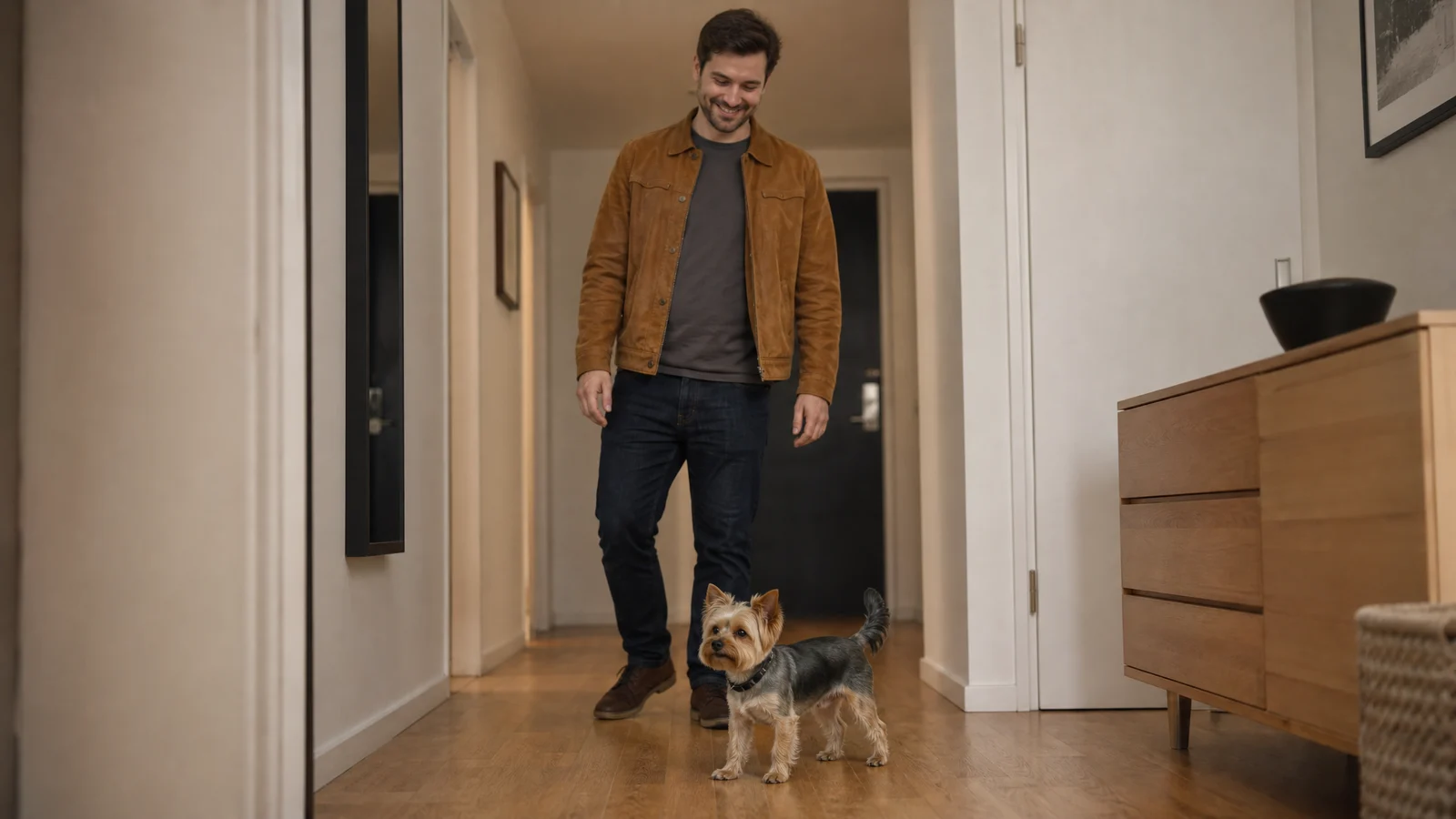
A Yorkshire Terrier may greet a familiar person with four quiet paws, then bounce against a visitor as soon as the door opens. The difference is not that the dog forgot the rule. The arrival scene contains movement, voices, eye contact, and attention that the household version did not include.
Another Yorkie may stay grounded but bark and circle instead. Both dogs need a rehearsed route through the doorway, but the reward and starting distance may differ. We separate the visitor's movement from the dog's job so both can be adjusted. This guide covers a staged doorway, four clear roles, approach-and-retreat rehearsal, several greeting options, and a score for ordinary arrivals.
Attention is the central payment. People move closer, speak, touch, or toss a reward only while the dog remains grounded. Jumping pauses that access without turning the doorway into a conflict.
Yorkshire Terrier Jumping-Up Stage
Decide where the dog waits before anyone knocks. A predictable starting point keeps the first seconds from becoming a race through the hallway and gives the handler time to secure equipment before the helper enters.
Use the dog's easiest familiar helper for the first rehearsal. A person who can follow instructions and move neutrally creates cleaner feedback than an enthusiastic guest who reaches, talks, and bends all at once.
Begin away from a real arrival. Choose a quiet room with secure footing and enough space for a helper to approach and retreat. Use a gate or leash so jumping cannot reach the person. The equipment prevents practice while the dog learns what opens access.
Place a mat to the side of the travel line rather than directly in the doorway. Keep tiny rewards on a nearby shelf so the handler can deliver them low without leaning across the dog. The helper should know the whole script before entering.
The Yorkshire Terrier Club of America describes a compact toy-size terrier no heavier than the standard's limit. Its breed club overview is a reminder that even easy-to-dismiss jumping happens in a small body with real joints and balance. Ground-level rewards reduce extra reaching and landing.
- Handler: Manages the leash or gate, marks grounded feet, and guides the dog to the planned reward point.
- Helper: Approaches only while paws stay down, pauses when feet rise, and retreats without talking or touching.
- Door lead: Handles knocks, entry, bags, and household traffic so the training pair can keep a clear lane.
- Dog: Chooses among standing, sitting, and traveling beside the handler while grounded feet keep social access open.
These are four explicit roles, not a table. One person may fill more than one human role later, but the early rehearsal works best when the helper is not also wrestling with the door and carrying groceries.
Jumping-Up Attention Rule
Teach the rule with the helper several steps away. The helper approaches while paws remain on the floor. The handler marks grounded behavior and delivers food low. If the dog jumps, the helper stops and turns slightly away. As soon as the dog lands and can reorient, the next opportunity begins.
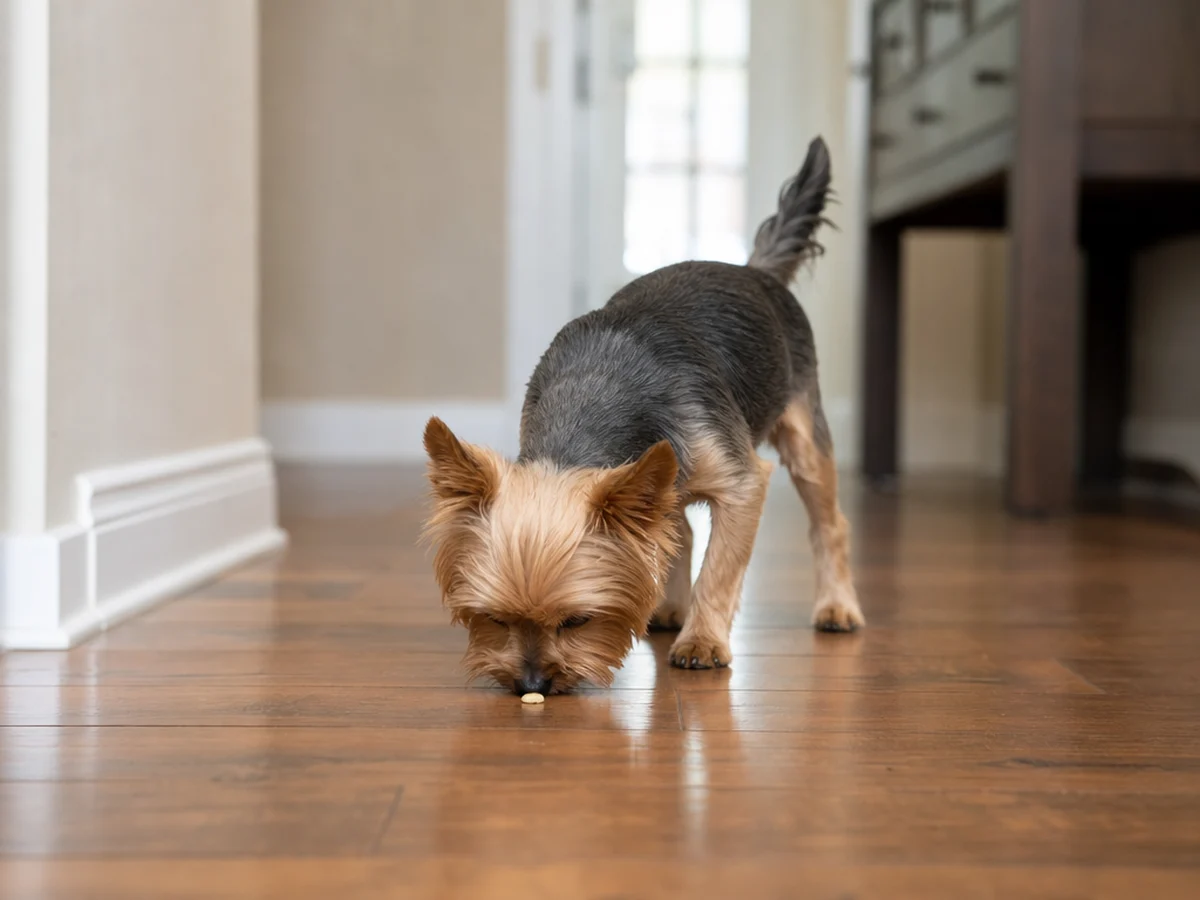
Change the helper's distance before changing their energy. A quiet approach from farther away may be easier than a cheerful approach at the same point. Keep the voice, eye contact, and hand movement subdued while the dog learns the basic access rule.
Do not ask for a long sit at first. A standing Yorkie with four paws down is already meeting the main criterion. Requiring stillness, eye contact, and duration at the same time can make the lesson harder than the greeting requires.
Pay Before Excitement Peaks
Mark early while the helper is still far enough away. Waiting until the person reaches the dog often turns the reward into recovery after jumping. Early payment shows which choice is keeping the approach alive.
Best Friends recommends rewarding polite greetings consistently while the dog is learning. Its jumping guidance explains that food can later become less frequent while still appearing often enough to maintain the behavior.
Yorkshire Terrier Jumping-Up Rehearsal
Mark a waiting line for the helper on the floor. That line makes each approach repeatable and stops the person from drifting closer while the handler is rewarding. Later, move the line in small increments.
The rehearsal has a beginning, a middle, and a clean reset. Start with the dog behind a barrier or at a generous distance. The door lead makes one mild arrival sound. The helper enters, waits, and follows the handler's signal before approaching.
Run the first passes without touch. The helper moves closer, the handler rewards grounded feet, and the helper retreats. This approach and retreat pattern turns the visitor's movement into feedback the dog can understand.
- Begin with the helper visible and still while the dog can eat and orient to the handler.
- Let the helper take one step closer during grounded behavior, then retreat before excitement rises.
- Add another step only after the dog can recover and remain eligible for the next approach.
- Allow one brief greeting, then call the dog back to the reward point and reset the scene.
- End with the helper seated or gone so the dog practices returning to ordinary household behavior.
Between repetitions, give the dog a real reset. Let them sniff for scattered food, drink, or rest behind the barrier while the helper remains still. A reset is different from holding the dog in position and immediately starting again.
Use only a few greetings in one lesson. Repeated arrivals can make the helper more exciting rather than less. Finish after a clear success and let the dog rest.
Add the Door in Pieces
Practice a knock without entry, then an opening door without a person, then a helper standing in the doorway. Combine those pieces only while the dog can stay grounded. A real arrival stacks them together, so separate fluency matters.
The site's guide to Yorkshire Terrier barking can help when sound, not social access, drives the first reaction. Work on the sound at a lower level before expecting the jumping rehearsal to carry both problems.
Coach the Helper's Hands
Hands should remain high and quiet while the helper approaches. Reaching down can pull the dog upward. When the dog stays grounded, the helper may toss food low, offer a brief chest touch, or step away according to the planned greeting.
If petting causes jumping, shorten contact. Touch briefly, withdraw the hand while paws remain down, and reward. The dog learns that calm contact comes in small repeatable pieces.
Greeting Options for Jumping Up
Build a greeting reward that suits the dog. Some Yorkies work best for food placed on the floor, while others value the helper stepping closer or offering a toy. Use one payment at first so the effect of grounded feet stays clear.
Household members should agree on attention outside formal practice. If family members invite jumping at other times, the doorway rule becomes difficult to predict. Use ground-level play and lap access by invitation instead.
Four paws down is the common rule, but the exact greeting can vary by person and setting. Choose one option before the helper arrives so everyone rewards the same behavior.
| Greeting option | Best use | What keeps access open |
|---|---|---|
| Stand with four paws down | Brief familiar greetings | Loose body and grounded feet |
| Sit beside the handler | Dogs who already sit comfortably near people | Seat stays down while person approaches |
| Go to the side mat | Busy doorways or guests carrying items | Dog remains on station until released |
| Walk past and greet later | Narrow spaces or high excitement | Dog travels with handler before social contact |
Use the easiest option for the current visitor. A quiet adult may support a standing greeting, while children, mobility equipment, or a crowded entry may call for a gate and later contact. Management is a valid choice when rehearsal conditions are not available.
The UKC calls the breed spirited and intelligent in its Yorkshire Terrier standard. Those traits can produce quick learning, but they do not guarantee the same greeting will transfer to every doorway or person. Rehearse each new picture at lower difficulty.
Yorkshire Terrier Jumping-Up Progress Score
Film one planned rehearsal when all participants agree. Video can reveal whether the helper bends forward, the handler rewards late, or the leash becomes tight before the jump. Change the human movement first when the script is inconsistent.
Count ordinary greetings, not only perfect training trials. Useful change includes feet returning to the floor sooner, fewer helper retreats, easier movement to the mat, and faster recovery after contact. A dog who still jumps once but can immediately follow the route is showing more control than one who remains airborne and disconnected.
Keep the helper type, arrival sound, and room in the log. If one visitor creates difficulty, return to a greater distance and simpler contact with that person. Do not erase progress from easier scenes by making every guest the hardest test.
Regular vet visits support safe practice. Sudden reluctance to sit, unusual landing, sensitivity to touch, or a new behavior change should be discussed with the veterinarian. Stop the movement pattern when the dog appears uncomfortable.
Handle Greetings Outside the Home
Practice with clothing, bags, hats, and different walking speeds only after a plain helper approach is easy. Add one visual detail at a time so a setback identifies the picture that needs more space.
On walks, step to the side and ask the person to wait. Reward grounded feet while they remain at a distance. If the dog cannot eat or keeps lunging upward, decline the greeting and move on. Social access is optional.
The broader Yorkie behavior guide explains how bold terrier energy can be redirected into clear routines. The doorway rehearsal is one such routine, but it should never require every stranger to participate.
Next Yorkshire Terrier Greeting
For the next practice, assign the roles aloud, place the dog at a workable distance, and ask the helper for one slow approach. Mark grounded feet before the visitor reaches the dog, allow one brief greeting if the body remains loose, then reset to ordinary household activity. The score is not whether a Yorkie sat perfectly. It is whether four paws kept the person available and whether the whole scene could finish calmly.
 Puppy trainingYour 8 Week Old Yorkie Puppy: The First Training Week
 Training basicsAre Yorkies Smart? What Intelligence Means for Training
 Exercise and jobsCan a Yorkie Be a Service Dog?