 Yorkie

A first-command plan works better as a deck of separate skill cards than as one long obedience routine, and each card has a purpose, a setup, a reward point, and a way to make the task easier. You can draw the card your Yorkie needs in that particular moment instead of drilling the whole stack by habit at home.
The nine-card deck begins with communication and covers name response, hand targeting, sit, down, stay, recall, leave it, and release, and we use treats and praise on every card while short sessions protect enthusiasm. Read on to teach one clear picture first, then move it gradually without assuming a familiar word travels automatically.
Yorkshire Terrier Training Card One Builds a Marker
A marker identifies the exact action that earned a reward. Choose a brief word, say it, pause, and then deliver food. Use a calm rhythm until your dog anticipates payment after the sound. The marker is information, so keep it separate from the name and recall cues.
Keep your hands still until after the marker. Reaching toward the treat pouch first can become the real signal and make the spoken word irrelevant. Mark, then move. That order makes later cards easier to teach with clean timing.
Test the marker by waiting until your dog is calmly near you, saying the word, and watching for a small orientation before reaching for food, and if nothing changes, build the association for several more brief rounds. Do not use it on difficult behavior until the sequence is clear.
Yorkshire Terrier Training Card Two Builds Name Response
Say your Yorkie’s name once in a quiet room, and when they turn toward you, mark and reward. If no turn happens, make the setting easier or use a soft neutral sound, then reward the glance without sending the name through the room several times.
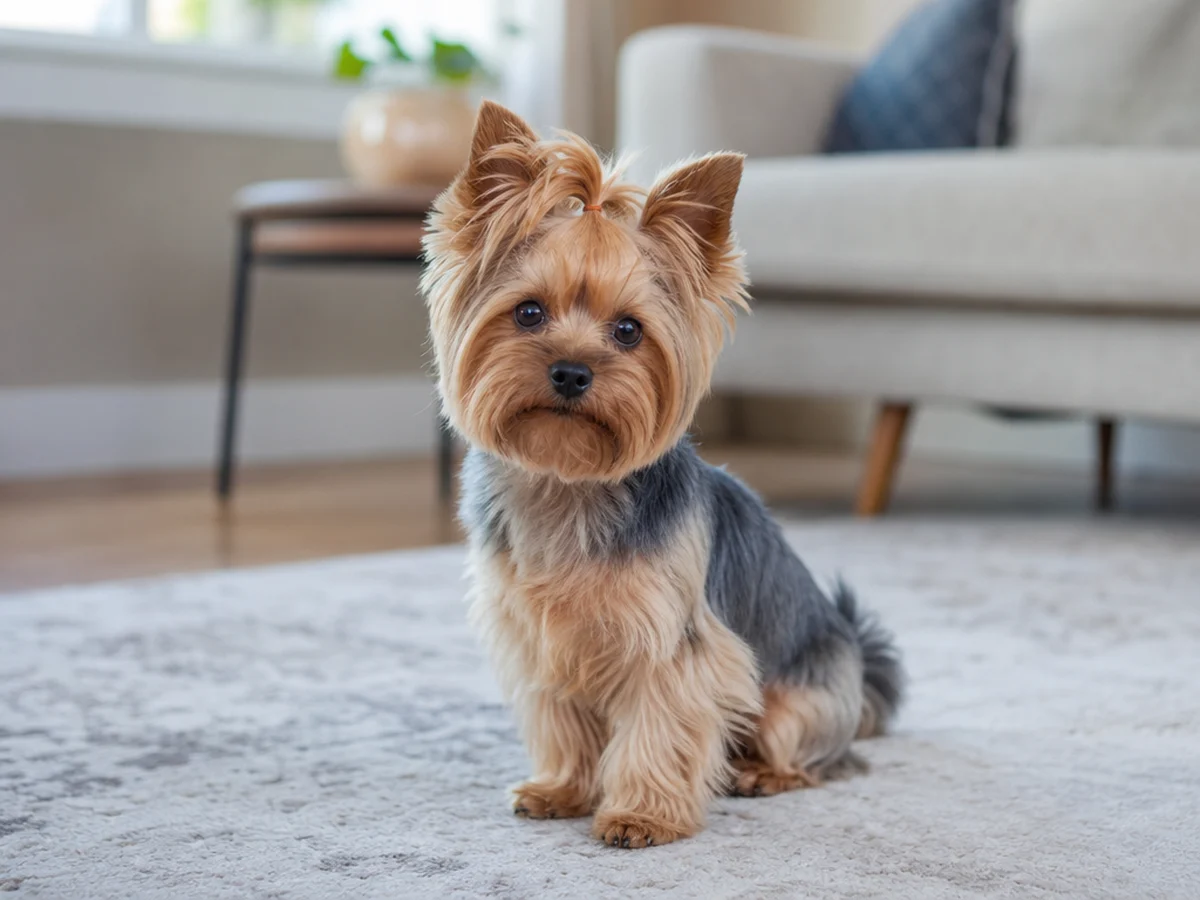
The name means “check in,” not “stop everything forever.” Release your dog back to safe exploration after some rewards, and returning access to the environment keeps attention from predicting that every enjoyable activity is about to end.
Deal This Card in New Rooms
Move the game to another quiet room and lower expectations, and reward a small head turn before asking for eye contact or a longer pause. A new place changes the picture, so generous payment is teaching, not backtracking.
Use the name sparingly, and if you say it while your dog is too distracted to respond, the sound becomes background noise. Add distance from the distraction, wait for a workable moment, and deal the card when success is likely.
Training Card Three Builds a Hand Target
Present an open palm a short distance from your dog’s nose. Mark any voluntary movement toward it, then reward with the other hand. Gradually wait for a nose touch. Do not push your palm into their face because the useful skill is choosing to move toward the target.
A hand target can guide position without handling the body, and use it to turn together, step onto a mat, or reconnect during a walk. Keep it distinct from recall by rewarding the touch itself and releasing after the action is complete.
Change the palm’s height and angle in small steps, and a target near the floor can support movement onto a mat, while one at nose height can guide a turn. Avoid stretching the dog upward or holding the hand where the movement looks uncomfortable.
Yorkshire Terrier Training Card Four Builds Sit
Capture a sit when it occurs naturally or lure slowly upward and back only if your dog remains comfortable, and mark when the rear reaches the floor, then feed low enough to prevent an immediate jump. After several successful actions, say the cue just before the movement begins.
Never press the hips down. If sitting appears awkward, slow, or avoided, do not insist. Use a stand or another comfortable position and consult your veterinarian when a familiar movement changes. A cue does not outrank physical comfort.
Play the Sit Card in Daily Life
Ask for a comfortable sit before opening a door, placing a meal, or greeting someone only after the skill is fluent. Reward with the life event as well as praise or food. This gives the card practical value without demanding it in every interaction.
Change one feature at a time. Practice beside a different chair before trying the doorway, and reduce duration when the setting becomes harder. The dog should experience a recognizable action, not a surprise exam with every difficulty added together.
Training Card Five Builds Down
Work on a secure, comfortable surface. Reward looking toward the floor, lowering the head, bending the elbows, and finally resting the body. Some dogs prefer capturing the action on a mat rather than following a lure, so choose the path that keeps movement voluntary.
Feed between the paws to support the position, then release before your dog stands on their own. Add the verbal cue after the action is predictable. Sit and down are separate cards, not a required sequence, and either can be practiced from a stand.
Practice the position on more than one comfortable surface once it is easy. Carpet, a mat, and a secure outdoor blanket can feel different. Reward the first attempt generously in each new picture and return to an easier surface if your dog hesitates.
Yorkshire Terrier Training Card Six Builds Stay
Stay begins with a tiny pause, not distance. Ask for a comfortable position, wait a moment, mark, reward in place, and release. Build duration, distance, and distraction separately because increasing all three at once hides which part needs help.
Use the card sequence:
- cue the position and pause briefly
- mark and reward where your dog remains
- give a consistent release word
- change only one difficulty on the next turn
Return to your dog to reward instead of calling them out of every stay. That pattern keeps remaining in place valuable. If they move early, reset without scolding and shorten the next pause so correct information arrives quickly.
Use a visible starting spot such as a mat while the concept is new. The boundary helps explain where remaining occurs. Fade reliance on the mat only after the release word and brief duration are fluent, and keep the dog within comfortable reach.
Protect the Release Card
A release word ends the stay and grants movement. Say it once, encourage a step, and reward the change of position. Avoid using the same word casually throughout the day if you need it to carry a precise meaning during training.
The release also protects consent. It tells your dog when the exercise is finished and prevents an unclear wait for permission. In ordinary life, you can release to sniff, greet, eat, or simply move, making freedom part of the reward system.
Training Card Seven Builds Come
Begin only a step or two away in a quiet, enclosed area. Say the recall cue once, move back invitingly, and reward generously when your dog reaches you. Briefly touch the harness or collar, reward again, and release so arrival does not always end fun.
Never punish a dog who arrives, even after delay. Do not rely on recall near traffic or in unsecured places. Use a leash or secure enclosure as normal safety management while the behavior grows, and preserve the cue for repetitions you can support.
For early foundations, Yorkie puppy training places recall beside socialization and household routines. Practice easy returns in many safe contexts rather than rushing toward the largest distraction.
Recruit a household member for restrained-free practice only if the puppy remains relaxed and the helper simply holds a safe barrier or waits nearby. Better still, take turns calling across a small enclosed room. Each person rewards arrival and releases the dog toward the next easy invitation.
Yorkshire Terrier Training Card Eight Builds Leave It
Place low-value food in a closed hand. Wait without saying anything, and mark the moment your dog backs away or looks elsewhere. Reward from the opposite hand. The inaccessible item stays unavailable, which teaches disengagement rather than a contest over grabbing it first.
Add the cue before presenting the closed hand only after the choice is predictable. Progress to a covered item on the floor, then greater distance, while using a leash for safety. Do not test with hazards. Management should prevent access when an error would matter.
Keep the Leave-It Card Rewarding
The reward must compete with what your dog leaves. Use better food, a toy, or access to another safe activity. If the dog remains fixed on the item, increase distance or lower its value instead of repeating the cue.
Reward voluntary disengagement in daily life. A glance away from dropped food, a turn from a doorway, or a pause near a distraction can earn payment before you formally deal the card. Captured choices make the cue easier to understand later.
The card is not a substitute for clearing hazards. Store household chemicals, food, cords, and small objects beyond reach. Training supports management, while a prepared environment prevents one mistake from carrying consequences that no practice session should test.
Yorkshire Terrier Training Card Nine Shuffles the Deck
Do not run all eight behaviors in the same order. Predictable chains can make the preceding action, not your cue, control the response. Mix one new card with familiar ones, change location gradually, and finish with an easy success while your dog remains engaged.
RSPCA training advice supports short, regular sessions. Let accuracy and willingness determine when to stop. A brief lesson that ends well is more useful than completing a planned count after attention has gone.
The Best Friends distance principle is useful when another dog or moving event changes attention. Begin at a range where noticing remains calm, then reward and leave. The goal here is a manageable setting, not direct interaction.
- Choose one teaching card for the session.
- Add one familiar card as a warm-up.
- Practice in one manageable setting.
- Record the reward and the next small change.
The AKC profile describes Yorkies as intelligent and eager to please and favors praise and treats. Honor that guidance by keeping every card clear, reinforced, and physically comfortable.
Maintain regular veterinary visits, and pause a position card if movement becomes hesitant, uneven, or suddenly different. Training notes can describe when the change appears, but a veterinarian should assess health concerns. Substitute a comfortable skill while you wait for guidance.
For help tailoring rewards and difficulty, the Yorkie personality profile turns preferences into practical setup choices. The deck should fit the learner rather than require the learner to fit a fixed routine.
Your deck is ready when each cue produces a willing response in several fair settings, not when the dog performs a memorized routine. Draw the card daily life requires, pay the correct choice, and return difficult cards to an easier version whenever the picture changes.
 Training basicsHarness and Leash Training for Your Yorkie, Step by Step
 Training basicsTrain the Dog You Have: Yorkie Personality and Your Training Plan
 PuppyYour 8 Week Old Yorkie Puppy: The First Training Week