 Yorkie
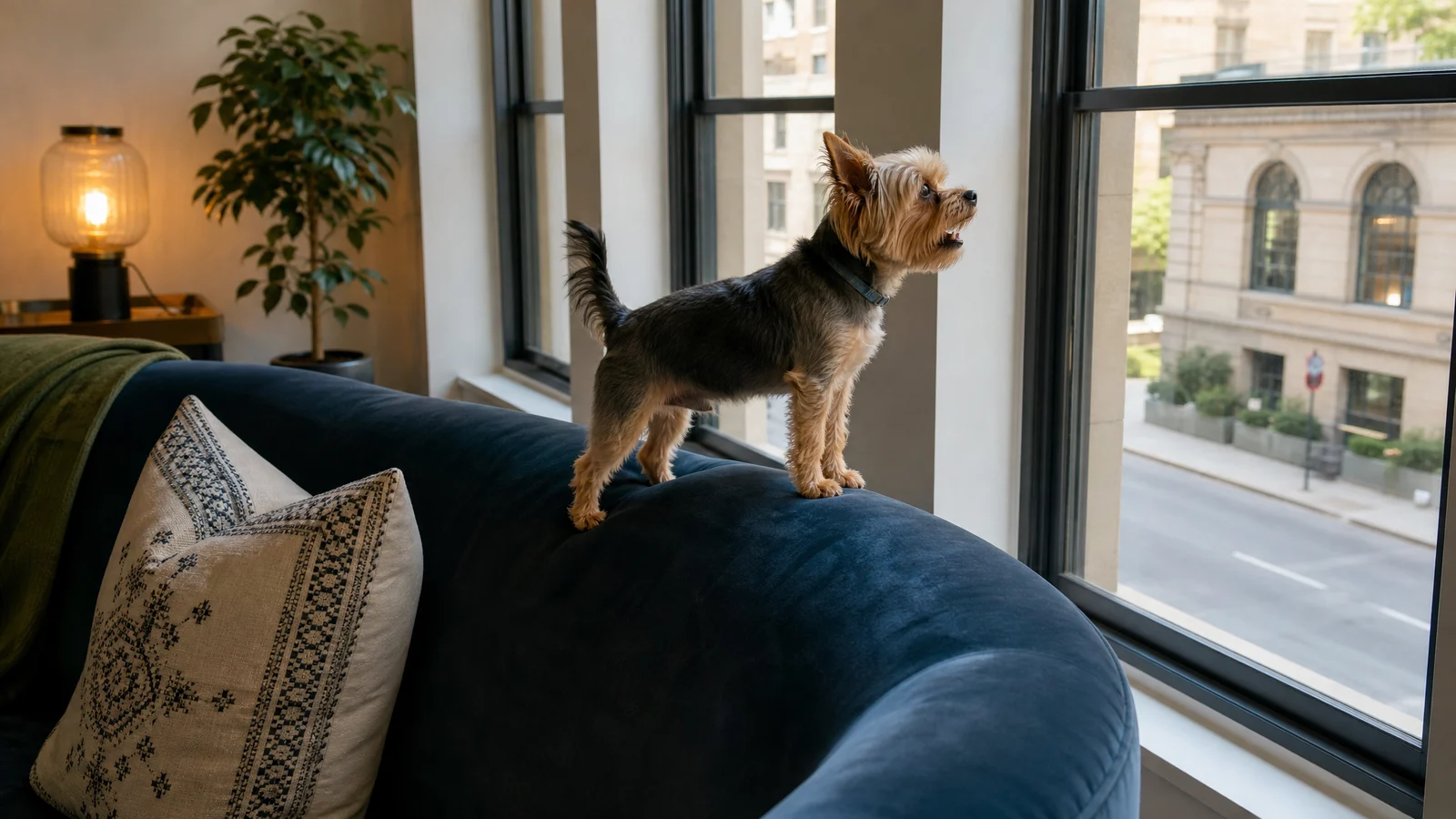
The practical way to reduce Yorkie barking at a window is to interrupt the lookout routine before it becomes a long patrol. Limit the view during training, reward the first turn away from a passerby, and send the dog to a comfortable station where quiet earns another reward.
A Yorkshire Terrier may have excellent reasons for announcing motion outside. The problem begins when one alert becomes a repeated sprint, stare, and bark cycle. We begin with the view and the route away from it. This guide covers a calmer room arrangement, a turn from the glass, a one-woof handoff, controlled traffic rehearsals, and a late troubleshooting board. Those pieces turn an alert into a route the whole household can repeat.
Yorkshire Terrier Barking at the Window Setup
Training is much harder while the dog can spend hours practicing the unwanted pattern. Move climbable furniture away from the busiest pane, close a shade over the lower part of the view, or use a removable visual barrier. The goal is not permanent isolation. It is a quieter practice room where each outdoor trigger does not arrive at full strength.
Choose one window for planned lessons and reduce access to the rest. Stand at a distance where the dog remains able to notice movement and take food. If they lean forward, stop eating, or race between panes, add distance or cover more of the view before asking for any cue.
- Place a non-slip mat away from the direct sight line but close enough for the dog to reach without crossing the room.
- Keep small rewards in a closed container at the station, not on the windowsill where they draw the dog back toward the trigger.
- Use steady background sound when hallway or street noise starts the patrol before the dog can see what caused it.
- Schedule practice during a manageable traffic period, then restore the barrier when nobody is actively training.
Keep the barrier plan easy for every household member to restore. A beautiful setup that takes several minutes to rebuild will disappear during busy periods, while a simple shade or furniture change can protect the lesson every day.
Room changes prevent rehearsals while learning catches up. They also make the desired route visible: notice outside, turn toward the person, travel to the mat, and settle. That route is more useful than asking for silence while leaving the dog planted at the window.
Quiet Station for Barking at the Window
Teach the mat when nothing is happening outdoors. Toss a reward onto it, allow the dog to step on, then mark the moment all four paws arrive. Feed another piece low between the front paws. Release them after a brief pause so leaving the station is as clear as going there.
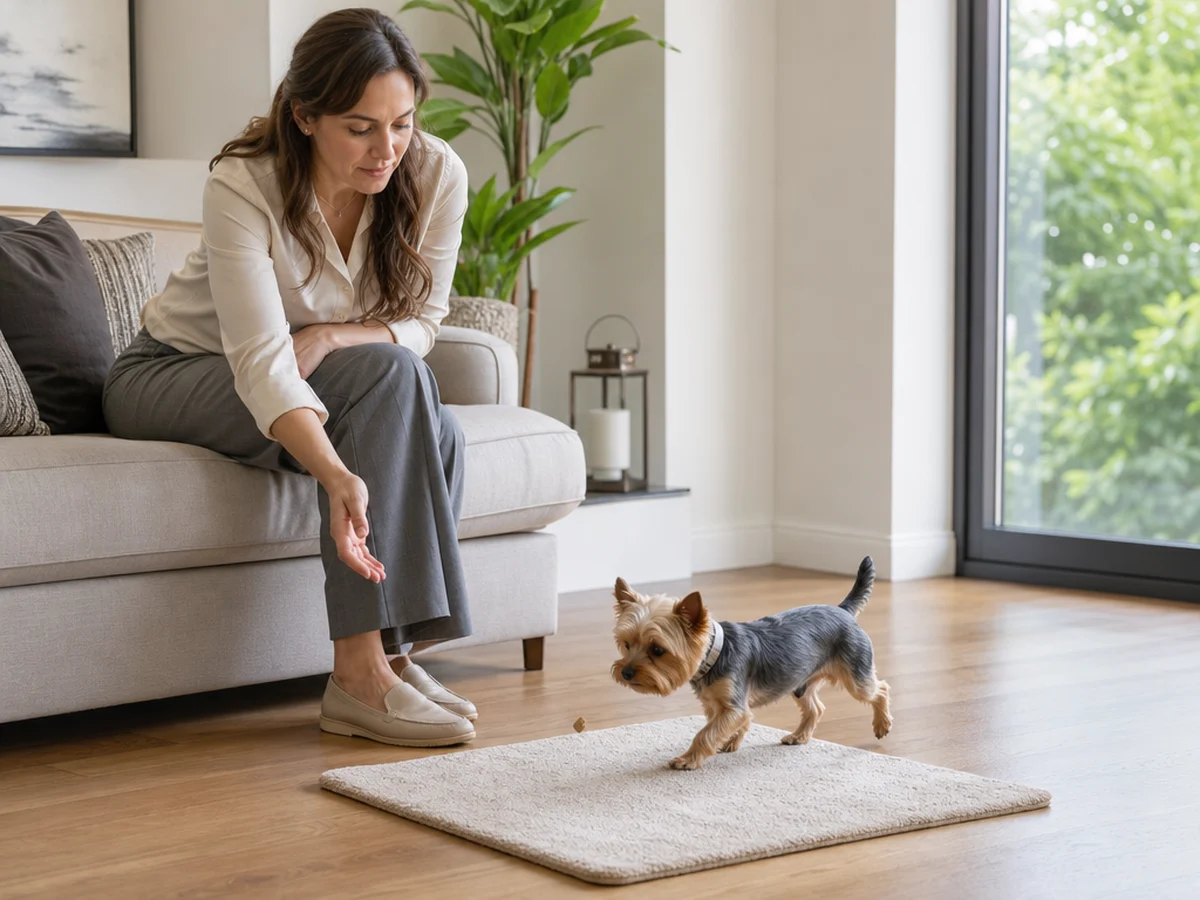
After those repetitions, pause and let the dog select the mat from nearby. Add a short cue only when the movement is predictable. Vary your position around the room and reward relaxed choices such as a hip shift, lowered head, or soft attention rather than demanding one exact posture.
Change the handler's distance as well as the dog's route. Work from a chair, from beside the doorway, and from the center of the room while the view stays covered. This prevents the mat cue from depending on one person standing beside the same wall.
The station must remain valuable outside a barking episode. Use it for calm chews, simple handling, and brief rests during ordinary family activity. The site's puppy training guide explains how small rewards and praise build early household skills. Here, that same reward history gives the dog somewhere specific to go after the alert.
Turning From Barking at the Window
The first useful behavior is not perfect quiet. It is the instant the head leaves the view. Begin with a mild trigger at a comfortable distance. When the dog glances toward you or turns even slightly away from the pane, mark that choice and deliver food beside your leg.
Place the reward so it supports the next action. Food handed at the glass keeps the dog's body in lookout position. Food delivered behind them creates a small retreat. After several easy turns, take one step toward the mat and reward again when they follow.
A marker helps the dog identify the precise choice that paid. Before using one around traffic, pair the sound with food in a quiet room. Clicker training basics recommend teaching that association before expecting the marker to carry information during a lesson.
Work Below the Barking Threshold
A dog who has already launched into rapid barking is processing less of the lesson. Close the barrier, move away, and wait for breathing and movement to soften. Do not keep repeating the station cue over a trigger that currently overwhelms it.
Lowering difficulty may mean increasing distance, choosing slower outdoor movement, or practicing after the dog has had an ordinary walk and rest. It does not mean withholding all exposure. It means arranging exposure at a level where the dog can still make a rewarded decision.
Pay the Whole Route
At first, reward the turn, the movement toward you, and the arrival on the mat as separate pieces. As the route becomes smooth, reserve the main payment for the station while occasionally marking an especially quick turn. This shifts value away from the glass without making the early choice invisible.
Release the dog away from the window. If the release sends them directly back to patrol, cover the view and begin an ordinary activity elsewhere. A completed repetition includes recovery, not only a brief stop between two barking bursts.
One-Woof Handoff for Barking at the Window
The one-woof idea is a household routine, not permission to provoke barking. When a natural alert occurs, acknowledge it in a calm voice, mark the first pause, and move toward the station. Reward the dog for following. With repetition, your acknowledgment becomes the signal that the observation has been received and the dog's next job is to disengage.
Some Yorkshire Terriers will offer no bark during an easy setup. Reward the quiet look and turn instead. The breed may be known for alerting, but the individual dog does not need to produce noise to earn the handoff. A silent notice is already the more useful behavior.
- Let the dog notice one mild outdoor event from the planned practice distance.
- Acknowledge the alert once, then wait for the smallest pause or head turn without repeating words.
- Mark the disengagement and move toward the station so your body shows the route.
- Reward arrival low on the mat, pause, and release into a calm activity away from the view.
Reward-based work still includes clear structure and predictable limits. The humane training statement from AVSAB explains that dogs can learn routines and guidelines without fear or pain. Covering the view after a missed handoff is a practical boundary, not a confrontation.
Real Traffic for Barking at the Window
Increase difficulty one feature at a time. A helper walking past slowly is easier to interpret than several people, a running dog, and a delivery at once. Begin with the helper far from the window and end the pass while your Yorkie can still turn, eat, and settle.
Change only distance, speed, or duration on the next repetition. If the dog succeeds, repeat that exact picture before making it harder. If they bark continuously, the helper should leave the scene while you close the view and reset. The barking does not need to produce a longer show outside.
Reward-based teaching makes the desired behavior more likely by delivering something the dog values. The RSPCA training guidance applies that principle here: the quiet turn earns food, access to the handler, and a clear route away from the trigger.
Practice from different places in the room only after the original route is fluent. A mat beside one chair may not transfer automatically to a bed across the room. Teach each station as a new version, then use one consistent handoff cue.
Handle Surprise Passersby
Real life will sometimes arrive above the current training level. Step between the dog and the view, close the barrier, scatter several rewards away from the pane, and move into another room. That emergency reset is management, not the planned lesson.
Return later with an easier trigger. The broader guide to Yorkshire Terrier barking separates alert, demand, excitement, and startle patterns. Use that distinction when the window is only one part of a noisier day.
Yorkshire Terrier Window Barking Control Board
Track what the dog can do while the trigger remains present. A quieter room is helpful, but the strongest evidence is a voluntary turn, a direct route to the station, and a body that settles after payment. Use the board to change the setup rather than blaming the response.
| What you see | What it suggests | Next adjustment |
|---|---|---|
| One look, quick turn, and easy eating | The current picture is workable | Repeat it before changing one feature |
| Turn happens only after the trigger leaves | The dog needs more distance or less visibility | Move the station back and cover more glass |
| Food is taken at the mat, then patrol resumes | The release returns the dog to the old route | Finish with the view covered and move elsewhere |
| Barking begins at sound before any sight | The trigger starts earlier than expected | Add background sound and rehearse from farther away |
Regular vet visits matter because sudden changes in hearing, vision, comfort, or general behavior can change how a dog responds to ordinary movement. If a previously manageable reaction changes sharply, discuss that change with the veterinarian before assuming the training simply stopped working.
Compare both common and unusual traffic. A slow passerby, a person stopping near the window, and an animal moving across the view may need different distances. Keep the handoff cue the same while adjusting how much of the scene is visible.
Also notice recovery between events. A Yorkie who returns to ordinary breathing and activity is learning a complete sequence. A dog who remains fixed on the covered window needs a longer break and an easier next lesson.
Today's Yorkshire Terrier Window Reset
Choose the busiest reachable pane, reduce the lower view, and place one comfortable mat outside the direct sight line. Reward several quiet trips to that station before waiting for any passerby. Today's useful result is a clear route away from the glass, because that route gives every later one-woof handoff somewhere calm to finish.
 CareTeaching Your Yorkie to Love Grooming Time
 BehaviorRedirecting a Yorkshire Terrier's Chase Instinct to Better Games
 BehaviorHelping a Yorkshire Terrier Stay Calm When Home Alone