 Yorkie
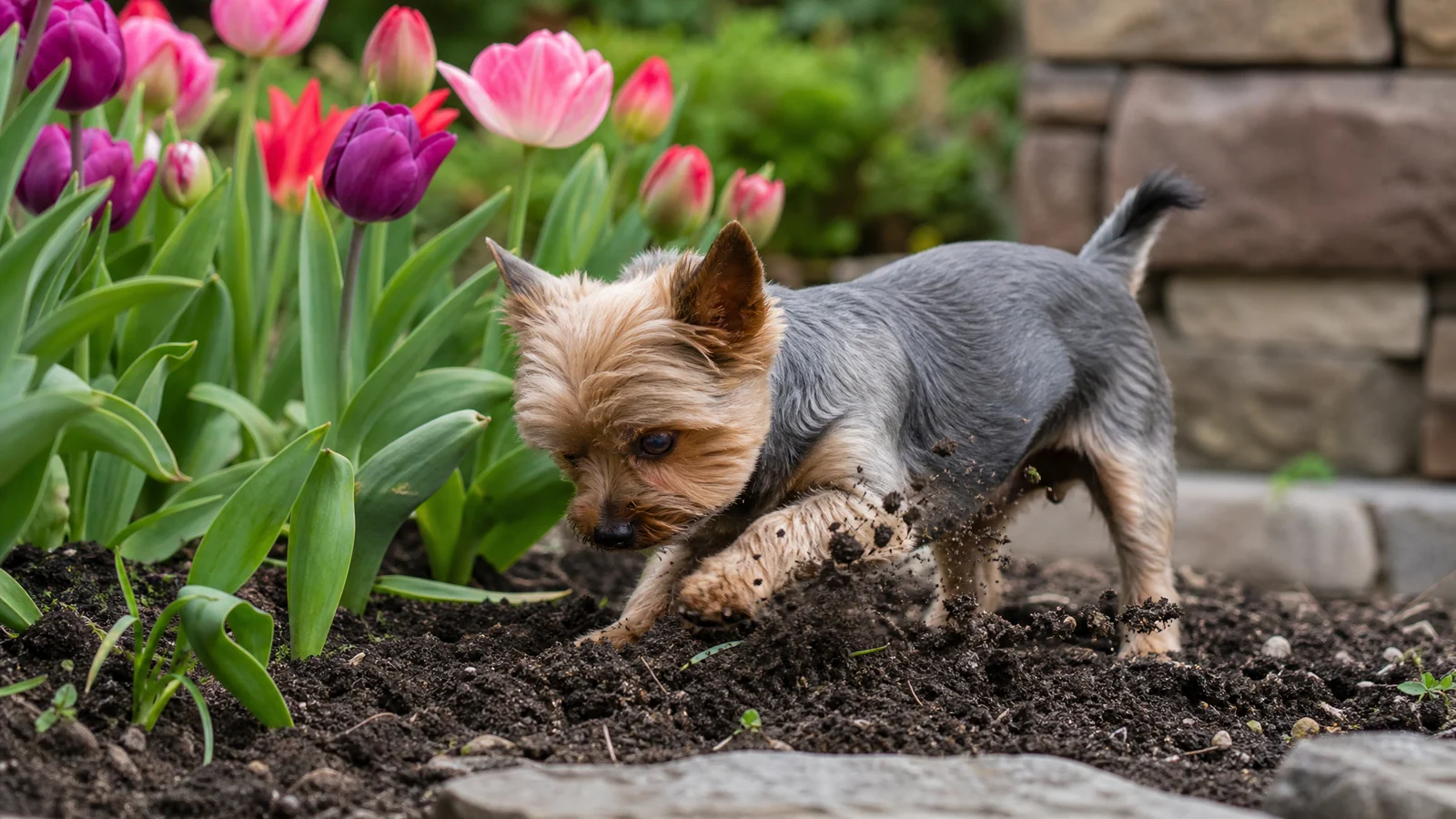
The common mistake with Yorkie digging is waiting for a hole, interrupting the dog, and then leaving the same bare soil available with no legal alternative. The useful fix begins before excavation. Protect valued areas, build one permitted digging site, and make that site easier to use than the flowerbed.
Yorkshire Terriers have terrier history beneath the polished coat. Digging can deliver scent, movement, cool soil, hidden objects, or the simple payoff of doing an absorbing job. We start with the location because the ground itself often explains the reward. This guide covers the payoff, an allowed site, a release cue, and a yard audit without treating every paw movement as defiance.
This yard brief uses nine short work units with no nested lesson maze. Each unit answers one practical question, and the final unit chooses tomorrow's project rather than offering a generic recap.
Yorkshire Terrier Digging Behavior Problem
Watch where and when the behavior starts. Soil beside a fence may hold animal scent. A cool patch under a shrub may be comfortable. Freshly turned garden beds are easy to move. Indoor blanket scratching may be a nesting routine rather than the same problem as yard excavation.
Separate digging that begins during supervised play from digging that begins after the dog has been alone outside. The first may need a clearer game boundary. The second often requires more supervision, a shorter yard visit, and a better activity before access begins.
Record the surface, weather, time of day, recent activity, and what the dog does after digging. A Yorkshire Terrier who sniffs intensely and follows a line needs a different setup from one who digs after standing alone in a quiet yard.
The AKC's breed overview traces Yorkies to work as ratters in mines and mills. That history does not make every individual identical, but it explains why searching and earth-moving can be rewarding even in a companion home.
Yard Protection for Digging Behavior Problems
Draw a simple yard map and mark protected beds, known animal routes, shade, fence lines, and the planned legal site. The map keeps the solution tied to actual locations rather than relying on a general instruction to stop digging everywhere.
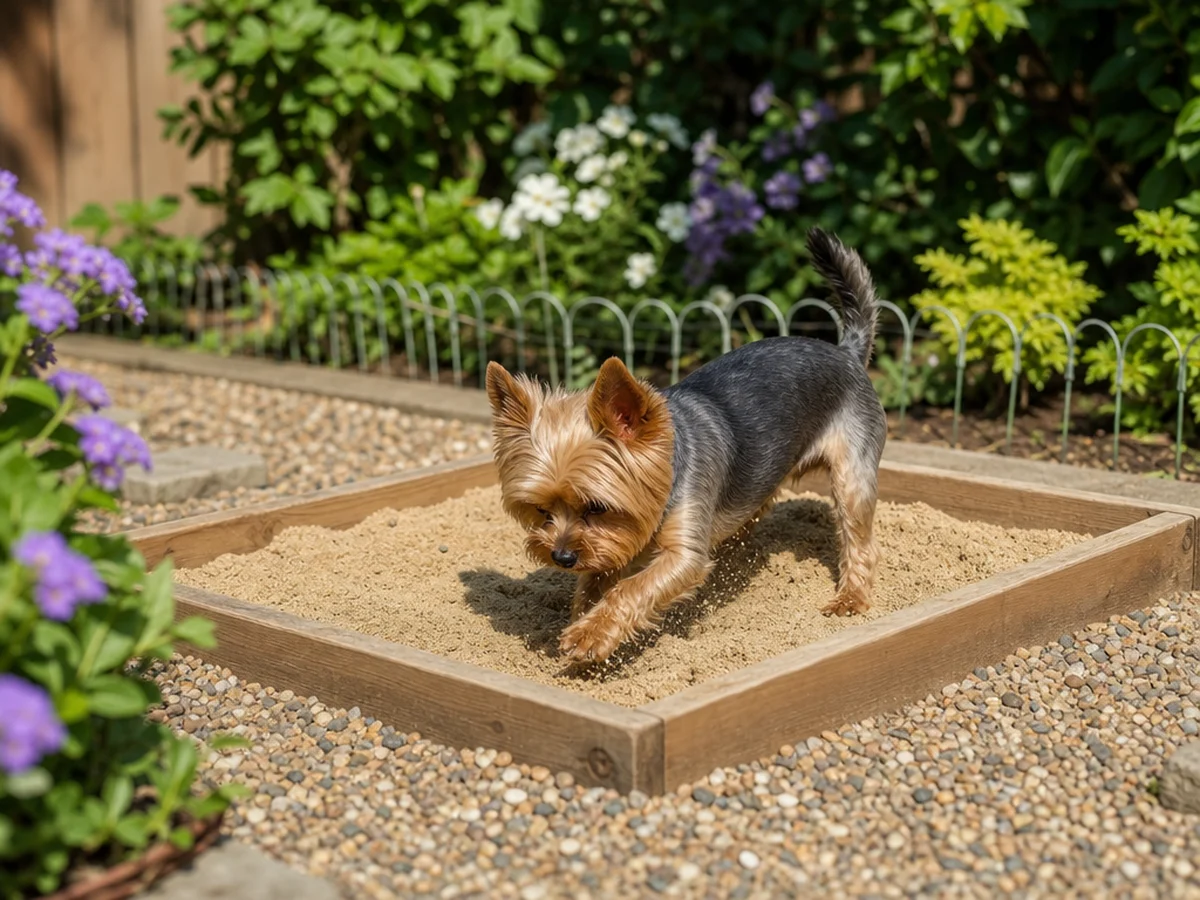
Use barriers while the new habit develops. Fence off new plantings, cover vulnerable soil with safe landscaping, and supervise access near foundations or escape routes. If the dog repeatedly reaches one area, revise the physical setup instead of depending on a cue delivered from inside the house.
Remove access to hazards and check the yard before training. Sharp material, treated soil, toxic plants, wildlife burrows, and unstable edges do not belong in a digging lesson. Choose a clear site where the handler can see the dog's whole body and step in without chasing.
- Select a level area away from gates, utility lines, prized roots, and places where the dog could tunnel beneath a boundary.
- Use a low container or a clearly bordered patch large enough for turning and pawing without crowding the edge.
- Fill it with a dog-safe loose material and keep the surface clean, dry enough to use, and free of hidden hazards.
- Place a washable mat or towel near the exit so cleanup becomes part of the route back indoors.
The allowed site should be obvious before the dog enters the yard. A vague corner looks no different from forbidden soil. A border, consistent surface, and direct handler route make the permitted choice easier to repeat.
Yorkshire Terrier Digging Site Design
Match the surface to the household's cleanup and safety needs. A container may suit a small patio, while a bordered soil patch may fit a yard. Whatever the material, prevent waterlogging, sharp debris, and access when nobody can supervise.
Give the site a maintenance routine. Remove broken toys, replace soiled material, level deep edges, and close access when weather makes the surface unsafe. A legal area stays attractive only when it remains usable.
Introduce the empty site before burying anything. Walk to it, scatter several rewards on top, and let the dog investigate. Mark any pawing or nose work inside the boundary. Release after a brief visit and leave together.
On later visits, place a toy partly under the loose material while the dog watches. Make the first discovery easy. The dog should learn that moving this surface produces worthwhile results, while protected garden areas produce no access.
Finish before the dog becomes fixed on continuing, then travel away together while the response remains easy. If they become frantic, throw material outside the border, or cannot pause, end the activity and make the next hide shallower. Excitement is not the only measure of success. Control and recovery matter too.
Allowed Site Changes the Behavior Problem
Let the permitted site appear at useful times, such as after a walk or before supervised yard play. Predictable access helps the dog wait for the project instead of testing every soft patch for opportunity.
Vary the search without increasing depth immediately. Place one object near the border, one beneath a light cover, and one along a short scent trail. Different locations create a longer project while keeping every discovery easy.
Use familiar toys, a few pieces of regular food, or a safe scent trail. Place items at different shallow points rather than packing everything into one deep hole. A dog who finds several easy targets learns to search the whole permitted patch.
Every meal can support enrichment, and the ASPCA enrichment guide suggests using food puzzles to add mental work. The digging site can serve a similar purpose when food is placed safely and the activity is supervised.
Do not use valued objects that could start a possession conflict. If the dog finds a toy, invite a trade and sometimes restart the search with that toy. The activity should strengthen cooperation around discoveries.
Cues for the Digging Behavior Problem
Add a release cue after the dog predictably approaches the site. Stand outside the border, give the cue once, then gesture toward an easy hide. The cue means this surface is available now. It does not ask the dog to dig on bare ground elsewhere.
Teach a finish separately. Call the dog away from an easy search, reward at the towel or mat, wipe paws if needed, and move into another activity. Sometimes end after a quick success so leaving does not always happen when the dog is most absorbed.
The site's guide to first commands builds markers, name response, hand targets, and release words. Practice those cards away from the digging site, then bring only fluent cues into the more exciting project.
Redirection for Digging Behavior Problems
Rehearse redirection before it is needed. Walk past a protected bed on leash, reward orientation to the handler, and continue to the legal site. That route gives the dog a practiced answer when loose soil later becomes tempting.
If the dog starts at a forbidden spot, avoid racing over and grabbing. Block continued access, call or guide them away, and travel to the permitted site. Make an easy hide available there. Reward digging in the correct location, not simply arriving after the garden already became exciting.
When the dog cannot disengage, use the leash or barrier plan to leave the yard calmly. Do not keep presenting the allowed site while they remain fixed on the original scent. Return later after changing access to that area.
Repeated attempts at one location contain information. Check for animal activity, soft soil, shade, or a route under the fence. Changing the cause may be more effective than increasing the value of rewards elsewhere.
Indoor Digging as a Different Behavior Problem
Indoor surfaces require their own inventory. Note whether the dog targets one rug, bedding before sleep, or places where food has fallen. Block access to damaged areas while providing a permitted activity that matches the pattern.
Pawing at blankets, beds, or carpet may happen before rest, during play, or when the dog is searching for dropped food. Protect fabric while you identify the pattern. Offer a washable blanket on the dog's bed for ordinary nesting and interrupt carpet work with a calm move to another activity.
Use food searches in boxes, folded towels, or commercial puzzle items that the dog has already used safely. Do not hide food beneath flooring or furniture. The target should make the permitted search obvious.
Indoor practice can also meet mental needs on days when yard access is limited. The UKC describes the breed as spirited and intelligent in its Yorkshire Terrier standard. Brief search work respects both qualities without turning the living room into an excavation site.
Audit the Yard Behavior Problem
The site's Yorkshire Terrier barking guide uses the same environmental principle around windows: prevent a practiced route while teaching an alternative. In the yard, barriers and the legal site play those two roles.
Review the yard once a week and after weather changes. Rain, new landscaping, visiting animals, and moved furniture can change where scent and loose soil collect. Repair the environment before the dog discovers the new opportunity.
- Check barriers, gates, borders, and the permitted site's material before unsupervised household activity begins.
- Note whether forbidden attempts are becoming less frequent, easier to interrupt, and less persistent after redirection.
- Refresh easy hides in the allowed patch so the correct location remains productive without requiring deeper digging.
- Compare exercise, search games, rest, and yard time on good and difficult days rather than changing everything at once.
Regular vet visits are important because sudden repetitive digging, new restlessness, skin discomfort, or a major behavior change may have a health component. Discuss abrupt changes with the veterinarian instead of treating them only as a training issue.
If the dog digs at escape points, cannot disengage, or is at risk from the environment, pause yard freedom and ask a qualified reward-based professional to review the setup. Safety comes before preserving a routine.
Tomorrow's Yorkshire Terrier Digging Project
Choose one clear job for the next yard visit: strengthen a barrier, refresh the permitted surface, teach one easy release into the site, or rehearse one calm finish at the towel. A Yorkshire Terrier does not need the instinct erased. They need a safe place where the project pays, a yard where the wrong projects are unavailable, and a handler who notices what the soil is offering.
 BehaviorWhen Your Yorkshire Terrier Growls Over a Toy: Happy Trades
 BehaviorFour Paws Down: Teaching Yorkshire Terriers to Greet Politely
 Puppy trainingYour 8 Week Old Yorkie Puppy: The First Training Week