 Yorkie
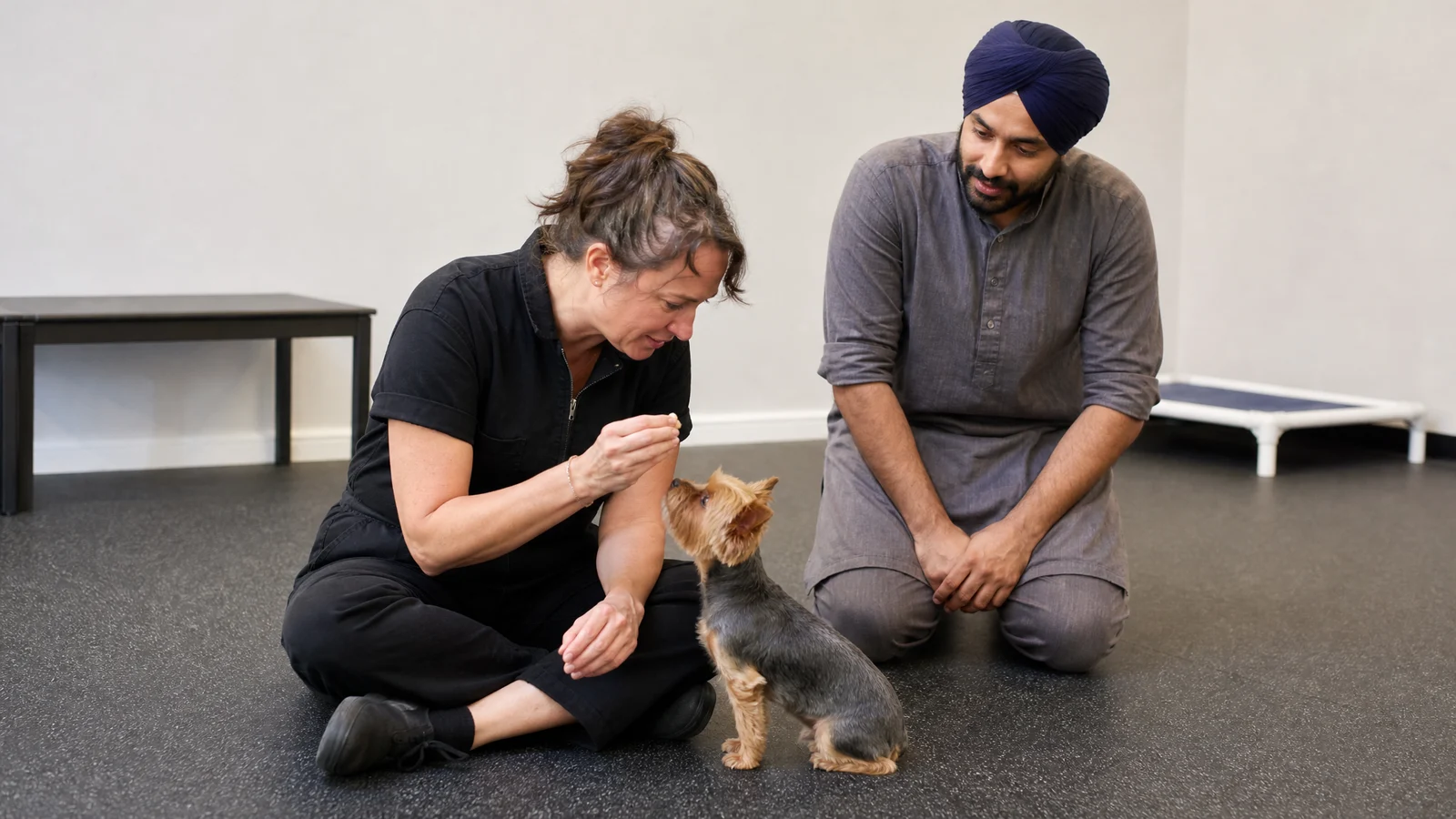
Hiring help for a Yorkie means finding someone who can teach a toy-size dog with a big-dog opinion: at floor level, in tiny treats, and without ever winning an argument just by being bigger. That person exists, and they are easier to spot than most websites suggest.
Letters after a name and a gentle voice on the phone are only the start. What matters is how a trainer teaches, how they handle a very small body, and how they treat you.
The wrong match wastes weeks of lessons and can leave you doubting your own dog. Read on for a way to tell the right trainer from the merely confident, beginning with what good teaching looks like for a dog this size.
A Yorkshire Terrier Trainer Teaches at Floor Level
Before you compare anyone, it helps to hold a picture of good teaching for a dog with a terrier's nerve in a toy-size body, because that picture becomes your yardstick for every call and lesson that follows.
Yorkies are quick, eager to please and quietly certain of themselves, which suits reward-based teaching beautifully and suits pressure badly. A dog with this much spirit rarely backs down, and a dog this small is easy to frighten or hurt with rough handling. Praise and treats work far better than harsh methods, so the trainer you want pays generously for what they like instead of punishing what they do not.
Four habits mark a trainer who suits the breed, and every one of them is something you can see for yourself. Letters after a name will not show you any of them, but a single lesson will:
- Teaching at floor level. The trainer kneels or sits so your dog is not craning up at a looming adult, and puts rewards where a short nose can reach them.
- Treats sized for a small mouth: soft, pea-size or smaller pieces that vanish quickly, so the lesson is not slowed by chewing or ended by a full stomach.
- Short rounds followed by a break keep a fast mind interested, and a good trainer stops while your dog still wants another go.
- Handling that asks first. Before lifting, touching or repositioning your dog, the trainer checks with you and watches whether your dog is comfortable with it.
None of this needs a special license, which is the point. Early lessons from a good trainer look a lot like the Yorkie first commands you could try at home, built from a marker, a name response and small rewards.
Class, Home Visits or Boarding With a Trainer
With a clear picture of good teaching, the next decision is where it happens, because the same trainer can be a fine fit in one setting and a poor one in another. Cost and convenience usually decide this first, and the dog's own needs should have a say.
Group obedience classes might suit a dog who needs basic manners such as sit, down and come when called, while a specific behavior problem would be best seen outside a classroom, as the ASPCA's breakdown of formats explains. Board-and-train adds a catch: it is only effective if the trainer teaches you the skills to keep the new behavior going.
Because you will not be there to watch a boarding program, ask about methods before you hand your dog over. The setting matters for a Yorkie in smaller ways too. A room full of large, excited dogs can overwhelm a toy-size newcomer, while a habit that lives in your house, such as barking at the window, often makes more sense to work on where it happens.
The Three Formats Side by Side
The formats look quite different once you picture a toy-size dog in them. This table sets them side by side, with the first question we would put to each:
| Format | It fits a Yorkie when | Ask this first |
|---|---|---|
| Group class | You want everyday manners and practice around other dogs and people | How big are the other dogs, and where can ours wait when the room gets busy? |
| Private or home lessons | A habit happens in your house, such as barking at the door or window | How will you teach us to run the plan between visits? |
| Day training or board-and-train | Your schedule leaves little room for daily practice | Which methods will you use while we are away, and how will the skills come back to us? |
Whichever row you pick, you are the one practicing between lessons. Favor the format that teaches you the most, because that is the part that keeps working after the trainer leaves.
When a Yorkshire Terrier Needs a Vet or Behaviorist First
Everything so far assumes your Yorkie simply needs to learn something, and some problems are not teaching problems at all. Telling the two apart early saves you weeks of lessons that were never going to help.
If behavior changes suddenly, or your dog seems painful, unwell or unlike themselves, call your vet before you call anyone who teaches. Regular vet visits matter for every dog, and they make your vet a sensible first stop whenever something about your Yorkie's behavior shifts.
Be careful with the word behaviorist. Veterinarians may call themselves behaviorists only if they hold board certification, according to the ACVB's guidance for owners, while trainers and others face no such restriction. For any dog showing aggression, professional help from a veterinary behaviorist is recommended because the consequences can be serious, so a trainer's confident promise about a growling dog should give you pause.
Where a Trainer Still Fits
Barking, swagger and a bluff at the doorbell are ordinary terrier talk, and a good trainer can work with them. A growl that turns into snapping, or fear that keeps your dog from eating or walking, belongs with your vet and a veterinary behaviorist first. A trainer can join the plan afterward, and the best ones welcome that kind of teamwork.
Whichever route you take, tell each professional what the other is doing. A trainer who asks for your vet's notes is showing the teamwork you want.
Reading a Trainer's Letters Without Leaning on Them
Once you know a trainer is the right kind of help, the credentials on their website are the next thing to read, and to read carefully. Titles can sound impressive without telling you much.
Anyone can print trainer on a business card, because dog training has no licensing requirements or regulatory oversight. Independent certification fills part of that gap: one widely recognized credential means a trainer has passed a comprehensive exam and has at least 300 hours of dog training experience, as the certifying council's owner guide describes.
What a Credential Cannot Show
That is useful, and it is also limited. A credential shows that someone studied and passed a test. It does not show how they handle a toy-size dog who has decided you are suspicious, and it says nothing about whether their hands are gentle.
Experience with small, fast, vocal dogs counts for more than a Yorkie label on a website. Ask what toy-size dogs they have taught, what went wrong with one of them and how they changed the plan, and whether two past clients would talk to you. A trainer who has mostly worked with big dogs can still be excellent, but they should be able to explain how they adapt a lesson for a dog this small, from hand height to treat size.
Reviews deserve the same patience. Read for patterns rather than stars, and look for clients who describe what the trainer actually taught.
Treat letters as a reason to keep talking. They are never the reason to stop asking questions.
Questions That Make a Trainer Show Their Method
A credential sits on paper, and your Yorkie lives with the method, so the call is where you learn what happens when a lesson goes sideways. A confident, specific answer is worth more than a smooth one.
The questions below are short on purpose, and none needs technical language. Put all five to every candidate in the same order, so the answers line up side by side:
- "What will our dog earn in the first lesson, and how will you deliver it?" A good answer names small treats, toys or praise and a clear marker, which tells you rewards drive the lesson.
- "What do you do when our dog barks, bluffs or ignores you?" A good answer changes the setup, adds distance or pays the calm moments. A poor one involves scolding or showing the dog who is boss.
- "Which tools do you use, and which do you refuse to use?" Expect a comfortable harness or collar, a leash and treats. Walk away from anything meant to startle or hurt, since a tiny dog has little cushion for it.
- "How will you teach us to run the plan at home?" The best trainers coach the person holding the leash, and that is how progress survives once the lesson ends.
- "How will we know it is working, and what happens if it is not?" A plan with a check-in point and a willingness to refer you elsewhere shows confidence without ego.
What to Listen For in the Answers
Listen for specifics. A trainer who answers with concrete steps, such as where the treat goes, what happens when the dog looks away and when the lesson ends, has a method. One who answers with slogans about respect, balance or leadership may not.
Some answers should end the search at once. Promises of guaranteed results, talk of being the alpha or dominating a dog, and any insistence on punishment or fear all point to someone you should skip. Bring your dog's likes and dislikes to the call too. The notes from a Yorkie personality profile give the trainer something real to work with.
Watching a Trainer Work Before You Pay
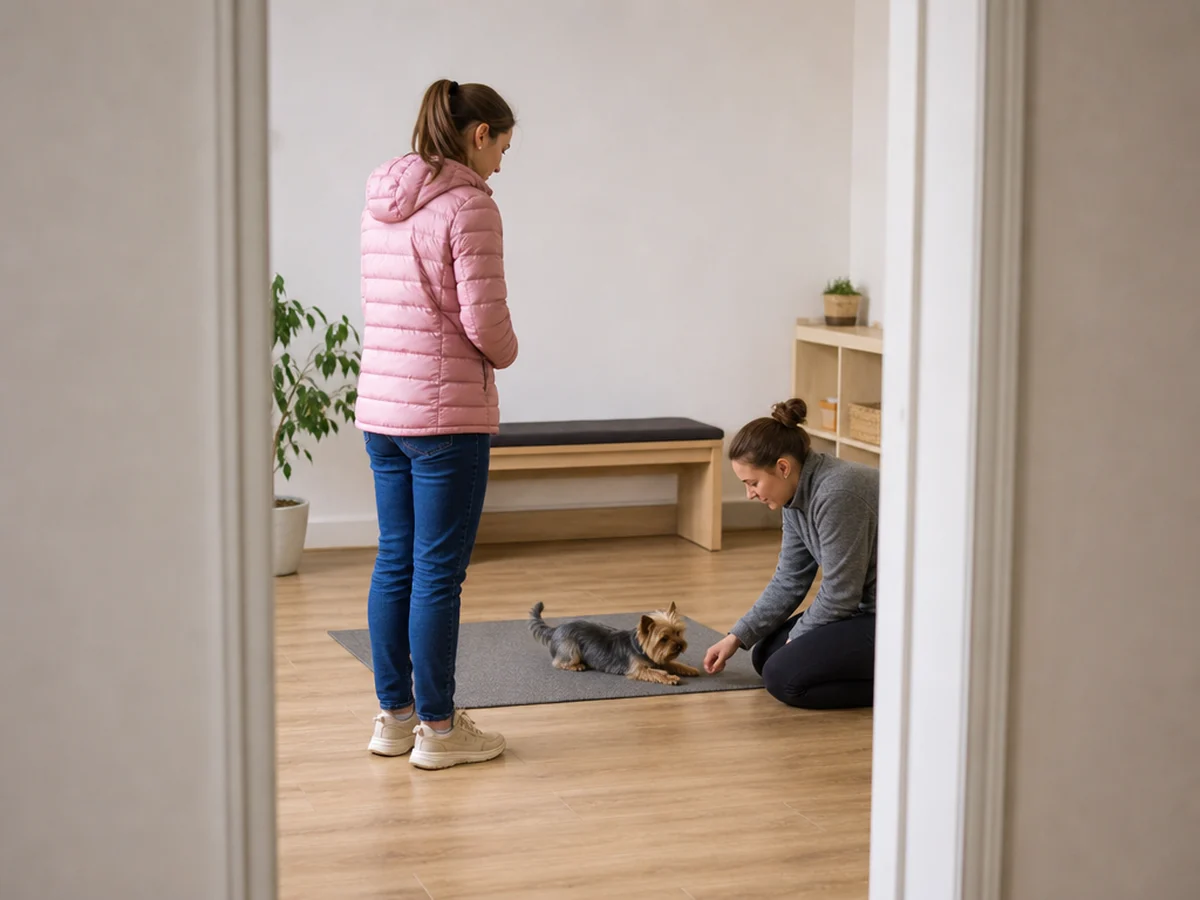
Answers on a call are promises, and a lesson is the only place you can see whether a trainer keeps them. Ask to watch one, or book a single session before you commit to a package.
The First Five Minutes
Notice how the trainer meets your dog before any teaching begins. In our view, a good one talks to you first, lets your Yorkie sniff and bark if they want to, and avoids looming or reaching over the head. A bark at a newcomer is ordinary for a breed that makes a fine little watchdog, so what counts is whether the trainer waits it out and pays the quiet moment instead of scolding.
The Rest of the Hour
Watch the treats first: are they tiny and plentiful, and can your dog choose, rest or walk away without being hauled back? Then watch the trainer's hands. Gentle, asked-for handling is the same quality you build at home during Yorkie grooming practice, so it is fair to expect it from anyone else who touches your dog.
Notice who is being taught, too. By the end you should be able to say what you will practice tomorrow in your own words, and your dog should still look willing to try more. If you leave confused, or your dog leaves flat and worn out, that is a good reason to keep looking, whatever the résumé says.
After You Get Home
The lesson is not over when the door closes. A dog who is pleasantly tired, curious and still willing to take a treat from you is telling you the session suited them. A dog who hides, refuses food or startles at the sight of the leash is telling you something different, and you can pass that straight back to the trainer before the next visit. Good trainers want that feedback, and how they respond to it is one more thing worth knowing.
Why a Yorkshire Terrier Still Deserves a Good Trainer
All of this takes effort, and it is tempting to wonder whether a dog who can be scooped up in one arm really needs it. Size is exactly why so many small-dog habits survive.
A Great Dane who leaps at guests gets attention right away, because nobody can ignore it. A Yorkie who does the same earns a laugh, a pat and another year of practice, and the habit that was cute at one year is exhausting by five.
So hold the person you hire to the standard you would set for a much bigger dog: a clear method, kind hands and a plan you can follow without them in the room. Your Yorkie will bring the same opinions to the lesson either way, and a good trainer will make those opinions work for everyone.
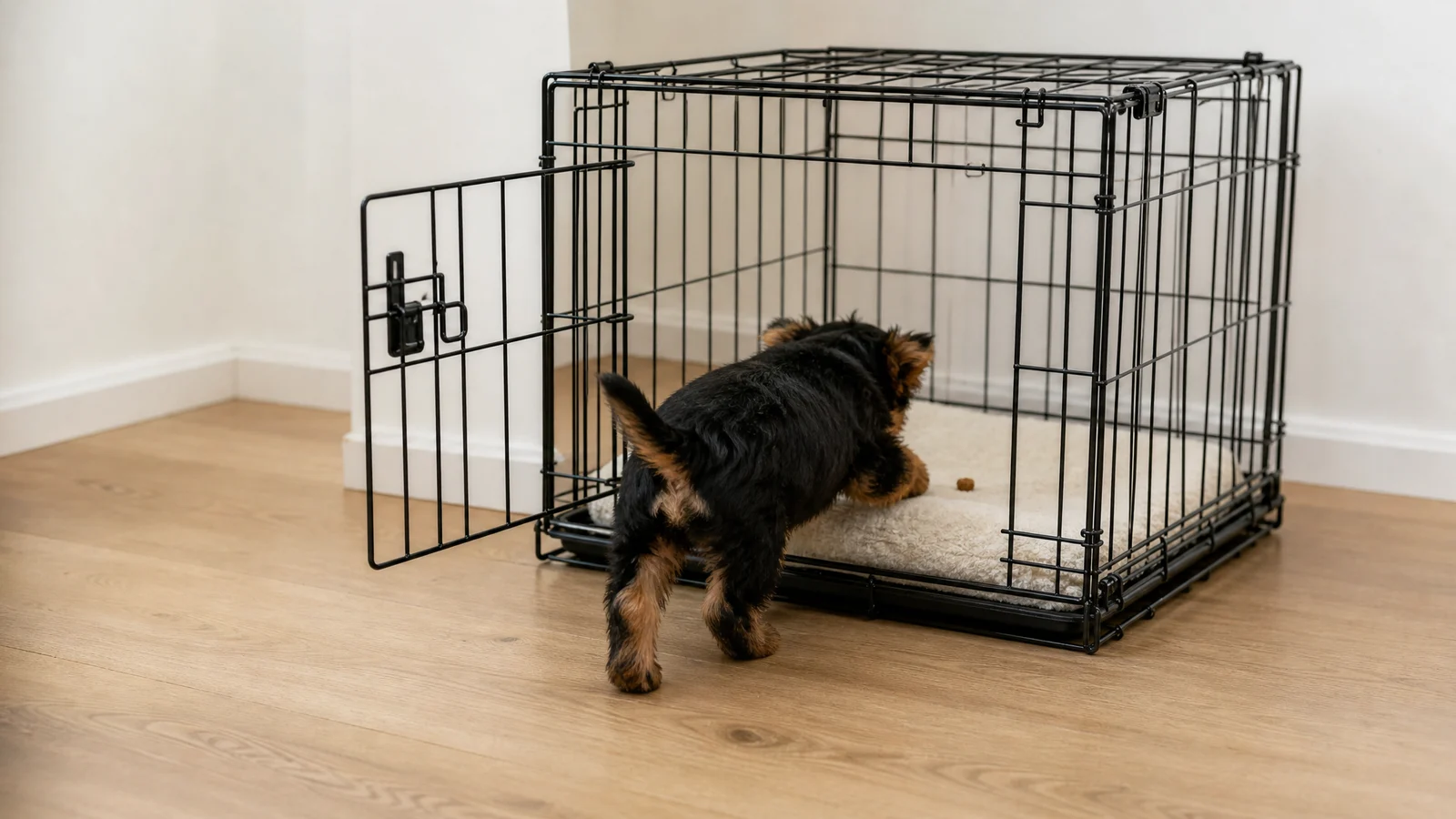 Puppy trainingHow to Crate Train a Yorkie Puppy
 Puppy trainingHow to Socialize a Yorkie Puppy
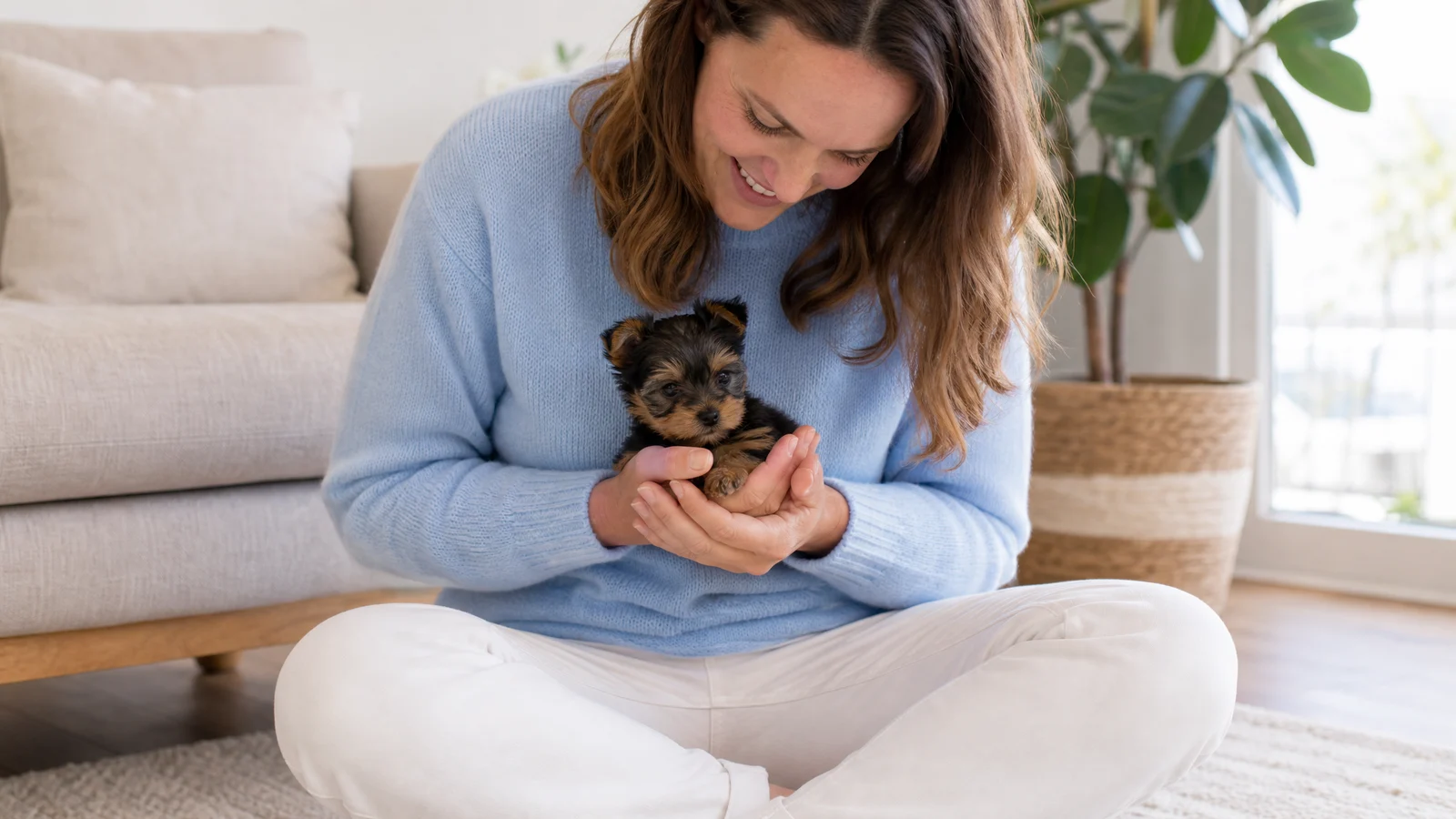 Puppy trainingYour 8 Week Old Yorkie Puppy: The First Training Week