 Yorkie

A Yorkshire Terrier puppy can start learning the day they come home, and the first real results usually show up within the first few weeks. Reliable manners take months, and for some dogs house training stretches well past that. A small minority of Yorkies learn the basics in about a week on praise and treats, but they are the exception, and expecting that result makes owners feel they are failing when they are not.
We'll walk you through what to teach in the first days, weeks and months, then how rewards, brief sessions, slow socialization and careful handling of a 4–7 pound body fit together. Timing matters because habits set early tend to stay, and a puppy who is quiet and easy now may find a loud bark later. Done well, you get an affectionate, quick little companion who wants to work with you.
Puppy Training Starts Early
Very young Yorkie puppies are usually nearly silent, with an occasional single bark and a soft growl. That calm is a training window, not a personality reading. Many Yorkies stay quiet for months or even years and then find their bark all at once, sometimes becoming very vocal.
Common advice says to wait until a puppy is older and settled before starting. With this breed, waiting means training around habits that already exist. Begin at once, keep it light, and reward calm behavior from the first day so there is something to build on before barking becomes a habit.
The First Days Home
Owners who avoid the most accidents tend to be the ones who take a tiny puppy outside every hour or two and watch them constantly. If accidents keep happening anyway, the cause is usually a missed or misread signal such as whining. Reward the signal itself with a treat and an excited voice, and your puppy learns that telling you works.
Keep the routine boring and predictable, and give your puppy a crate or an exercise pen with easy-clean flooring for the times you can't watch. Add two easy games alongside the potty trips. Pay a treat whenever your puppy looks at you after hearing their name, and touch paws and ears gently before each treat so handling feels pleasant.
The Following Weeks
Once the routine holds, add basic cues separately and practice each in a new room before starting the next. A puppy who sits in the kitchen and stares blankly in the hallway has learned the kitchen, not the cue.
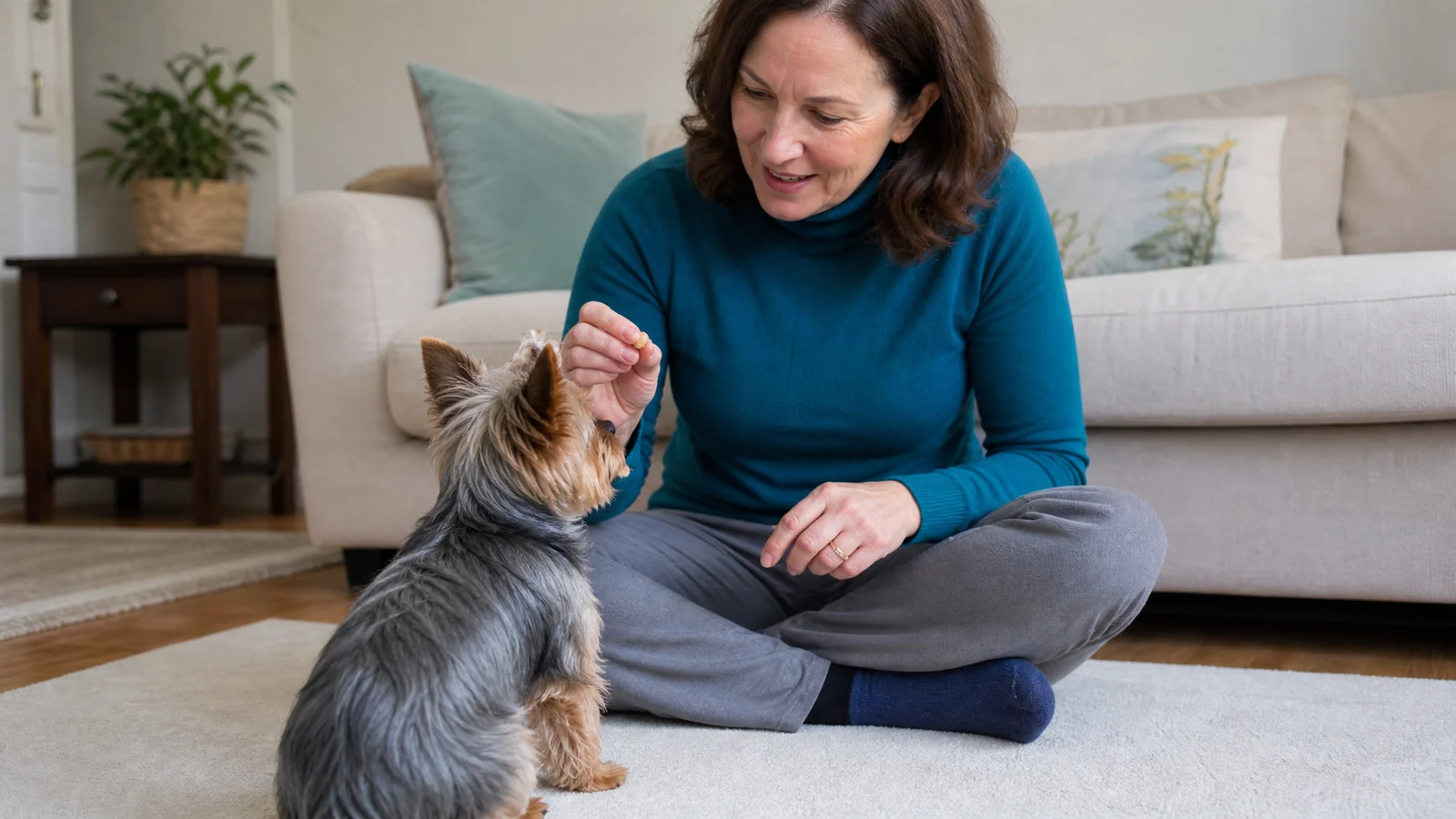
- Sit: hold a treat just above your puppy's nose and slowly move it back over their head. When their bottom touches the floor, mark the moment with your chosen word and then give the treat.
- Come: say the name and the cue in a cheerful voice while backing away, then pay lavishly on arrival so coming to you is always the best thing that happens.
- Leave it: close your hand around a treat and wait until the pawing and sniffing stop, then mark and give a different treat from your other hand.
The Months After That
Many owners report dogs who seemed trained for weeks or months and then regressed, sometimes repeatedly. Teething, a first heat season, extreme cold and wet weather are common triggers. If a skill falls apart, go back to easier conditions, pay more often and rebuild. Reported ages when everything came together vary widely, so judge your puppy against their own progress rather than another dog's calendar.
Praise Works in Yorkshire Terrier Puppy Training
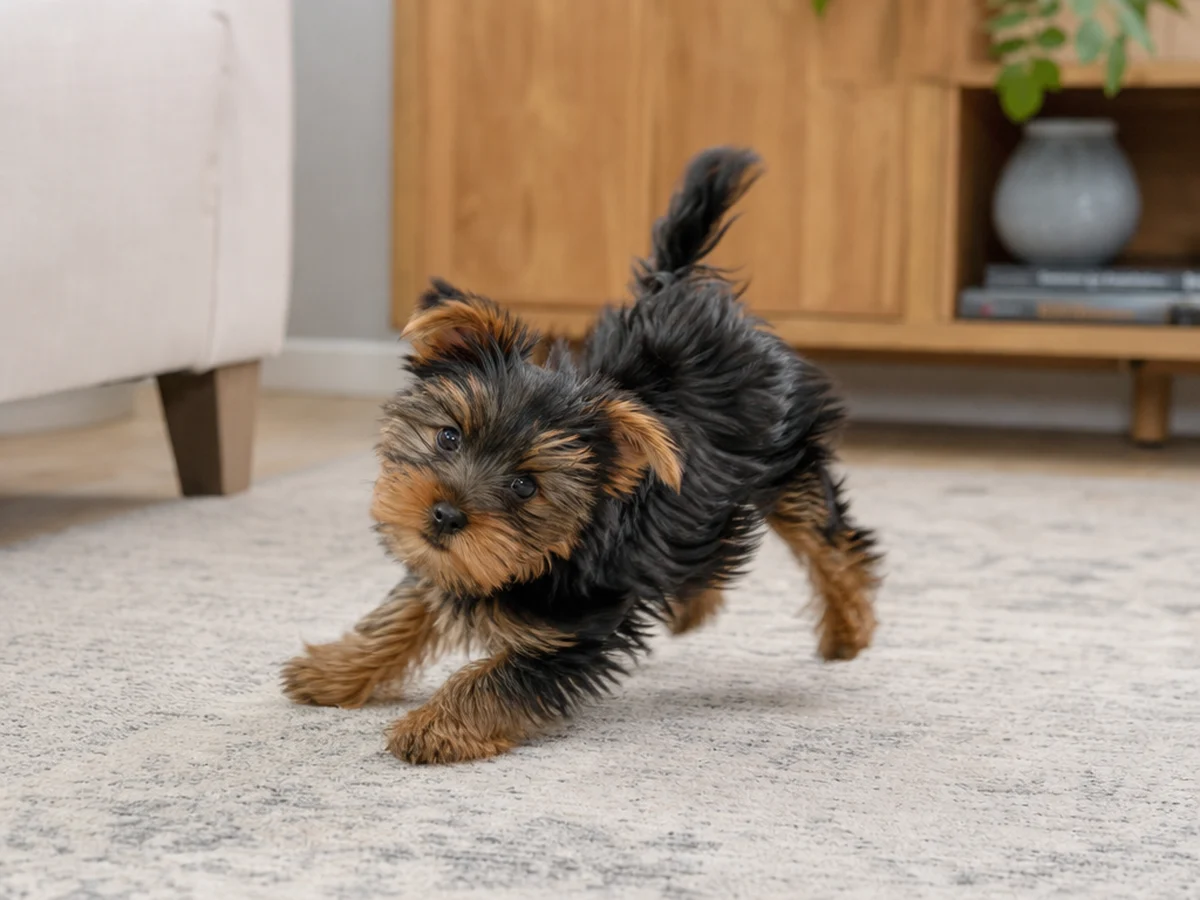
A Yorkie puppy who hears a bright, excited voice usually answers with a full-body wiggle, and that eagerness explains why effusive praise and treats work far better than anything harsh. Trainability is rated 4 of 5, and these dogs are very intelligent, loving and keen to please. The breed standard adds that they are spirited, which is the terrier showing through, so keep training upbeat enough to hold the attention of a confident little dog.
Rewards That Work
Use whatever your puppy finds exciting: a pea-sized treat, a high-pitched happy voice, a quick game, or a marker word such as "yes" or a clicker that tells them the exact moment they got it right. Owners credit all of these with improving results, especially in potty training. If your puppy ignores the treat, either the treat is wrong or the room is too distracting, so change one of them rather than repeating the cue.
When a young Yorkie seems stubborn despite clearly understanding you, shrink the task and raise the pay. If they bark at or grab something they shouldn't have, interrupt calmly, redirect to something they can do and reward that.
Paying for the Real Thing
Clever Yorkies can learn to exaggerate a potty signal to earn a treat, asking to go out many times a day. If your puppy asks out and then only sniffs around, bring them back in without a reward and pay only when they actually go. Pay at the moment of the right behavior.
Tiny dogs fill up fast, and a handful of treats can equal a meal's worth of calories. Cut treats small and count them as part of the daily food.
Short Sessions Suit Yorkshire Terrier Puppy Training
A puppy who nails a sit and then wanders off to chew the rug is not being stubborn. They have used up their attention. Yorkies rate 4 of 5 on energy and also 4 of 5 on mental stimulation needs, yet the body is small and tires quickly, so brief bursts scattered through the day beat one long lesson.
Use daily life as your schedule. Cue a sit just ahead of mealtime, a pause at the door, a settle before the leash clips on. Each takes seconds, and the reward, such as dinner or a walk, comes built in. Diagnose the session by what your puppy does:
- If they stop taking treats, the session is over, and ending there keeps training pleasant.
- If they bounce around and can't focus, play for a moment first and then ask for a single easy cue.
- If they miss a cue repeatedly, make it easier and finish on a success so the last memory is a win.
- If they leave a game still wanting more, they will return eager, and that is the state to aim for.
Because Yorkies are so people-focused, the reward for a good session can simply be a cuddle or a game.
Puppy Socialization Goes Slowly
Yorkies score 5 of 5 for openness to strangers and 5 of 5 for watchdog nature, and that pairing explains a lot. A confident terrier in a tiny body may greet everyone happily one day and bark hysterically after a single scare the next. Start socializing early, but introduce new situations slowly, in a calm, happy atmosphere, so each one becomes a good experience.
People
Ask visitors to sit down and ignore your puppy at first, then let your puppy choose whether to approach. Reward the approach, and if they hang back, reward any calm look from a distance. Handled this way, a puppy learns that people predict good things. Children can join in, since the breed is rated 5 of 5 with young children, as long as an adult supervises.
Places and Sounds
Several owners trace a dog's first bark to a startling event, such as a toad, a family member appearing suddenly or something seen through a window. Barking continued in some of those dogs and not in others. Add new floors, doorbells, vacuum cleaners and car rides gradually, at low volume or at a distance, and pay for relaxed behavior. If your puppy startles, make the next exposure gentler rather than abandoning the practice.
Other Dogs
Good with other dogs rates 3 of 5, which means supervision, and some Yorkies behave as if they are the biggest dog in the world. Borrow the method of a calm helper dog: approach only until your puppy notices the other dog without reacting, then move away and reward with praise or treats. Repeat before any reaction builds, and shorten the distance bit by bit.
Handling a Tiny Puppy Gently
At 4–7 pounds, a Yorkie puppy is easy to drop, squeeze or overexcite, and the way you pick them up shapes how they feel about being handled. Slide a hand under the chest, support the hindquarters with the other, and keep the body level. Children should sit on the floor when holding the puppy, because a fall from standing height is a real risk.
Training at Ground Level
Sit or lie on the floor, hold treats low and lure downward so your puppy isn't craning their neck up at you. If your puppy keeps jumping at your knees for attention, that is a sign you are training from too high up or paying too late. Drop to their level and reward four paws on the floor.
Protecting Small Joints
Care should be taken to limit jumping height, especially in puppyhood, to help avoid luxating patella, a knee problem. Use ramps or steps for the sofa and bed and block access when you can't supervise. A consistent family program matters here, because the rules have to stay the same every time, with no exceptions for certain places or moments.
Yorkshire Terrier Puppy Training Takes Months
Progress with a Yorkie rarely runs in a straight line. Several owners say full, reliable house training took many months to a couple of years, and some call Yorkies the hardest dogs they have trained. A few report a puppy trained in a week, but those are the exception. Some Yorkies of three years or older still have accidents despite good effort, and rescues often go through a period of accidents after arriving in a new home.
When your puppy regresses, ask what changed. If the trigger is teething, weather, a new pet or a household shake-up, restore the routine and pay more often. If the puppy seems anxious, submissive peeing or separation anxiety may be involved, so keep departures calm and rewards frequent. If a reliable puppy suddenly goes indoors or passes frequent tiny amounts, a medical cause is possible, and regular vet visits are wise for a toy breed anyway.
This is general information, not medical advice. If your puppy's toilet habits change suddenly, or you have questions about treats, feeding or their joints, check with your veterinarian.
Some quirks fade without much effort. Poop eating, which many owners report, usually eases with age, and picking up promptly and brushing teeth often help in the meantime. The pattern behind all of it is the same: steady kindness builds a reliable Yorkie. Skipping steps creates setbacks, while rewarded effort, gentle handling and slow exposure produce an adult who trusts you.
Puppy Training Questions Owners Ask Next
After the basics are set, owners usually ask about three things. If accidents are your main frustration, our guide to potty training a Yorkie puppy covers schedules, signals and cleanup.
If your puppy has started barking at the window or at every passing neighbor, teaching quiet with rewards shows how to mark and pay for calm. The feisty, bossy streak many owners describe is the same confident terrier spirit, and it responds to clear routines and rewards for calm behavior.
If you wonder how far a bright, eager Yorkie can go, read about Yorkies as service dogs. Whatever you aim for, the answer starts the same way. Meet your puppy's need for play and mental work with short, happy sessions, and the confident little terrier you are raising will have no reason to look for less welcome outlets.
 BehaviorWhy Your Yorkie Acts Like a Big Dog
 Coat brushingFirst Commands Every Yorkie Dog Can Learn With Treats
 Training basicsHarness and Leash Training for Your Yorkie, Step by Step