 Yorkie
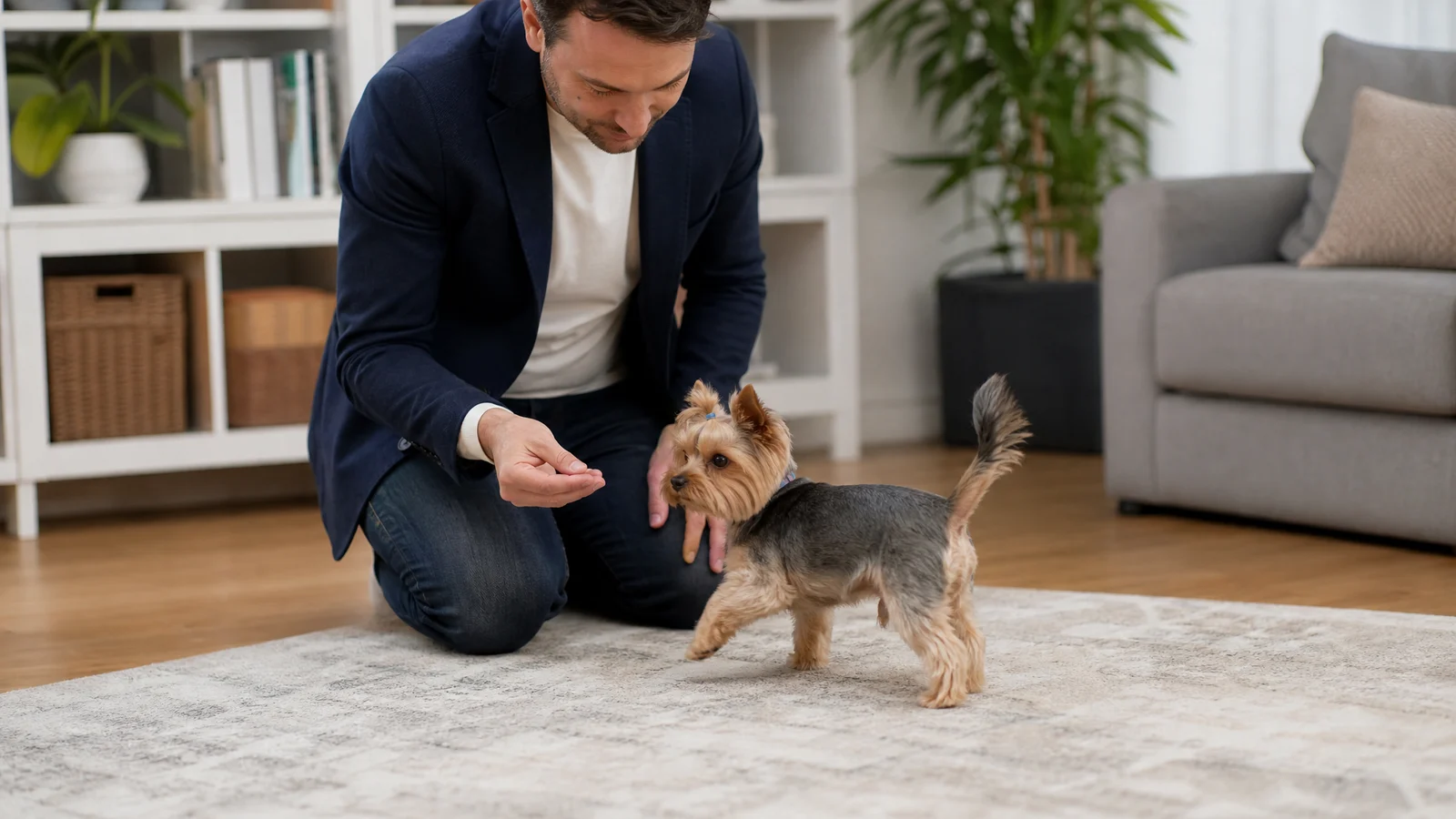
Calling a Yorkie smart is easy, and turning that label into a fair lesson takes more care. Intelligence can appear as quick pattern learning, close attention to consequences, inventive problem solving, or a fast discovery that waiting beside the treat shelf pays better than joining you across the room during a familiar practice session at home.
This report translates those observations into training choices. It does not assign every Yorkshire Terrier one fixed ability or promise instant obedience. We separate learning from compliance, show what to record, and explain how rewards, setting, and repetition alter performance. Read on for a practical account of what your dog understands, values, and can do next.
Yorkshire Terrier Training Needs More Than One Measure
A single word cannot describe every kind of learning, and a dog may solve a food puzzle rapidly but need more practice transferring a hand target from the kitchen to the yard. Another may follow human movement closely yet stop participating when the reward has little value.
The UKC description calls the Yorkshire Terrier intelligent, lovable, spirited, and an excellent companion, and those traits offer useful context, but they do not replace observation. Individual experience, comfort, motivation, and the exact task still shape what you see.
Translate Labels Into Observable Verbs
Replace “smart” with notes such as notices a marker, remembers a location, tries a new action, follows a hand, or returns after an error, and each verb points toward a lesson. A broad compliment feels good, while a specific behavior tells you what to reinforce.
Use a simple record with the cue, setting, reward, response, and next change, and keep the tone neutral. “Looked away after the door opened” is more useful than “became stubborn,” because it identifies the competing event without pretending to know an attitude.
| Observation | Possible meaning | Fair next test |
|---|---|---|
| Responds in the kitchen | Context may support the cue | Try another quiet room |
| Offers several actions | They may enjoy shaping | Mark one clear criterion |
| Leaves after repetition | Value or novelty may have dropped | Change reward or end earlier |
The middle column is a hypothesis, not a verdict, and test one change at a time and watch whether performance improves. If several variables move together, you will not know whether the location, reward, duration, or distraction made the difference.
Repeat the same modest test on another day before calling the result a pattern, and one missed response may reflect a noise outside, a recent meal, or simple interest elsewhere. Several observations under comparable conditions carry more value than a dramatic conclusion drawn from one attempt.
We also distinguish learning speed from durability, and a behavior acquired quickly may remain dependent on one prompt, while a slower skill may become flexible through careful practice. Record what the dog can do after a pause and in a changed picture, not merely how fast the first success appeared.
Yorkie Training Separates Learning From Compliance
Understanding a cue and performing it now are different events. A dog may know that “come” predicts reaching you but choose a nearby scent when that outcome is stronger. That choice does not prove a lack of intelligence. It asks you to improve the training conditions.
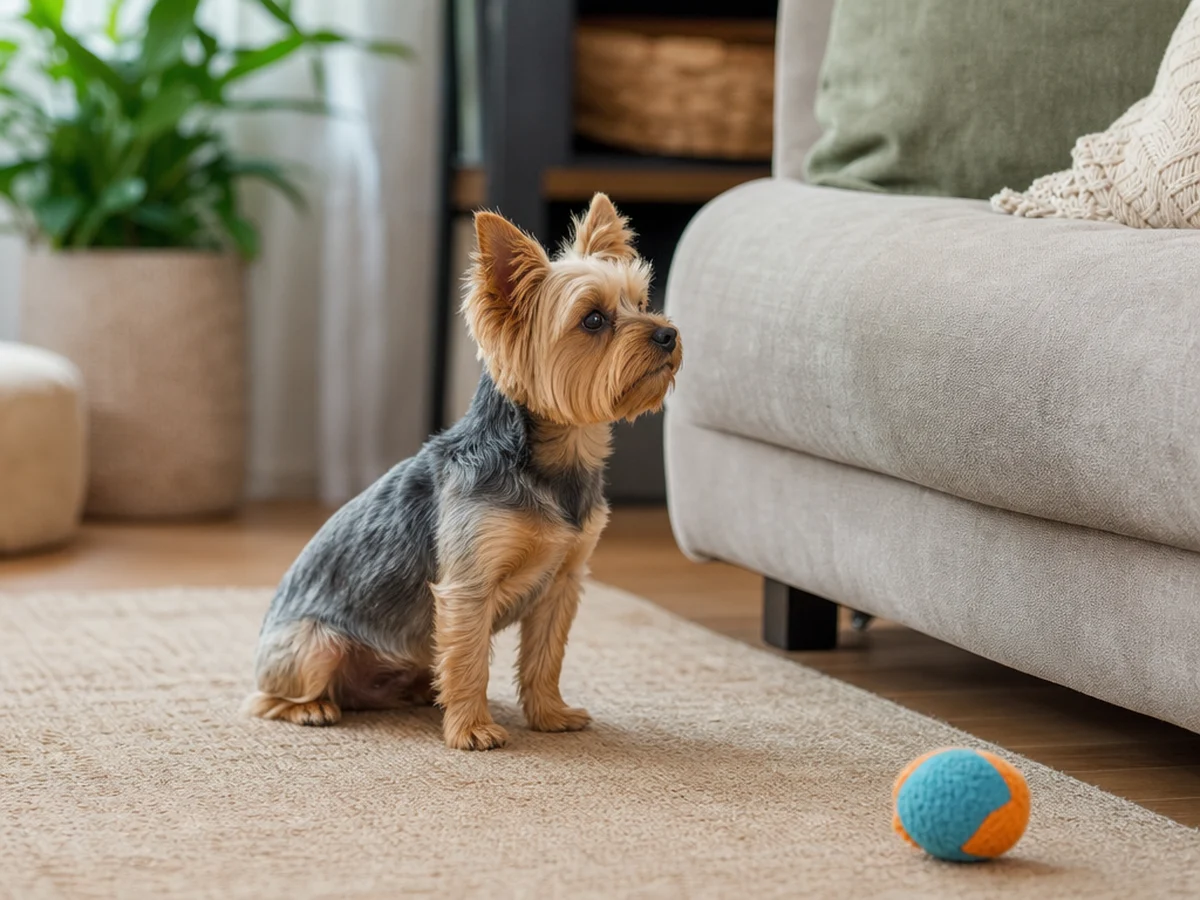
The AKC breed profile describes Yorkies as very intelligent and eager to please, with trainability rated 4 of 5, and it also favors praise and treats for good behavior. Read those points as a reason to teach clearly, not as a guarantee that every request will win.
Reward the response you want at a level that fits the setting, and indoors, a piece of regular food or cheerful praise may work. Near an open door, your dog may need a more valuable food reward, a toy, or permission to investigate after checking in.
Check the Whole Learning Chain
Before deciding that a cue failed, inspect the chain, and did your dog hear it, understand it in this location, find the requested action physically comfortable, and expect a worthwhile result? A weak link can resemble refusal even when the familiar word is recognized.
Make the picture easier when accuracy drops. Reduce distance, quiet the room, or return to a smaller movement. Mark the first correct effort, then rebuild. This approach teaches the dog which action works instead of adding pressure to a confusing moment.
Humane training guidance recommends teaching desired behavior with reward-based methods, and structure still matters. Clear starts, predictable criteria, and a release cue make the task easier to understand without fear or pain.
Write the chain from the dog’s point of view. They notice a signal, select an action, meet a consequence, and decide whether to repeat the action later. Improving any link can change the result, which is why broad judgments about willingness rarely solve the lesson.
Short Yorkie Training Sessions Reveal More
Long drilling can hide useful information beneath fatigue, satiation, or boredom. Brief lessons let you see the first response, the effect of one adjustment, and the point at which attention begins to drift. Stop while your dog is still choosing to participate.
The short-session advice from the RSPCA favors regular practice without overwhelming the learner. “Short” is not one universal number. Watch accuracy, pace, body language, and willingness to reengage instead of training against a timer.
One useful session may contain a warm-up, a small question, and an easy finish. Ask for a known target, change one detail such as your position, then reward a familiar response. That progression creates evidence without turning the lesson into an endurance test.
- Warm up with one fluent behavior.
- Change a single condition for the day’s question.
- Reward the first accurate effort generously.
- Finish with a response your dog enjoys.
The list describes a shape, not a quota. If the warm-up reveals low engagement, finish there and meet the dog’s needs. If the small question is answered easily, record it rather than adding several new difficulties that blur what was learned.
Yorkie Training Rewards Are Part of the Test
A reward is defined by its effect on behavior, not by the label on the package. If your dog leaves a biscuit but races after a tossed toy, the toy may be the stronger payment in that moment. Preferences can also change with hunger, activity, and surroundings.
Compare rewards fairly. Use the same easy behavior in the same quiet place, then observe speed, enthusiasm, and whether your dog returns for another turn. Do not wave several options at once. A clean comparison helps you build a practical reward menu.
Match Payment to Difficulty
Easy household responses may need modest payment, while a new behavior or distracting place deserves more. This is not bribery. You are arranging consequences so the requested choice can compete with the environment while the skill is still developing.
Life rewards matter too. A calm pause can open a door, a check-in can release your dog to sniff, and standing on a mat can bring a visitor closer. These outcomes make training part of ordinary life rather than an isolated exchange beside a treat pouch.
For an individual reward profile, the Yorkie personality interview helps connect preferences with lesson design. Revisit the menu often. A reward that worked yesterday may be less useful after a meal or in a busier setting.
Delivery changes value as well. A treat placed on a mat supports stillness, while the same treat tossed away can create movement and a reset. A toy may support an active recall but disrupt a quiet handling exercise. Choose both the reward and its delivery to fit the behavior.
Yorkshire Terrier Obedience Training Must Travel
Dogs learn complete pictures, including your posture, the floor, nearby objects, and what usually happens next. A sit beside the food cabinet may not be the same problem on a sidewalk. Transfer is a trained skill, not proof that the first lesson was forgotten.
Change one feature at a time. Face another direction in the same room, move to a quiet hallway, then practice near a closed exterior door. Reward generously at each new stage and step back when accuracy falls. The smaller transition often produces the clearest learning.
Use familiar cues as anchors when the environment changes. A hand target or name response can begin the session before you ask for something harder. The first command deck explains how to build those foundation skills without crowding them together.
Do not turn a miss into repeated commands. Pause, regain an easier setup, and cue once. Repeating the word while your dog remains unable to respond teaches that the first version is optional and adds noise to the evidence you are collecting.
Keep a familiar safety boundary while you test transfer. A leash, gate, or enclosed room prevents a training question from becoming an emergency. Management does not mean the dog failed. It creates the conditions in which a new response can be reinforced accurately.
Yorkshire Terrier Training Ends With a New Question
A useful report does not conclude that a dog is bright, average, or difficult. It names a behavior that is fluent, a condition that changes it, and the next fair test. That conclusion can guide tomorrow’s lesson without limiting who your dog may become.
Review your notes for patterns across several days. Perhaps responses stay accurate in three rooms but slow near movement, or shaping produces more engagement than repeated luring. Build the next session around that pattern, then preserve an easy success so the dog leaves confident.
- name the response that is already fluent
- record the condition that changes performance
- choose one fair adjustment for the next test
Keep health and comfort in the picture through regular veterinary visits. If a familiar action changes suddenly, looks physically awkward, or declines across ordinary settings, pause the experiment and speak with your veterinarian. A behavioral record can help describe the change without trying to explain its medical cause.
Compare the report with daily life rather than a staged test alone. Notice how your dog solves access to a favorite resting place, predicts household routines, or asks for help. Everyday patterns can reveal strengths that a formal cue session never invites them to show.
The final translation is simple but not simplistic. Yorkie intelligence becomes useful when you observe precisely, teach with rewards, and adjust one condition at a time. Write one narrow question for the next lesson, such as whether a target transfers to the hallway, and let the answer shape the session after that.
Keep the report descriptive and generous. It should help the next trainer reproduce success, explain why an easier setup is fair, and show where choice remains strong. Intelligence then becomes a working conversation rather than a score pinned permanently to the dog.
 Exercise and jobsCan a Yorkie Be a Service Dog?
 House trainingPotty Training a Yorkie Puppy Without the Setbacks
 Barking for attentionHow to Train a Yorkie Not to Bark Using Rewards