 Yorkie
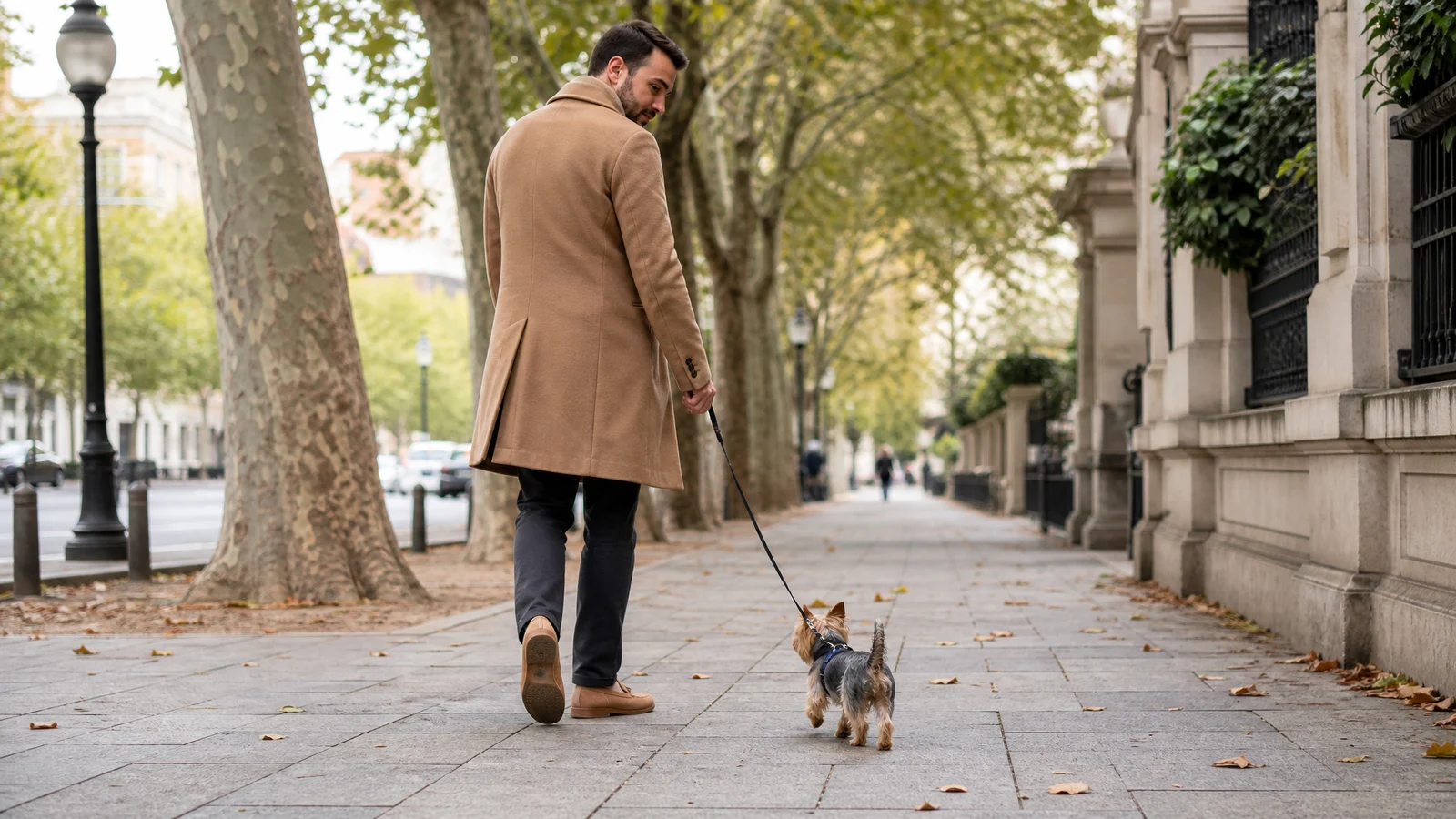
A harness can become a cooperative training station before it ever reaches the sidewalk, and your Yorkie sees the gear, chooses to approach, places their head near an opening, and learns that every pause is respected. The equipment then predicts rewards, clear choices, and shared movement instead of an abrupt change they did not understand or willingly join during ordinary daily preparation.
This studio develops that conversation from fit check through real walks. We use seven workbenches for equipment, consent, fastening, leash connection, first steps, pulling, and new places. Read on for a reward-based process that stays fully adjustable. If your dog hesitates, the next useful step is smaller, not firmer.
Yorkshire Terrier Leash Training Fit Bench
Start with the manufacturer’s fitting directions because harness designs differ, and check that straps lie flat, buckles close without pinching, and legs move freely. You should be able to inspect the contact points without forcing a finger rule that ignores coat, shape, or the specific design.
Watch your dog walk indoors for a few moments, and look for a natural stride, easy shoulder movement, and no rubbing, twisting, coughing, or attempts to escape. Recheck after movement because a harness can shift even when it appeared centered while the dog stood still.
| Studio check | What to observe | Next adjustment |
|---|---|---|
| Standing fit | Flat straps and clear skin | Follow maker guidance |
| Walking fit | Free gait and stable position | Stop if rubbing or twisting appears |
| Leash point | Hardware secure and easy to reach | Practice clipping before a walk |
No table can confirm comfort for every dog, and if movement changes, skin becomes irritated, or you are unsure about fit, stop using the equipment and ask a qualified professional or veterinarian for help. Training cannot make unsuitable gear suitable.
Photograph the fitted harness from the side and above for your own reference, then compare its position after movement, and coat length and normal activity can change how straps sit. Recheck the fit regularly instead of assuming an earlier adjustment remains correct.
Yorkshire Terrier Harness Training Approach Bench
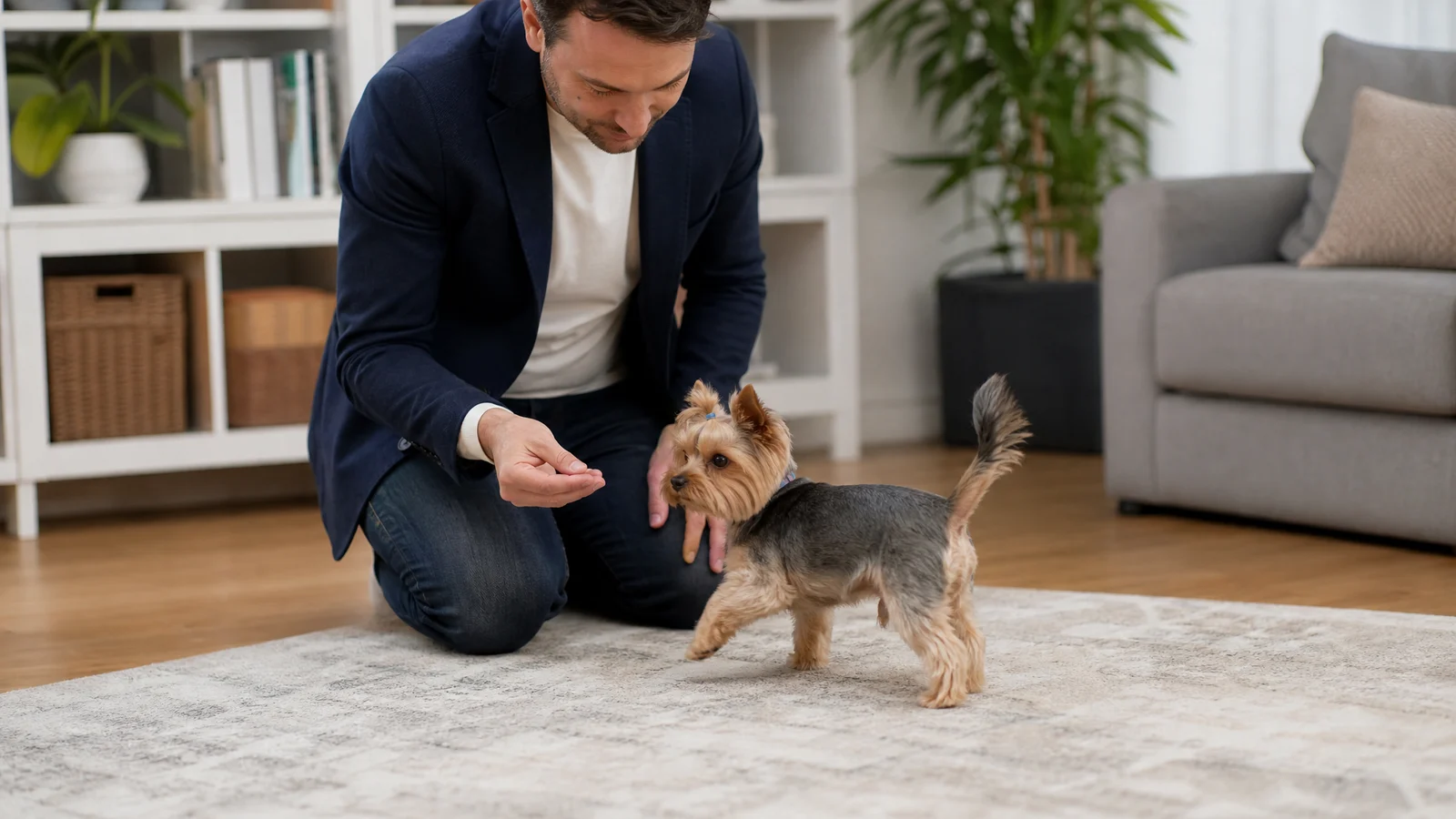
Place the harness on the floor and let your Yorkie notice it, and mark a glance, step toward it, or sniff, then place the reward away so they can choose to return. That reset makes each approach voluntary and prevents food from holding the dog beside an object they want to avoid.
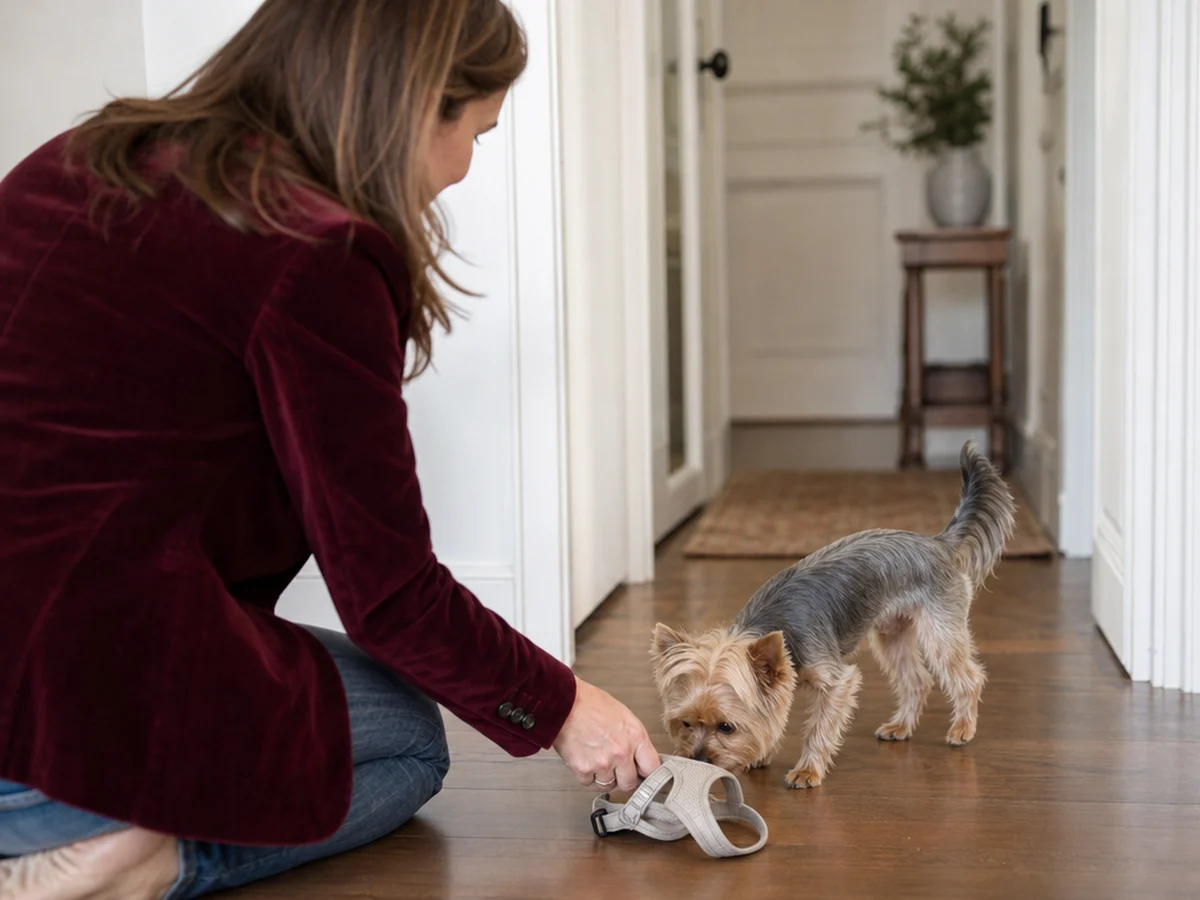
Move the harness only after relaxed approaches become easy. Lift it slightly, reward, and set it down. Next, hold it in your ordinary fastening position at a generous distance. If your dog backs away, return to the last picture that produced loose, willing movement.
The studio rule is simple. Present the gear, wait for a voluntary action, mark it, reward, and offer a reset. Do not chase your dog, corner them, or push their head through an opening. A cooperative start protects trust and makes future repetitions easier to read.
Vary the reset by placing the reward away from the harness, inviting a short play break, or ending the session, and returning after a genuine break shows that the dog is choosing the station. Remaining because food continuously appears beside the gear is less informative.
Yorkshire Terrier Harness Training Fastening Bench
Break fastening into separate sounds and touches. Handle a buckle away from your dog, click it softly, and reward calm observation. Touch a strap briefly to the shoulder, mark stillness or a voluntary lean, then remove it. Removal is part of the reward when touch is new.
Clicker training guidance recommends dividing a finished behavior into small rewarded steps. A marker word can serve the same timing job if it has been taught. The marker tells your dog exactly which choice earned payment.
For an over-the-head design, reward looking through the opening before asking for any head movement. Hold a treat beyond the opening only if your dog remains free to withdraw. Gradually reward a nose, then more of the muzzle, and finally a comfortable head placement without pulling the harness toward them.
Fasten one buckle, reward, and unfasten. Build duration only after the closure itself is ordinary. If your dog freezes, scratches continuously, or refuses food they normally enjoy, remove the gear calmly and return to an earlier step during another brief session.
Change your own position gradually because bending overhead can alter the picture. Practice from the side, from a low seat, and eventually from the posture you will use near the door. Keep hands slow and visible so the dog can predict each movement.
Leash Training Connection Bench
Practice the leash clip while the harness session is still indoors. Touch the clip to the attachment point, mark, and reward. Then connect it for a moment while you hold all slack. Prevent the leash from dropping or chasing your dog across the floor.
Teach gentle movement separately from pressure. With the leash loose, shift one step sideways and reward your dog for turning with you. If the line becomes taut, stop your own motion and wait for slack or invite an easy hand target without pulling them into position.
Keep the first connected exercises clear:
- clip on, reward, and clip off
- stand together while the leash hangs loose
- take one shared step and reward near your side
- release to sniff after a check-in
These are skill pieces, not a rigid schedule. Your Yorkie may need several sessions with the clip or move quickly to a few indoor steps. Progress depends on relaxed participation and equipment comfort rather than completing every item in one day.
Practice a calm pause after clipping and before motion. That pause prevents the sound of hardware from becoming an automatic sprint signal. Reward stillness, say a release word, and begin together so the first step belongs to a shared routine.
Leash Training Walking-Together Bench
Begin in a quiet room with a short route between two visible points. Reward beside your leg, change direction before the leash tightens, and use a release word before a sniff break. The goal is shared awareness, not a precise competition position.
Deliver rewards where you want the dog to return. If food always appears in front, forward pulling may gain value. Feeding near your side creates a useful location, while permission to investigate gives the walk another legitimate reward.
A steady pace can still include choices. Pause for sniffing, let your dog look at the environment, and resume when they can reconnect. The first training cues deck can add a hand target and name response without turning every walk into constant commands.
Use the Yorkie learning report to record which locations support connection and where attention changes. The notes can separate a skill gap from an environment that is currently too busy, leading to a fairer next route.
Let the route include quiet observation. Standing at a comfortable distance from movement can be useful practice when your dog remains relaxed. Walking farther is not always the best measure. Quality of connection matters more than reaching a landmark.
Leash Training Pulling-Repair Bench
When the leash tightens, stop rather than jerking back. The PDSA pulling guide recommends waiting for pulling to stop without pulling the leash in return. Mark slack, reconnect, and move again.
If standing still creates a prolonged contest, calmly change direction when your dog can follow. Best Friends guidance suggests rewarding the turn rather than yanking the leash. Practice the turn indoors so it is familiar before a distracting walk.
- stop when the line first becomes tight
- mark the return of slack
- reward reconnection near your side
- resume toward the safe goal only when ready
Ask what the pulling reaches. A smell, greeting, doorway, or faster pace may be the actual reward. Use distance and planned access. Reward a loose approach, then release your dog to the safe goal when the line remains soft. If tension returns, step away and simplify the new attempt.
Do not make forward progress the only success. A voluntary glance, a return toward you, or one soft step can earn payment during a hard moment. Small reinforced choices rebuild the conversation and prevent a difficult block from becoming a strength contest.
Review reward placement if pulling returns repeatedly. Feeding too far forward may keep the dog’s weight aimed ahead, while payment near your side supports a different location. Delivery is not a permanent heel requirement. It is one temporary way to clarify the useful zone.
Keep regular veterinary visits in the broader care plan, and ask your veterinarian about any sudden gait change, coughing, discomfort, or reluctance to move. Pause harness training while a concern is assessed. Equipment practice should never be used to work through possible pain.
Leave the harness stored calmly after removal and end with an ordinary activity your dog enjoys. Returning to easy approach and fastening steps keeps the equipment history positive as fit, coat, and surroundings change.
Yorkshire Terrier Leash Training Field Bench
New locations combine unfamiliar surfaces, sounds, scents, and motion. The AKC breed profile advises introducing Yorkies to new situations slowly in a calm, happy atmosphere. Begin at a distance where your dog can observe and still take part.
Shorten the route and increase reward value in a novel place. Let looking and sniffing happen before asking for sustained walking. If your dog cannot eat, orient, or move comfortably, retreat to a quieter position. Distance is a training adjustment, not a failure.
End the studio visit with easy gear removal. Reward standing or approaching while you unclip, guide straps gently away, and place the harness out of reach. Check contact areas and note what changed during movement. Those notes belong in the next fitting and training decision.
A successful field visit may be only a few relaxed steps followed by observation and a return home. Write down the quietest entry point, the strongest reward, and the moment attention changed. Those details define the next studio assignment more honestly than distance traveled.
- record where the harness remained centered
- note the point where connection became harder
- identify the reward that restored participation
- choose a quieter starting place for the next visit
This field note is deliberately brief. It captures equipment, environment, reinforcement, and the next setup without judging the dog. Compare notes across walks only after the routes and conditions are similar enough to make the comparison useful.
Cooperative harness work is successful when your Yorkie approaches willingly, moves naturally, and can reconnect on a loose leash. Keep testing comfort instead of assuming it. The next walk begins at the bench, where choice, fit, timing, and rewards remain part of the same shared skill.
 Training basicsTrain the Dog You Have: Yorkie Personality and Your Training Plan
 PuppyYour 8 Week Old Yorkie Puppy: The First Training Week
 Training basicsAre Yorkies Smart? What Intelligence Means for Training