 Yorkie
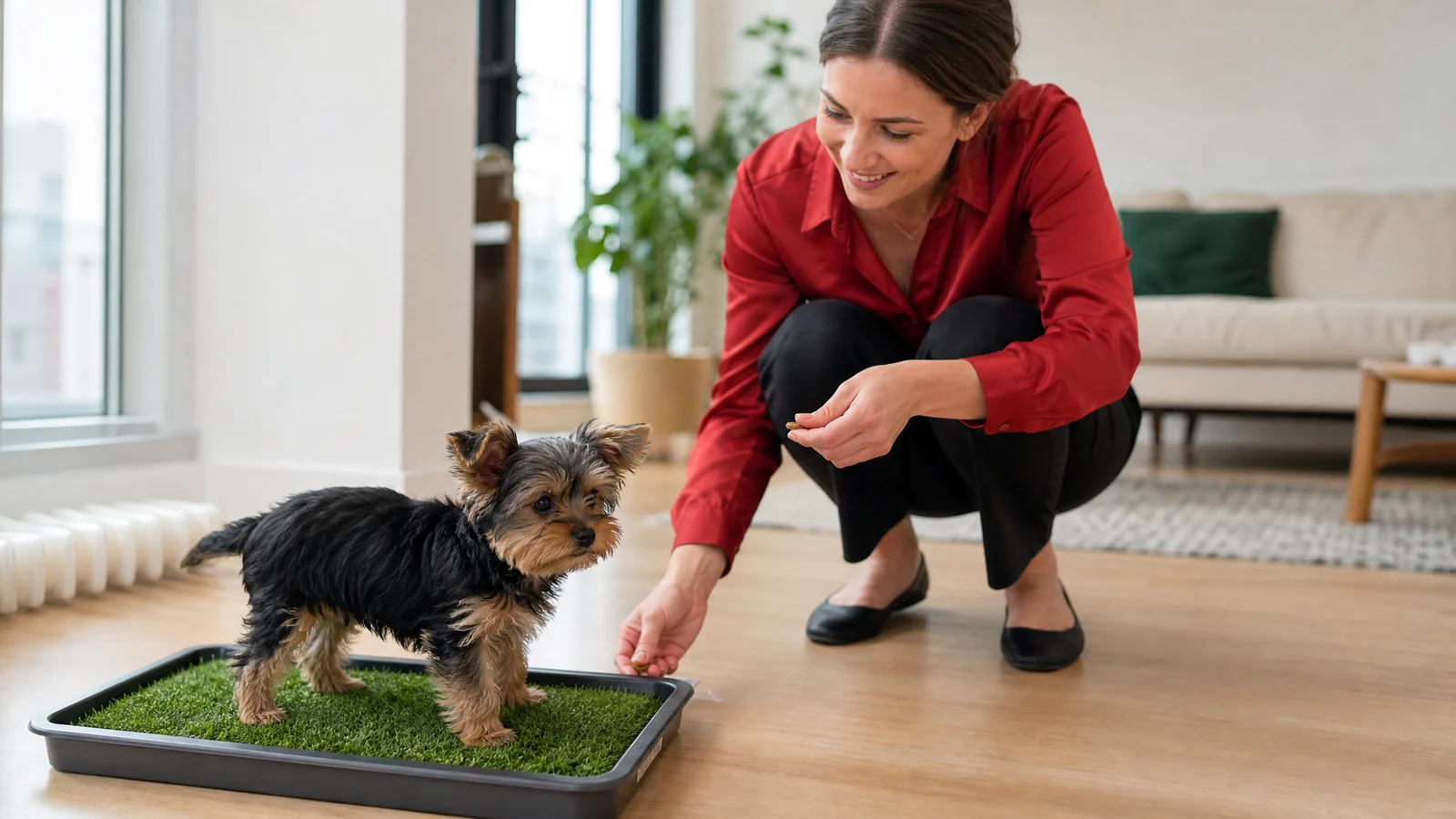
Your Yorkie puppy trots outside, sniffs around, and comes back in with a wagging tail. Two minutes later there is a puddle on the rug. Owners describe this exact scene all the time, and it almost never means the puppy is being spiteful.
What is going on is a tiny bladder plus a lesson that has not yet tied the yard to the house. Many Yorkies also look reliable for weeks or months and then slip, and full reliability can stretch to many months or longer. We have spent many years focused on this breed's training, and the dogs who get there have owners who keep the system running well past the first clean stretch.
In this article, we'll go through instant rewards, the small-dog gear and spaces that make success easy, a daily schedule, accident cleanup, and a reset plan for older dogs who still have accidents.
Potty Training Rewards That Land Within Seconds
Yorkies are very intelligent and eager to please, and rewards are the lever that trait hands you. Your puppy ties a payoff to whatever happened in the last moment or two, so timing matters more than treat size. Make the potty spot the best-paying place in your puppy's day. Tiny, soft treats let a 4–7 pound dog earn many rewards in a day without filling up or losing interest in dinner.
Pay at the Spot, Not at the Door
Stand on the potty patch with a treat already in your hand. The moment your puppy is done, reward right after they finish with your marker word, the treat, and a bright, high-pitched voice. Paying at the back door instead rewards the walk inside, and your puppy will gladly accept that credit. Let them finish completely first, since an early cheer can cut things short and leave a puddle for later.
Pay the Signal Too
Many accidents trace back to a missed or misread signal, such as whining, pacing, or circling. Owners who rewarded that signal, by heading for the door and paying again outside, found it grew clearer over time. This works because reward-based training makes a behavior more likely whenever the dog gets something they truly like for it. Owners also credit an excited voice and clicker work with better habits. Build your payoffs like this:
- Mark and treat the instant your puppy finishes at the spot, then add a quick game as a life reward.
- Answer every clear signal by moving to the door right away, so whining reliably leads somewhere good.
- Throw a small party after a success that follows a long dry stretch.
- Thin the treats into occasional ones over time while the praise stays generous.
Common advice says to drop the treats once a puppy seems to understand. With Yorkies, we would hold on much longer. Backsliding after weeks of success is so common in this breed that a small payoff after a good outing is cheap insurance.
Potty Training Gear for a Yorkshire Terrier Puppy
A breed capped at seven pounds needs equipment scaled to match. Oversized gear gives a tiny puppy room to sleep in one corner and go in another, which quietly undoes your work. A few small, simple pieces will do the job, as long as each one has a specific purpose in your routine.
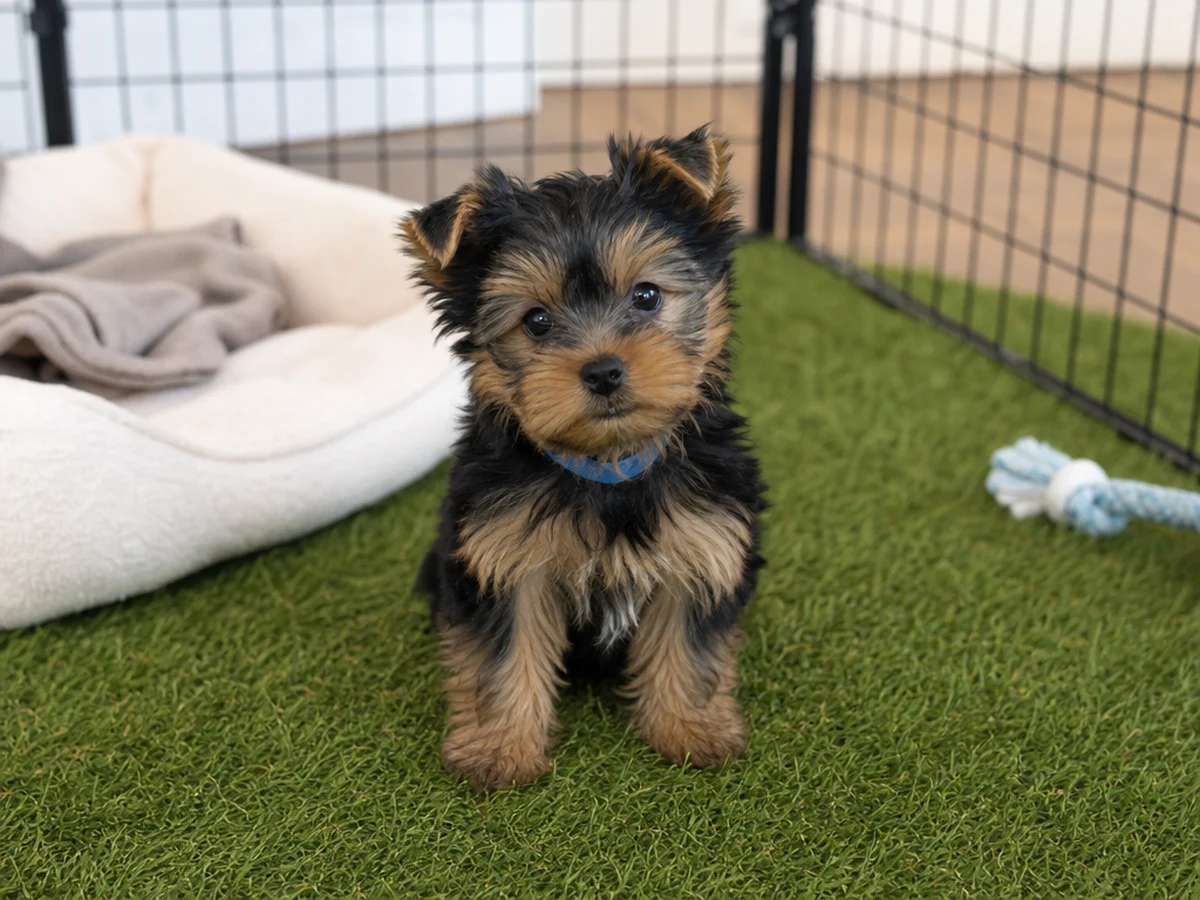
- A snug crate where your puppy can stand, turn, and lie down but has no spare corner. Owners favor a crate their dog won't soil, which tells you the size is right.
- An exercise pen with easy-clean flooring, which gives you a wipeable safe zone for the times you cannot watch.
- A lightweight leash and a well-fitted harness, so trips to the spot stay calm and your puppy stays near you while sniffing.
- A treat pouch worn all day, so a reward is never delayed while you hunt for one.
- A washable pad or pad-like rug for the indoor spot, plus an enzyme neutralizer for the times things go wrong.
Male Yorkies are reported to mark, and owners often get good results from a belly band or wrap used with close supervision. Treat it as a management tool while the habit fades, and change it as soon as it is wet. If you share your house with other dogs, watch a male closely, since marking can show up around other dogs' scents and spaces.
Nights deserve a plan too. Make the sleeping area snug and cozy, take your puppy out right before settling down, and reward calm behavior in the bed or crate with quiet praise and a small treat. Whichever setup you choose, keep it the same night after night so your puppy knows what to expect.
Potty Training Spaces for a Yorkshire Terrier
A whole house is far too big a classroom for a toy dog. Map out one outdoor spot, one indoor safe area, and supervised access to everything else, then keep that layout identical day after day. A puppy who always finds each activity in the same place learns the rules faster than one left to guess, and a small space also means you spot the pre-potty sniffing in time.
Choose One Outdoor Spot
Carry or leash your puppy to the same patch on every trip, then stand still and stay quiet while they sniff. Weather matters for such a small dog. Some owners saw setbacks during extreme cold and in snow or wet spells, so clear a path, shelter the spot if you can, and go out together instead of opening the door and hoping.
Build the Indoor Safe Area
Set the pen up with the bed or crate at one end and the pad or pad-like rug at the other. Some puppies use pads only at certain times or places, or only in part, and a few avoid the pad after seeming to understand it. Leashing your puppy at the pad and rewarding there helps. Keep pad trips calm and low-key, and save the praise and treat for the moment your puppy finishes.
Ration Free Roaming
Hand out freedom in small slices, only right after a successful trip and only when you can watch. Puppies often go where nobody is looking, so close doors, set up gates, and keep your puppy in sight. Offer ramps or low steps for the couch, since limiting jump height protects a small puppy's knees.
The Daily Potty Training Schedule That Prevents Accidents
A young puppy's body cannot hold on for long, which is why frequent toilet breaks are the rule early on, sometimes nearly hourly. Some Yorkie owners say trips every 1 to 2 hours plus constant watching were what kept accidents away. Build your day around that small bladder rather than your convenience, and head to the spot at these moments.
The first trip comes the instant your puppy wakes in the morning, and the next ones follow soon after every meal and every drink. Head out after play and after each nap too, and again when visitors arrive or excitement peaks. Go out before you leave and right after you return, then make the last trip last thing at night. Add one more whenever your puppy wakes and fusses.
Serve meals at set times so the trips fall predictably behind them. A predictable day gives your puppy the kind of structure that humane training guidance favors, with no fear involved. After each success, finish with a short play or cuddle before the pen so the outing ends on a high note. Regular vet visits keep growth and feeding on track.
As weeks pass, stretch the gaps slowly. If accidents creep back, return to the last gap that worked and stay there a while. Yorkie progress tends to move in loops, so a step back is part of the process and not a failure.
This is general information about routines, not medical advice. Ask your veterinarian how much and how often to feed your puppy, and mention any sudden change in how often they urinate.
Cleaning Up Potty Training Accidents Without Repeats
Every household has accidents, and your reaction decides whether one turns into a habit. Keep your tone flat and relaxed. Submissive or anxious peeing is tied to accidents in some Yorkies, and a big reaction to a puddle can feed that cycle. Calm handling and thorough scent control together make a repeat far less likely.
When You Catch It Happening
Make a soft, calm interrupt sound, scoop your puppy up, and carry them to the potty spot. If they finish there, mark and treat as usual. A puppy this small learns quickly when the right place pays, and not at all when the lesson is a stressful scene.
When You Find It Afterward
Clean quietly and say nothing to your puppy, because they cannot connect your mood to something that happened minutes ago. Then run through this routine:
- Blot liquid with paper towels instead of scrubbing it deeper into the fibers.
- Saturate the area with an enzyme neutralizer, which owners report helps, and let it air dry completely.
- Block the spot with the pen or a gate for a few days so the old scent loses its pull.
- Write down the time, the place, and what came before, then adjust the schedule.
Your notes usually reveal a cause, such as a late trip or a missed signal. Easy-clean flooring in the pen and washable rugs cut the workload a lot.
Many owners also report Yorkies eating their own poop, which usually fades with age, though some dogs continue. Owners manage it by picking up quickly and brushing teeth often. Treat it as a housekeeping habit and not a training failure, and bring it up at your next vet visit.
A Reward-Based Potty Training Reset for Older Yorkies
Some Yorkies aged 3 years or older still have accidents despite real effort, and a rescue often arrives with habits from earlier life, such as relying on pads, never having been trained, or living in a cage. Newly adopted dogs also tend to go through a stretch of accidents while they settle in. None of this is a character flaw. The fix is to go back to puppy rules and let rewards rebuild the habit.
Reported ages for when everything finally clicks vary widely. Some owners describe full reliability arriving only after about a year of steady work, and a few say it took years, so build patience into the plan. Work through these steps in order:
- Book a vet visit first. A urinary infection caused sudden indoor peeing in some dogs and stopped with treatment, and kidney problems caused frequent tiny pees in others.
- Look for triggers. Anxiety, separation anxiety, teething, a first heat season, harsh weather, and household changes all coincided with setbacks.
- Restart the puppy schedule, with frequent trips to the same spot and an instant reward each time.
- Shrink your dog's world to the pen or one gated room, with supervised time elsewhere.
- Clean every accident with the scent routine above so old smells stop calling your dog back.
- Widen freedom slowly after a long dry stretch, and step back a level when accidents return.
Expect progress in loops, and keep the rewards flowing. For the wider picture of how treats and praise shape every lesson, see training your Yorkie puppy.
A Potty-Trained Yorkshire Terrier Comes From Routine
Every tool above does the same job, which is making the right place and the right moment obvious and rewarding. A bright, eager Yorkie with a tiny bladder learns best from quick payoffs, small spaces, set trips, and calm cleanups, all run daily long after the first clean week. A minority of Yorkies train fast, but plan for the more common path of many months and a few setbacks. Steady routine is what carries your dog through them.
Progress shows up in small steps before it becomes dependable. Look for these.
Dry stretches between trips grow longer, and your puppy heads to the door or the pad unprompted, or gives a clear signal such as whining. Accidents become rare, and you can usually trace each one to a missed trip or signal. Eventually good habits hold up through small disruptions, like rain or a visitor.
Reach out early rather than waiting it out. Call your vet if regression appears suddenly, or if your dog strains or passes frequent tiny amounts. Ask a trainer for help if accidents continue despite a steady routine, or if anxiety seems to drive them. For most Yorkies, patience and generous rewards are what finally get them there.
 Barking for attentionHow to Train a Yorkie Not to Bark Using Rewards
 Puppy nippingTraining Your Yorkie Puppy Starts With Treats and Praise
 BehaviorWhy Your Yorkie Acts Like a Big Dog