 Yorkie
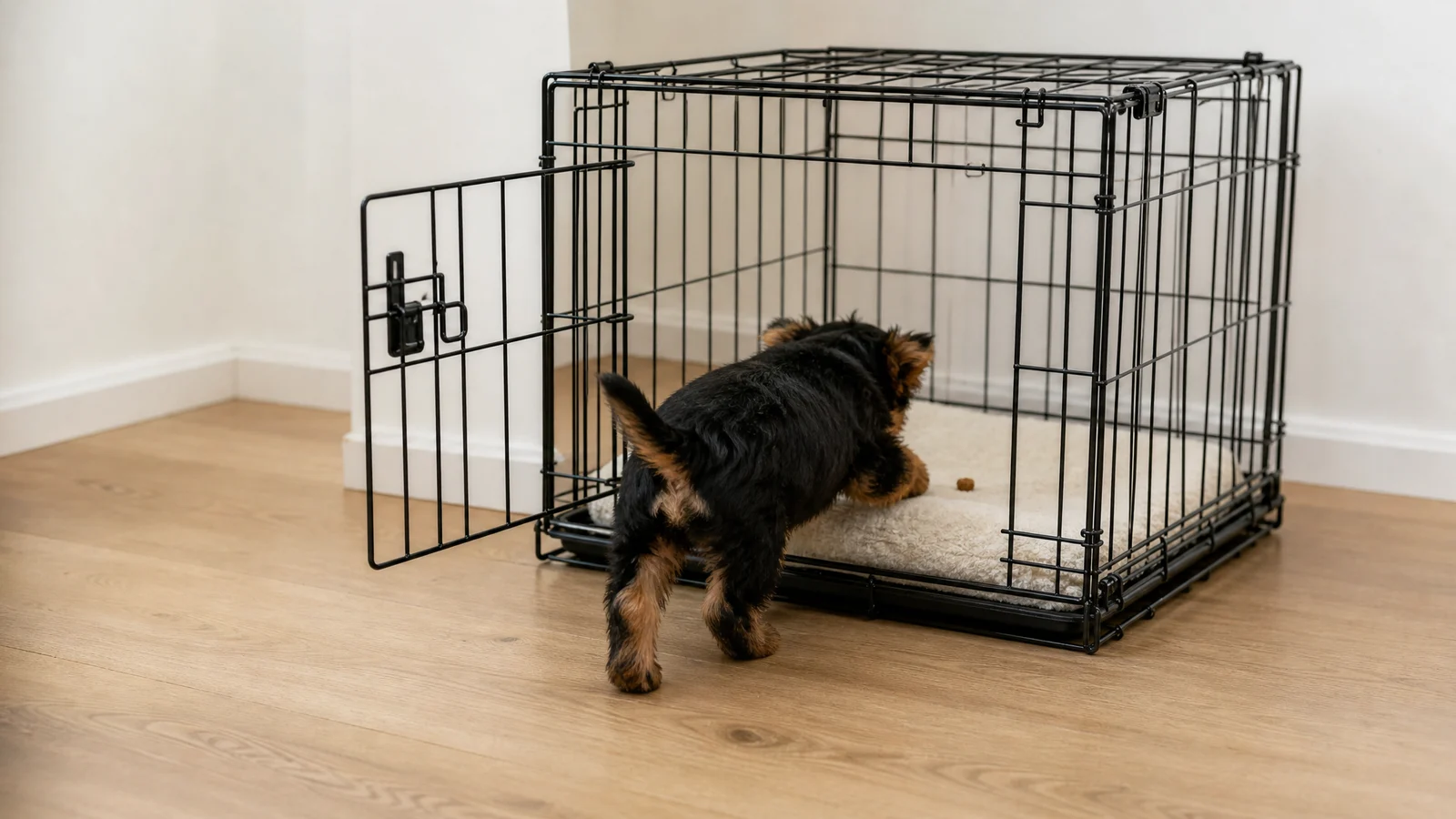
How your Yorkie puppy first meets the crate decides whether they treat it as a place to rest or a place to escape. Most of that early work happens with the door standing wide open.
This breed makes a good start easy, because Yorkies love their people, learn quickly and respond far better to treats and warm praise than to anything harsh. Your job is to make the crate the place where good things happen, one small step at a time.
The rest of this page covers the crate to buy, the order of the door lessons, the schedule around them and the signs that a puppy needs a different plan. Along the way we point out where a toy-size dog changes the usual advice.
Expect the work to take days or even a few weeks, depending on the puppy. That range is normal and says nothing about how bright your dog is.
What a Crate Does for a Yorkshire Terrier Puppy
Before you buy anything, it helps to know what job the crate is being hired for, because that decides how you teach it. For a toy-size puppy, the crate is mainly a safe place to settle when you cannot watch every second. It keeps chewing and wandering trouble small while a young brain is still learning the household rules, it gives house training a helping hand, and it can make a later car ride or vet visit less stressful because the box is already familiar.
A Yorkie also gets something from it that is easy to miss. This is a breed that is happiest spending time with their people, and a crate set up in the right room lets a puppy rest near the action instead of behind a closed door down the hall.
Just as important is what a crate cannot do. It is never a punishment spot, and a puppy who is sent there after a mistake learns to dislike it. It is not a cure for barking or for panic when you leave, either: a crate teaches a puppy to rest, while comfort with real absences is a separate skill that Yorkshire Terrier home-alone practice covers step by step.
Keep that in mind while you teach. The crate should always be something your puppy goes to, never something that happens to them.
Choosing a Crate for a Toy-Size Yorkshire Terrier
With the crate's job settled, the next question is which box does it best for a dog this small. Two decisions matter most: how big it is and what it is made of, and then where it sits.
Size and Divider
The right size is the one where your puppy can stand without ducking their head, turn around and lie down comfortably, and no bigger. A box with room to spare invites a puppy to sleep at one end and use the other as a bathroom, which quietly undoes your house training.
Because a Yorkie stays a toy dog, you are shopping for a small crate even for the adult. A crate with an adjustable divider still earns its place, since it lets one box fit a tiny puppy now and a grown dog later without buying twice. For a puppy this small, we would buy the smallest crate that passes that stand, turn and lie test.
Material and Placement
Material comes first. Wire crates fold flat and can wear a sheet over the top, leaving one or two sides open, which gives many dogs a den-like feel. Plastic crates have solid walls and need no cover. Fabric or mesh crates are light and good for travel, but a puppy who chews can destroy one, so a sturdy wire or plastic crate is the safer place to start learning.
Where the crate sits matters as much as what it is. Put it in a busy part of the home, such as the family room or kitchen, so a puppy who loves company rests within sight and sound of the household. Keep it on the floor rather than on a sofa or bed, since care should be taken to limit a Yorkie's jumping height, especially as a puppy, to help avoid luxating patella.
Add a soft blanket or towel and leave the door fastened open. That is the whole setup.
Puppy Crate Training Starts With the Door Open
A crate only matters once your puppy wants to be inside it, so the first lessons have nothing to do with a closed door. A door that swings shut on a startled puppy teaches the wrong lesson in one second, which is why it stays fastened open while your puppy explores at their own speed.
Teaching the Walk-In
Work through these steps in order and move on only when the one before feels easy. Each one is short, and a step that goes well is a good place to stop for the day.
- Pin the door open first. Use a clip or tie so a bump from your puppy cannot swing it into them, and keep your voice happy and easy while you show them the crate.
- Scatter treats from near to far: drop a few tiny treats beside the crate, then just inside the door, then toward the back. If your puppy stops at the threshold, pay them for the step they took and let them choose the next one.
- If treats do not tempt them, toss a favorite toy inside instead and let your puppy chase it in and out. Never push, lift or pull a puppy through the door, because being forced in is exactly what makes a crate scary.
- Mark and Pay Each Brave Step: say a short marker word the instant a paw crosses the line, then hand over the treat inside the crate so the reward and the place arrive together.
- Move on when your puppy trots in calmly, all the way, for a treat and stays relaxed afterward. Some puppies get there in minutes and some need several days, and both are ordinary.
Repeat the whole sequence in short sessions until walking in is dull for your puppy. A boring entrance is the best sign that the crate has become part of the furniture.
Moving Mealtimes Into the Crate
Once the walk-in is easy, move mealtimes to the crate. Start with the bowl just outside the door, then set it a little farther back at each meal until your puppy stands inside to eat without a second thought. That steady routine adds a pleasant association every day and shrinks any worry about the box.
If your puppy balks halfway in, put the bowl back where they were comfortable and try again at the next meal. Going one step back costs you a single meal, while pushing ahead risks teaching a puppy that the crate is something to be wary of.
Closing the Crate Door on a Yorkshire Terrier Puppy
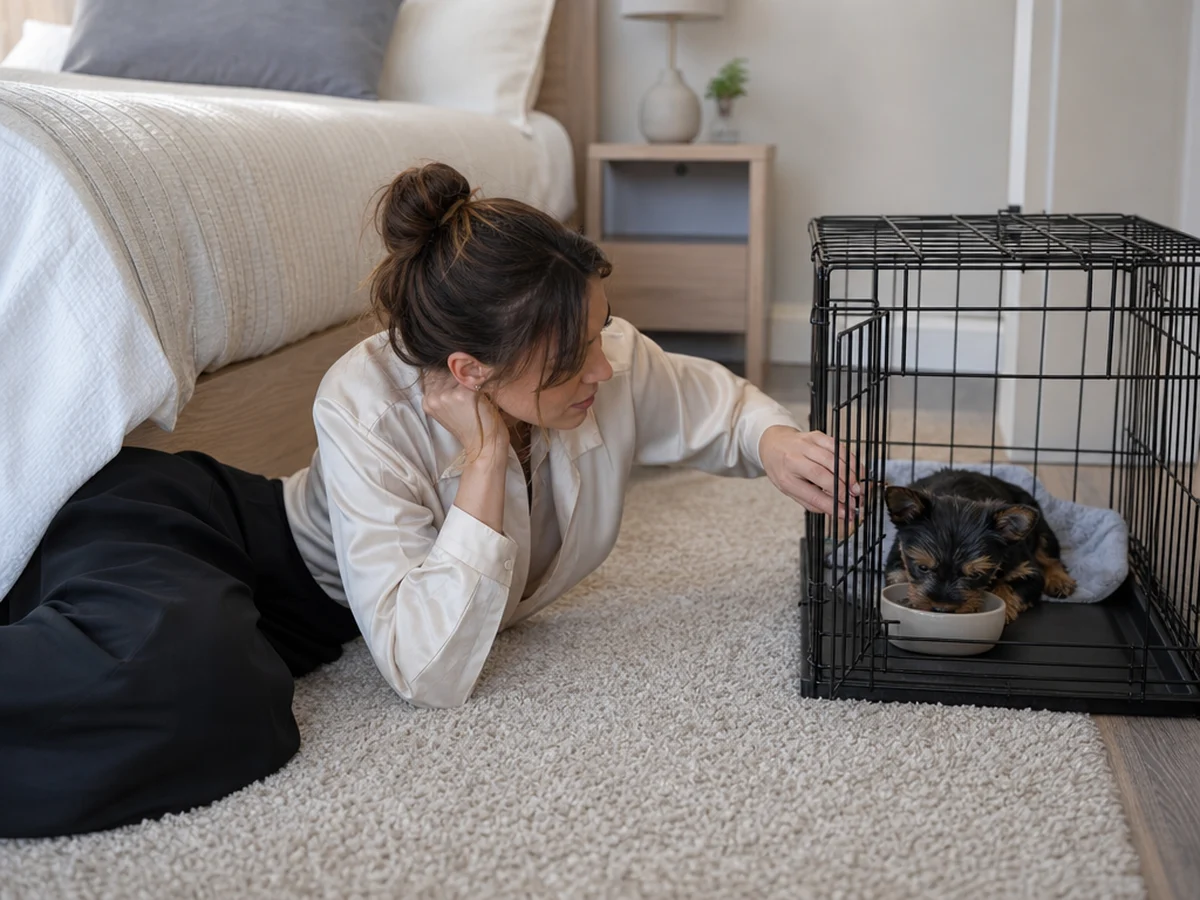
A puppy who eats at the back of the crate without a glance is ready to find out what the door does. Treat the door as its own lesson, taken in pieces, because the click and the shut are new sounds before they are new confinement. Each stage in this table should feel easy for your puppy before the next one starts.
| Stage | What you do | Move on when |
|---|---|---|
| Door touched | While your puppy eats inside, swing the door shut and open it again before they finish. | They keep eating as if nothing happened. |
| Door closed at meals | Close the door for the length of the meal and open it the moment the bowl is empty. | They finish calmly and walk out without fuss. |
| Door closed, you beside | Say a short cue word such as "crate," hand over a treat, close the door and sit quietly nearby. | They settle or rest instead of pawing or crying. |
| Out of sight, briefly | Step into another room, come back, sit down quietly and then let them out. | They stay settled while you are gone and when you return. |
| Longer stays | Stretch the time crated and the time out of sight a little at a time. | They stay quiet for a good stretch with you mostly out of sight. |
Read the last column as your permission slip. If your puppy cannot meet it yet, repeat the stage you are on instead of adding anything new.
Out of Sight and Back Again
Once the door is closed and you are sitting beside it, the usual order is to stay for five to ten minutes, step into another room for a few minutes, return, sit quietly again and only then let your puppy out. Repeat that several times a day, lengthening both the time crated and the time out of sight a little each round. When a puppy stays quiet for about thirty minutes with you mostly out of sight, short stretches in the crate while you are away can begin.
Stay in the house for the first rounds of this ladder. Going out of sight while you are still nearby lets you hear exactly how your puppy takes it and come back before a small fuss becomes a big one.
Keep that same cue word for good. Say it just before your puppy steps in and pay with a treat once they are inside, and over time the word alone starts a happy trot toward the box.
A Crate Training Schedule for a Young Yorkie
Stages need a day to live in, and for a puppy this small the clock matters as much as the lesson. Two pieces of timing keep the plan fair: how long each stretch lasts, and what surrounds it.
How Long a Puppy Can Wait
A simple rule keeps the day honest: use your puppy's age in months plus one to work out how many hours they can be crated. A young puppy can only be expected to hold it for a few hours, never a whole workday, and a dog who is forced to soil the crate by being kept in too long will be much more difficult to house-train.
For a two-month-old puppy the rule works out to three hours at most. Treat that as a ceiling for the longest stretch, never a target, and ask your veterinarian how long your own puppy can reasonably wait while they are tiny.
When you will be away longer than that, the crate cannot be the only place your puppy lives. Set up a small gated area or exercise pen with the crate inside, its door removed, plus water, toys and a potty spot, so your puppy can sleep in the crate and still reach a place to go.
Crate Time While You Are Home
Practice crate time while you are in the house too, in short stretches and at different times of day, so the crate does not turn into a signal that you are about to leave. A puppy who also naps in there while you are home has less reason to link the door with your leaving.
Build the habit around the rest of puppy life. Take a trip to the potty spot before the crate and another right after it, add a little play or a walk beforehand so your puppy is ready to rest, and keep the moment the door opens calm. Our Yorkie potty training plan sets the trip times, and your Yorkie's first week shows how crate naps fit into a full day.
Yorkie Crate Anxiety or Plain Fussing?
Even a well-paced plan produces noise, and the real skill is telling the noise that fades from the noise that means stop. A little whining as the door closes is ordinary for a puppy who is still deciding about a new place.
Yorkies are a vocal breed with plenty to say, so judge the whole picture instead of the volume alone. A puppy who protests briefly and then settles is learning, while one whose complaints keep building is telling you the step was too big.
Some signs mean the crate itself is not working. A puppy who shows excessive barking or other vocalizing, pacing, panting, drooling or accidents in the crate should never be forced to remain crated alone, and dogs who are that stressed may do better in a pet-proof exercise pen or with a sitter keeping them company. A veterinarian or a qualified trainer can help a worried puppy get comfortable with the crate and lower their anxiety.
What to Do When Fussing Becomes Distress
When fussing turns into distress, open the door and let your puppy out. Then go back to the last stage that felt easy, and shorten it.
Before you blame the crate, run through the plain needs: a potty trip, a drink, some play and a bit of company before the door closes. A puppy who suddenly refuses a crate they used to love is worth a call to your veterinarian, and regular veterinary visits keep small changes from slipping past. If your puppy likes the crate but cries every time you leave, that is a different problem with a different plan.
Crate Questions Yorkie Owners Raise
The lessons and the warning signs leave a few practical gaps. These answers fill the ones that decide whether the plan survives a normal week.
Where should the crate go at night?
Keep it in or near your bedroom for the first weeks, so a puppy who is still learning the crate does not link it with being shut away from everyone. You will also hear the whimper that means a potty trip, which a puppy this young often needs overnight. Once they sleep comfortably with you nearby, move the crate a little at a time toward its permanent spot.
Can an adult Yorkie learn to like a crate?
An adult can learn the same ladder, and the stages do not change. What changes is how long each one takes, because age, temperament and past experience all shape the pace. If the crate stays a struggle, ask your veterinarian or a qualified trainer for help instead of pushing on.
Does crate time replace potty training?
No. The crate narrows the number of places an accident can happen, since dogs tend not to soil where they sleep, but the potty plan still has to teach where the right place is. Reward every successful trip outside as if the crate did not exist.
A Crate the Whole House Respects
Once the lessons work, the biggest threat to a puppy's crate is a household that does not know the rules. Everyone who lives with or visits your Yorkie needs one plain rule: when the puppy has gone into the crate, they are off duty. No fingers through the bars, no tapping on the walls, no lifting a sleepy puppy out for a cuddle, and no calling them away from a nap to show a guest.
Even a dog who adores company needs a spot where company stops, and the crate is that spot only while everyone honors it. Say the rule out loud to every adult and child before they meet the puppy, and be the one who enforces it kindly each time.
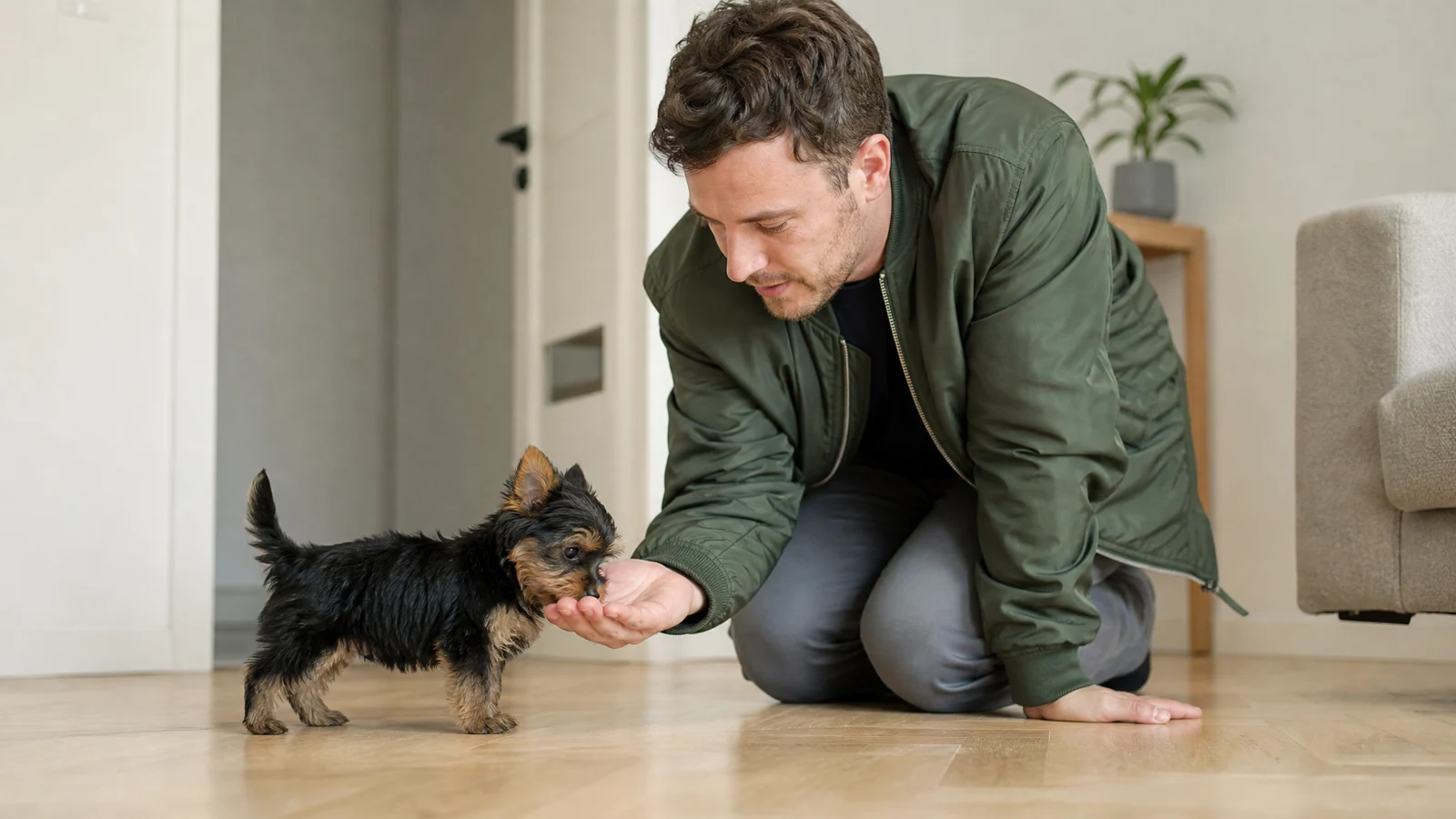 Puppy trainingHow to Socialize a Yorkie Puppy
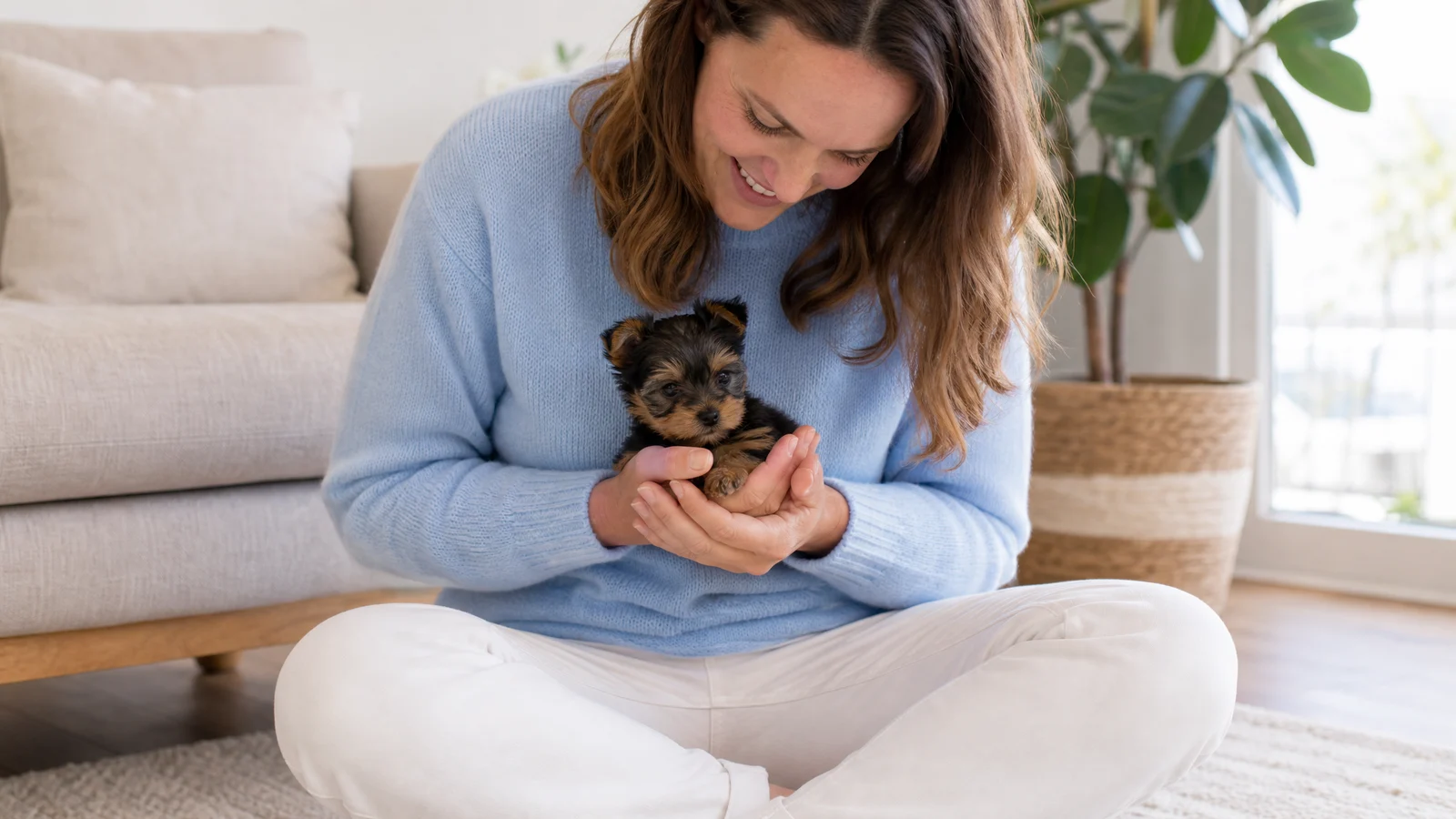 Puppy trainingYour 8 Week Old Yorkie Puppy: The First Training Week
 Training basicsAre Yorkies Smart? What Intelligence Means for Training