 Yorkie
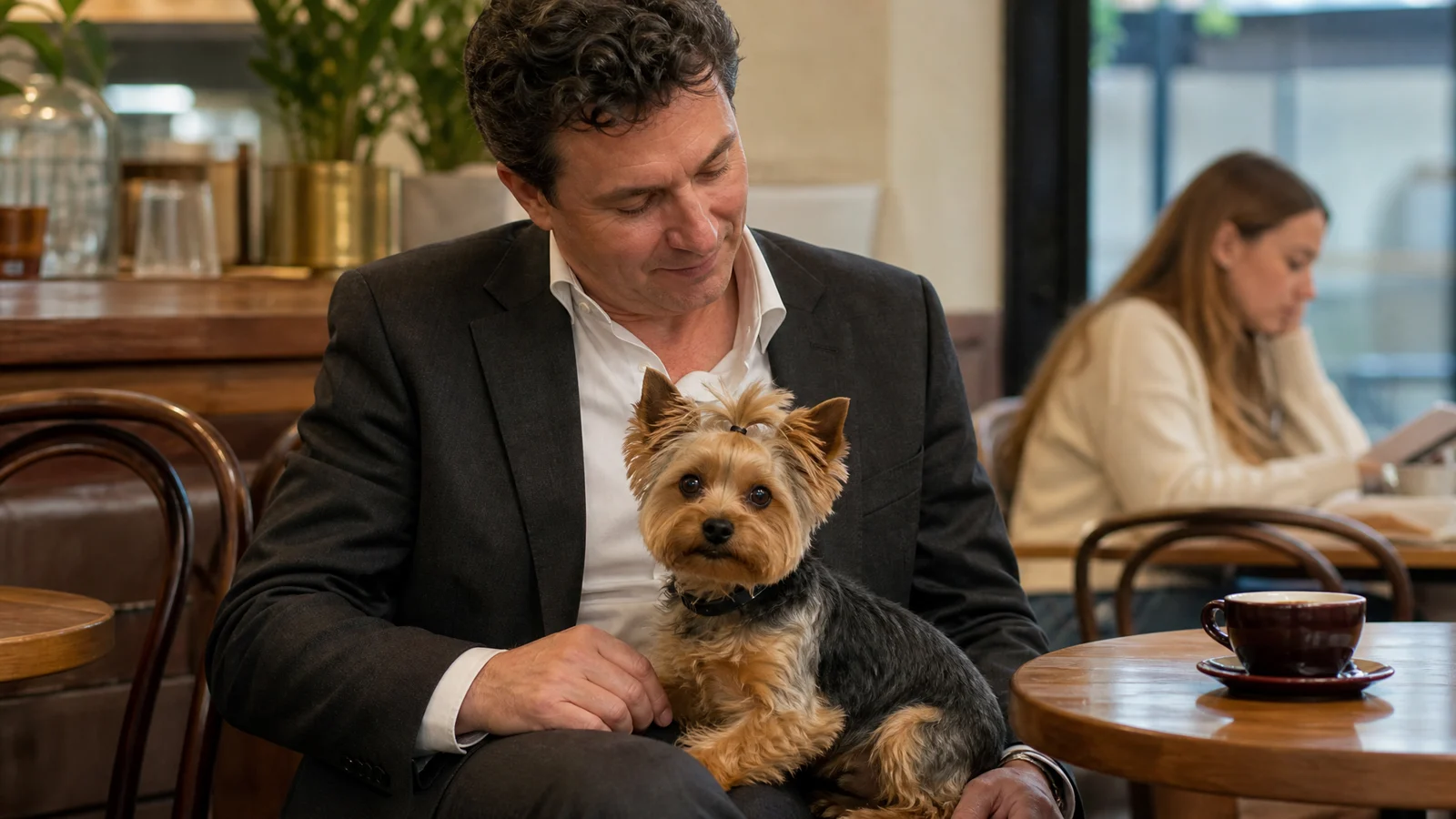
The usual advice is that a Yorkshire Terrier is a lap dog with a big attitude, and the breed standard describes a spirited, intelligent companion. The AKC adds that Yorkies can excel at rally, agility and obedience, and that many serve in roles such as therapy work. Owners who try serious task training report something messier: a quick, devoted learner who may stay silent for years and then suddenly find their bark.
That gap is why the question matters. Handled badly, a vest and good intentions produce a dog who barks in the grocery store and a handler who loses faith in the whole idea. Handled well, you get a calm partner or a welcome therapy visitor.
This guide covers training a Yorkie for assistance work, from whether a tiny body can do the job to what a working career looks like over the years, with stops at barking, paperwork and public manners.
Yorkshire Terrier Size and Service Dog Training
The belief goes like this: a dog this small cannot help anyone, so the question is closed. History disagrees. During World War II, a Yorkie named Smoky helped save the lives of soldiers by carrying a communications wire through an underground tunnel, a job that needed a small body. The blunt version of the myth fails. A narrower version holds up, because size does decide which tasks fit.
Tasks That Fit a Small Body
Work done close to the handler suits a Yorkie best. These are the realistic options:
- Alerting to a sound such as a knock, doorbell or alarm by going to the person and making eye contact, which suits the many Yorkies who run to the door and look at their owner instead of barking.
- Fetching a light item, such as dropped keys or a phone, that a small mouth can carry.
- Staying tuned in to one person and checking in often, which fits a breed rated at the top of the scale for affection with family.
- Settling on a lap or beside the handler's feet for long stretches in waiting rooms.
Verdict: the size myth is busted for these tasks. The Yorkie's closeness to one person is an asset here, and the door-look habit is worth rewarding from the first week.
Tasks That Do Not Fit
Bracing for balance, pulling a wheelchair, opening heavy doors and anything built on repeated jumping are out. To help avoid luxating patella, jumping height should be limited, especially in puppies, so keep every training jump low. Athletic work deserves a vet conversation first, since agility puts pressure on joints and breathing. Regular vet visits belong in any working dog's year anyway.
Yorkshire Terrier Intelligence and Training
Smart and eager sounds like a dog who trains themselves into the role. Yorkies are very intelligent and eager to please, and trainability sits at 4 of 5 on the breed scale, just short of the top. That makes new cues quick to learn. It does not cover the rest of the job.

Owners describe the other edge of the same brain. Their Yorkie seems to understand everything said and spends that intelligence on mischief. Some learn to exaggerate potty requests to earn praise and treats, asking out many times a day. Others turn bossy, try to run the household, or act stubborn while clearly knowing what was asked. Intelligence learns whatever pays, and a useful task is only one of the things on offer.
So pay for the right things. Effusive praise and treats work very well with this breed, and a rating of 4 of 5 for mental stimulation needs means structured work is welcome, not a burden.
The harder part, as one trainer quoted by PetMD puts it, is creating a dog who is quiet, attentive to the handler and unfazed by every imaginable situation. That comes from slow, calm exposure, and it starts with the basics of Yorkie puppy training.
Verdict: intelligence speeds up learning. It does not supply steadiness, and it will happily learn the wrong lessons if you let it.
Barking and Task Training for a Yorkshire Terrier
Does a barking level of 4 of 5 rule the breed out? Not automatically, but it should make you honest. That rating describes the breed on average, and owners report a wide spread. The watchdog streak is real, since Yorkies are rated at the top of the scale for vigilance, and a dog who barks through a store cannot work there. What training can change is how the individual dog uses their voice.
Alert Barking
Many Yorkies are not noisy alerters. Some do not bark at a doorbell or knock at all and instead run to the door and look at the owner or jump at it. Several owners say their Yorkie is not a barker or barks only occasionally, from young adults to dogs of 11 and 13. Reward that look every time and you are building a calm alerting habit that doubles as a sound-alert task.
Do not bank on a quiet puppy staying quiet. Many owners describe Yorkies who were silent for months or even years and then found their bark, sometimes becoming very vocal. Some trace the first bark to a startle, such as a toad, a family member appearing suddenly, or something seen through a window. Temperament even varies between siblings from the same parents. Reward calm early, before barking becomes a habit.
Quiet on Cue
Low-key beats escalating. Owners report better results from calm reassurance, such as picking the dog up without fuss, and from a look cue followed by a reward, than from louder responses. Watch the toy trick, though. Redirecting with a toy can backfire if the dog learns that barking earns play, so reward the pause in barking instead.
Triggers are worth mapping. Common ones are passersby seen from windows, ordinary street sounds, being left alone in a room, and crating while the family is home. Some owners found that white noise or a fan stopped night-sound barking. Our full method is in training a Yorkie not to bark.
Verdict: barking does not disqualify the breed, but quiet on cue comes before any task.
Therapy Dog Versus Service Dog Training
The belief that therapy and service work are the same thing causes the most confusion. They are different jobs with different rules. A service dog is trained to do tasks for one person. A therapy dog visits others to offer comfort, and an emotional support dog is a comfort at home. Mixing them up leads owners to aim a Yorkie at the wrong goal.
The legal difference is concrete. Therapy animals have no federally protected right of access, and entry where pets are banned is up to management. Yorkies fit therapy work well because they are affectionate, playful, rated at the top of the scale for openness to strangers, and many already serve in that role.
One screening issue deserves attention. Some Yorkies cannot stand their owner giving attention to another person or dog, and others are devoted to one person and dismissive of everyone else. A therapy dog must accept strangers, so socialize early, slowly and with rewards, and test the dog honestly.
Verdict: therapy work is the realistic, proven role for the breed, and service work is possible only for the right individual.
Service Dog Papers, Vests, and Real Training
Does a vest or registry certificate make a service dog? No. A vest and a certificate are equipment and paperwork. Neither teaches a task or a settle under a restaurant table. What counts is the work the dog does for the handler and how reliably they behave in public. Rules differ by place and setting, so check local rules and ask venues before you rely on any access claim.
A realistic path looks like this:
- Build the foundation with reward-based basics, a reliable look, and calm settling at home.
- Teach one or two tasks that fit a small body, paying well for each repetition.
- Add places slowly, starting quiet and ending busy, in a calm and happy atmosphere.
- Test in real settings and end sessions early if the dog is struggling.
- Keep up regular vet visits so pain or illness never hides behind a behavior problem.
A vest on a dog who barks at every passerby tells people only what you hope. Behavior tells them what you have done.
Yorkshire Terrier Public Manners Training
Can a feisty terrier hold steady in public? Beneath the dainty coat beats the heart of a feisty, old-time terrier, and plenty of Yorkies act like the biggest dog in the world. Still, Yorkies are rated at the top of the scale for adaptability, and slow introductions to new situations work. For more on the attitude behind the behavior, see the big-dog attitude. Here is how it looks in three settings.
Stores
Start with short trips at quiet hours. Reward the settle on a mat or beside your feet and reward eye contact. Many Yorkies bark when startled rather than at routine sights, so leave before the dog tips over. If they startle, calmly lift them without fuss and pay for recovery.
Crowds
Stay at the edge of the crowd first. Reward calm looks at people instead of pushing close contact. A Yorkie that treats every passing leaf as a neighborhood watch concern will need many easy repetitions before a busy sidewalk feels routine. Carrying a small dog through the worst moments is fine, as long as you set them down to settle.
Other Dogs
Rated 3 of 5 with other dogs, Yorkies need supervision. Keep distance, reward looks back to you, and skip greetings while working. Some rescue Yorkies bark at every child they see, and owners report that some eventually became comfortable while others did not. Judge by the individual.
Long-Term Yorkshire Terrier Training
The final belief is that a working Yorkie is a short-term project. The reality is closer to a long relationship. Energy and mental stimulation needs both rate 4 of 5, so these dogs stay ready for a job well into later life. We have trained this breed for many years, and the dogs who stay reliable are the ones whose owners keep practicing.
Expect maintenance training to continue. A quiet young dog may find their bark later, a dog adopted at an older age may need new socialization, and one that is steady at home may wobble in a new building. Refresh settles, look cues and quiet cues often, and pay generously. Keep exercise moderate, with steady walks and occasional short bursts of play.
Plan for realistic roles, with therapy work the most proven. Check in regularly on whether the dog still enjoys the job. A wagging tail on arrival, easy eating and relaxed settling are good signs. Reluctance, avoidance or new barking mean it is time to shorten sessions or rest, and to visit your vet.
A Yorkie can have a real working life. It looks like patient practice, a quiet voice, and a partner you keep asking whether they are still glad to do it.
 House trainingPotty Training a Yorkie Puppy Without the Setbacks
 Barking for attentionHow to Train a Yorkie Not to Bark Using Rewards
 Puppy nippingTraining Your Yorkie Puppy Starts With Treats and Praise