 Yorkie
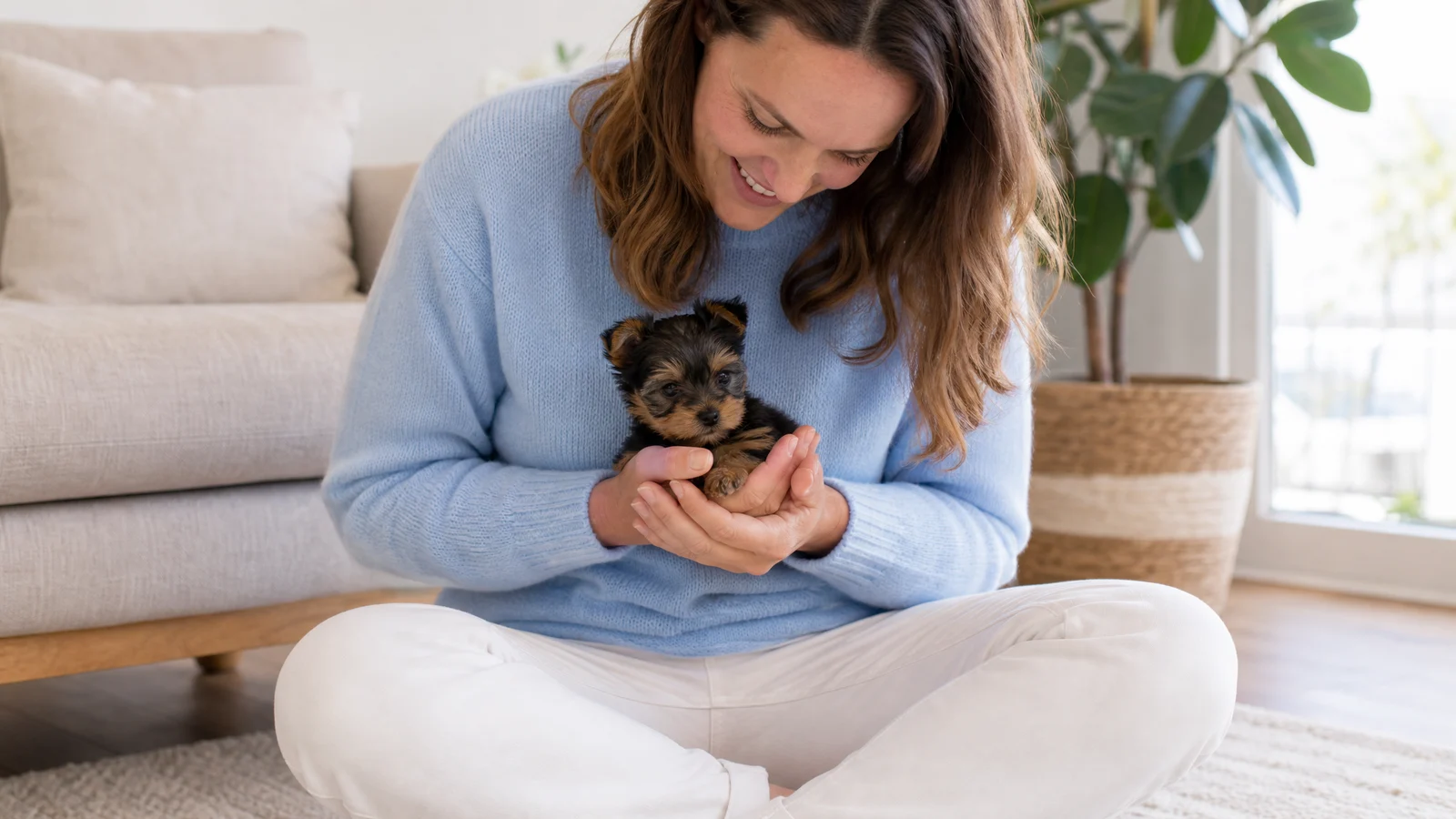
The first week with an 8-week-old Yorkie puppy is a household timetable, not an obedience deadline, and sleep, meals, potty trips, gentle play, quiet observation, and tiny learning moments all share the day. A predictable rhythm helps the puppy understand where comfort and good outcomes come from, even while the new home, people, sounds, and daily transitions still feel unfamiliar.
This guide divides that week into five household shifts. We use flexible event-based routines because puppies, homes, and veterinary guidance differ. Read on for brief, rewarding name games, handling, settling, and potty practice. Your puppy can watch, approach, or rest, and the plan changes when their behavior says the day is full.
Yorkshire Terrier Puppy Training Starts With a Map
Before arrival, choose a sleep area, a supervised activity area, the route to the potty place, and a quiet retreat, and remove cords, unstable objects, unsafe plants, and anything a puppy could swallow. Place rewards where adults can reach them promptly but the puppy cannot.
Build the Day Around Events
Use waking, eating, drinking, play, and changes in activity as prompts to offer a potty opportunity, and follow the schedule supplied by your veterinarian or breeder and watch the individual puppy. Event cues are more reliable than assuming one clock interval fits every body.
Keep a simple log of sleep, food, water, potty results, play, and unusual behavior, and the record helps household members stay consistent and gives your veterinarian useful context. It is not a scorecard, and an accident calls for cleanup and better supervision rather than punishment.
| Household event | Offer next | Training note |
|---|---|---|
| Puppy wakes | Calm potty opportunity | Reward success promptly |
| Meal or drink | Supervision and planned outing | Follow individual guidance |
| Play ends | Potty chance, then rest | Lower stimulation |
| Puppy disengages | Quiet sleep space | Do not add another lesson |
Give Every Person the Same Plan
Agree on cue words, the potty route, reward delivery, sleep boundaries, and what the puppy may access, and mixed rules make the environment harder to predict. Write the essentials near the activity area so care does not depend on whoever remembers the last conversation.
One adult should supervise each active period rather than assuming someone else is watching, and use gates or a safe pen when attention must move elsewhere. Management prevents rehearsal of chewing and accidents while leaving the puppy free to rest and explore approved objects.
Post a short household checklist where everyone can see it:
- note the last sleep, meal, water, and potty event
- name the adult supervising the active period
- keep approved chews and rewards ready
- protect the next quiet rest opportunity
The checklist coordinates care without turning the puppy’s day into a rigid program, and update it when an event occurs, then use the puppy’s behavior to choose the next sensible step. Rest can replace a planned game whenever engagement fades.
Yorkshire Terrier Puppy Training in the Morning
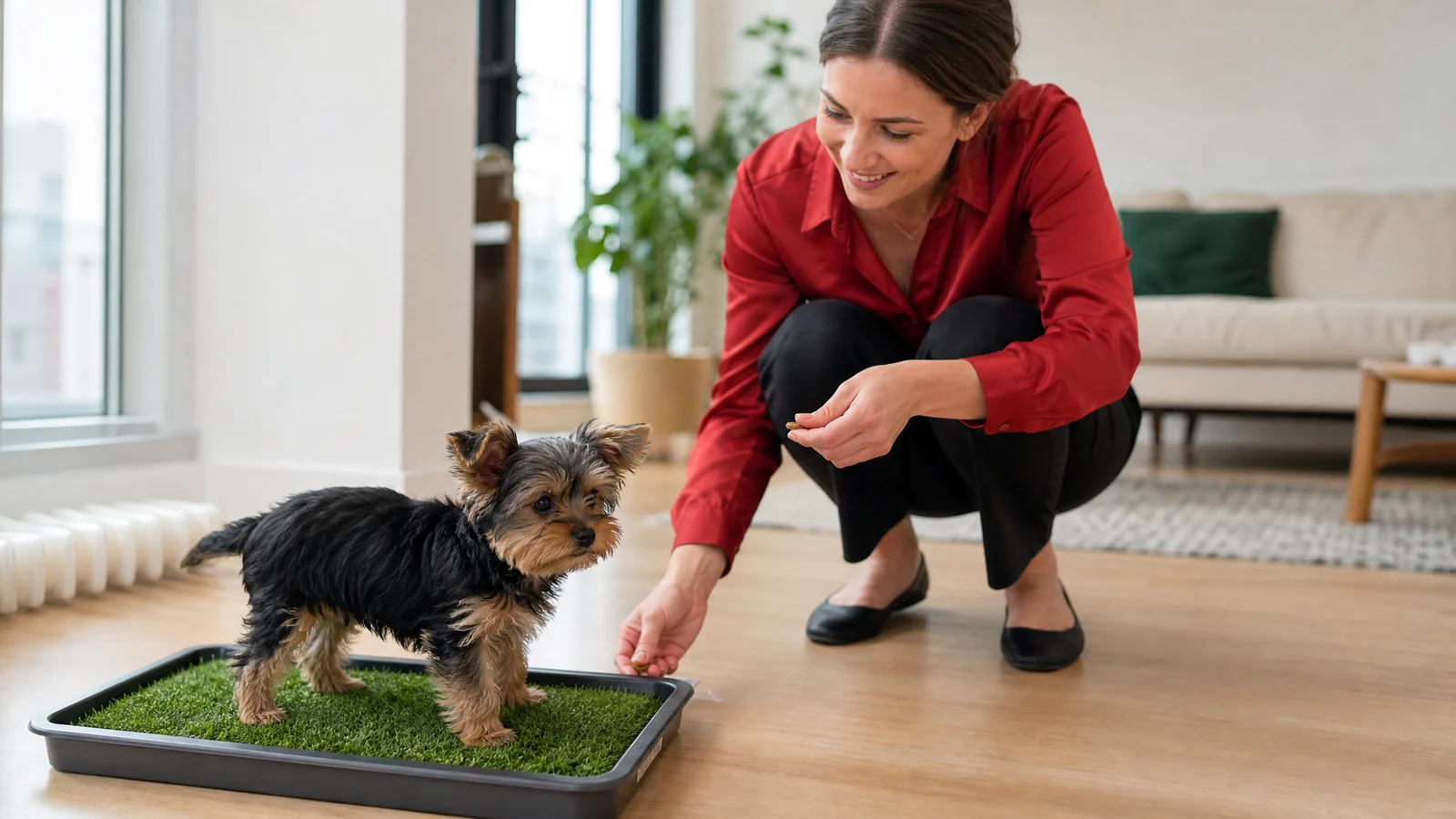
Carry or guide your puppy along the planned safe route according to your setup, then wait quietly at the potty place, and reward immediately after success. Avoid turning the trip into exciting play before the puppy finishes because the purpose should remain easy to recognize.
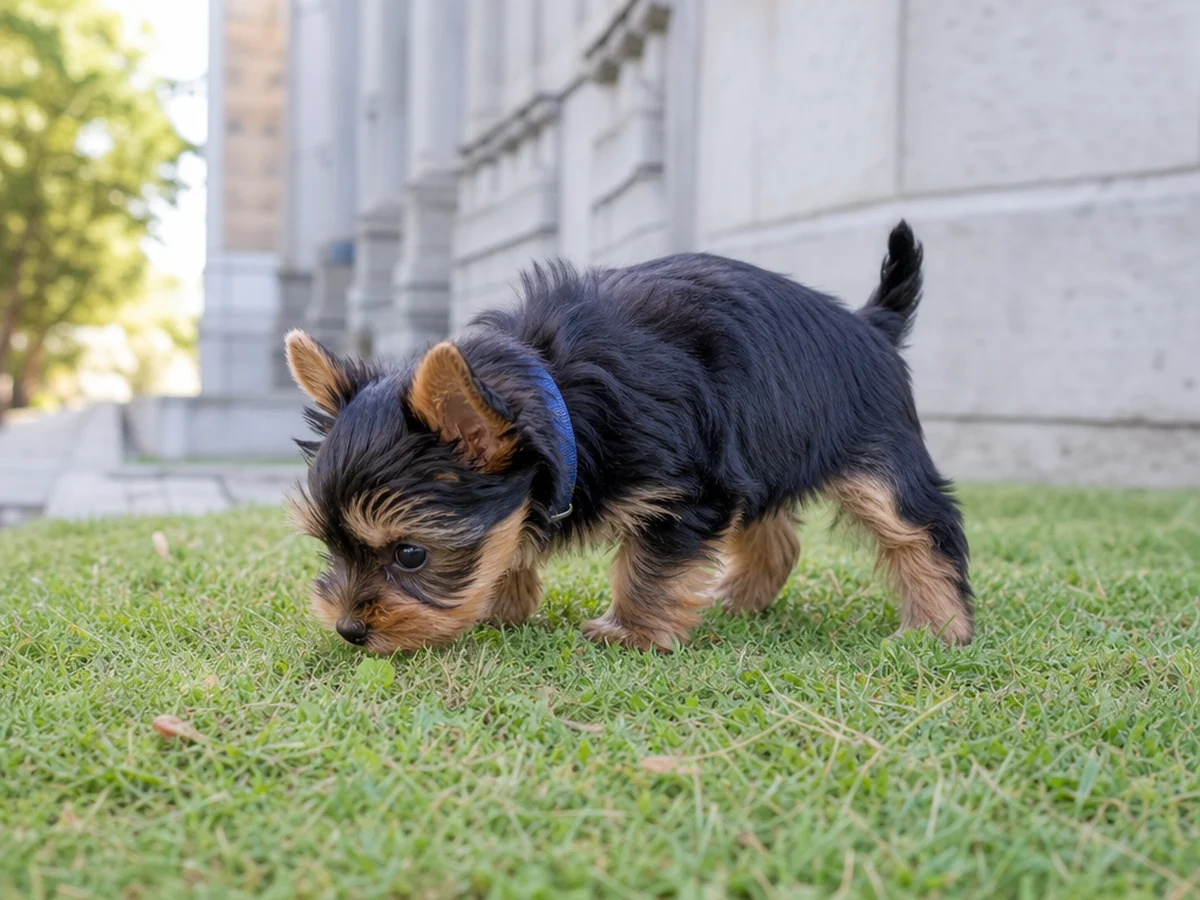
Play the Yorkie Name Game
In a quiet space, say the puppy’s name once. Mark a head turn or movement toward you, then deliver a small reward. Release them to explore, and try again later. The name should predict useful connection, not a stream of demands or the end of fun.
If there is no response, reduce distraction and shorten distance, and pause instead of sending the name again and again. A soft neutral sound can help the first orientation, but reward the puppy for turning toward you rather than startling them into attention.
Let another household member play the same game later using the shared marker and reward plan, and start from an easy distance. This teaches that the name carries useful information across people without passing the puppy around or creating a noisy group exercise.
Add a Tiny Handling Conversation
Touch the shoulder briefly, reward, and remove your hand, and on another turn, touch a paw or lift an ear only as far as the puppy remains comfortable. The cooperative handling guide from Best Friends recommends backing up when stress signals appear.
Handling practice is not restraint practice. Let the puppy move away and return. Pair brushes, towels, and gentle examination with food at a distance first, then progress in tiny steps. Choice now can make future grooming and veterinary care less surprising.
The first week is also a good time to establish regular veterinary care, and arrange the puppy’s recommended visit and follow the veterinarian’s advice on food, parasite prevention, vaccines, and safe exposure. Training guidance cannot replace an individual health plan.
This article offers general training information, not medical advice. Ask your veterinarian about vaccination, diet, exercise, elimination, and safe social exposure for your individual puppy.
Yorkshire Terrier Puppy Training at Midday
Offer a small supervised area with safe footing, water as directed, approved chew items, and a clear path to rest, and let the puppy investigate before asking for a cue. Exploration is learning, and constant direction can make a new home harder to process.
Use ordinary moments as lessons. Reward four paws on the floor when the puppy approaches, a glance toward you, chewing an approved item, or settling near the family. Capturing good choices reduces the need to manufacture formal sessions throughout an already busy day.
Exploration can be a quiet lesson. Let curiosity set the first pace.
Place two safe textures or objects in the activity area and allow investigation without pointing out every option. Mark a calm approach or return toward you, then let exploration continue. The environment becomes part of the reward rather than a competitor you must constantly defeat.
Rotate only a small number of items so the area remains understandable. Supervise and remove anything the puppy damages or tries to swallow. Novelty should invite curiosity while the familiar sleep space and potty route stay stable.
Keep Socialization Calm and Optional
Socialization means positive, controlled exposure, not meeting everyone immediately. Let the puppy watch one person, sound, surface, or household event at a comfortable distance. Pair calm observation with food or play and end while they can still disengage easily.
Ask your veterinarian what exposure is appropriate for the puppy’s health and vaccination status in your area. Avoid unknown dogs and unsafe ground until you have professional guidance. You can still build positive experiences with household sounds, carried observation, and known safe environments.
The UKC breed description presents the Yorkshire Terrier as spirited, intelligent, lovable, and companionable. Those qualities can appear in many ways during the first week. Let the individual puppy’s comfort determine pace instead of expecting constant boldness.
Invite only calm visitors who can follow the plan. The puppy may watch from a protected area, investigate food placed at a distance, or sleep through the visit. A successful exposure is one the puppy can process and leave, not a required greeting or handling session.
Evening Puppy Training Lowers the Volume
Evening energy does not always mean the puppy needs a harder workout. They may need a potty opportunity, a chew, dimmer activity, or sleep. Reduce household motion and offer a familiar resting place before excitement becomes mouthing, racing, or difficulty settling.
Use the Settle Sequence
Guide the puppy to the quiet area with a treat trail or hand target, provide an approved calming activity, and reward relaxed choices. Sit nearby without constantly touching or talking. Your presence can support rest while the puppy learns that nothing else is required.
If the puppy leaves, check for potty, thirst, discomfort, or too much stimulation. Meet the need and try again rather than holding them in place. Settling is a state you arrange and reinforce, not a position you force through exhaustion.
| Day | Household focus | Keep it easy by |
|---|---|---|
| Arrival day | Safety and rest | Limiting new people |
| Early week | Name and potty rhythm | Using one quiet area |
| Middle days | Handling and observation | Offering choice and distance |
| Later days | Repeat useful routines | Changing only one detail |
The table is a sequence of priorities, not a test with fixed deadlines. A puppy who needs another quiet day should get one. Progress is visible when eating, sleeping, elimination, exploration, and connection become easier, not when every box is completed on schedule.
Prepare for nighttime before the household becomes tired. Set out the leash or other potty-route equipment, refresh the sleep area, and agree who responds if the puppy wakes. A calm plan prevents several people from adding lights, voices, play, and conflicting decisions.
The first-vet-visit guidance from Battersea recommends slow, positive introductions with time to explore and receive treats. The same emotional principle suits household routines. Familiar steps and pleasant outcomes make necessary events easier to approach.
At week’s end, review the log and mark which events predict potty needs, when play is easiest, how handling feels, and where the puppy settles. Preserve the routines that work. Change one difficult point at a time so the effect remains visible.
Yorkshire Terrier Puppy Training Reviews the Timetable
Plan week two from the puppy’s answers. If the name game works in one room, try it once in another quiet room. If paw handling remains difficult, return to shoulder touches or reward the sight of your hand. If evenings unravel, move the calming routine earlier rather than adding more demands.
- keep one routine that clearly supports comfort
- choose one skill to practice in a second easy place
- lower one setup that still produces hesitation
- protect long quiet periods around active moments
Continue Yorkie potty training with close supervision and immediate rewards. Keep accidents emotionally uneventful. Clean thoroughly, restore the routine, and consult your veterinarian if elimination changes suddenly, seems uncomfortable, or raises any health concern.
The first week succeeds when the household becomes predictable and the puppy keeps choosing connection. Do not compare the timetable with another dog’s pace. An 8-week-old learner needs safety, sleep, patient repetition, and rewards that explain good choices without pressure.
Set one modest goal for week two, such as a cheerful name response in two rooms or calmer shoulder handling. Leave room for rest and surprises. The timetable should serve the puppy in front of you, and every revision should make learning safer, clearer, and easier to join.
Share the revised timetable with everyone who provides care. Keep cue words, management boundaries, and reward timing consistent while allowing the puppy’s needs to reshape the day. Coordination creates predictability, and predictability leaves more room for curiosity.
End the review with something the puppy already enjoys, such as a quiet search, gentle play, or rest near you. The week should close with security rather than a final test. Tomorrow’s learning starts from the trust built across these ordinary household shifts.
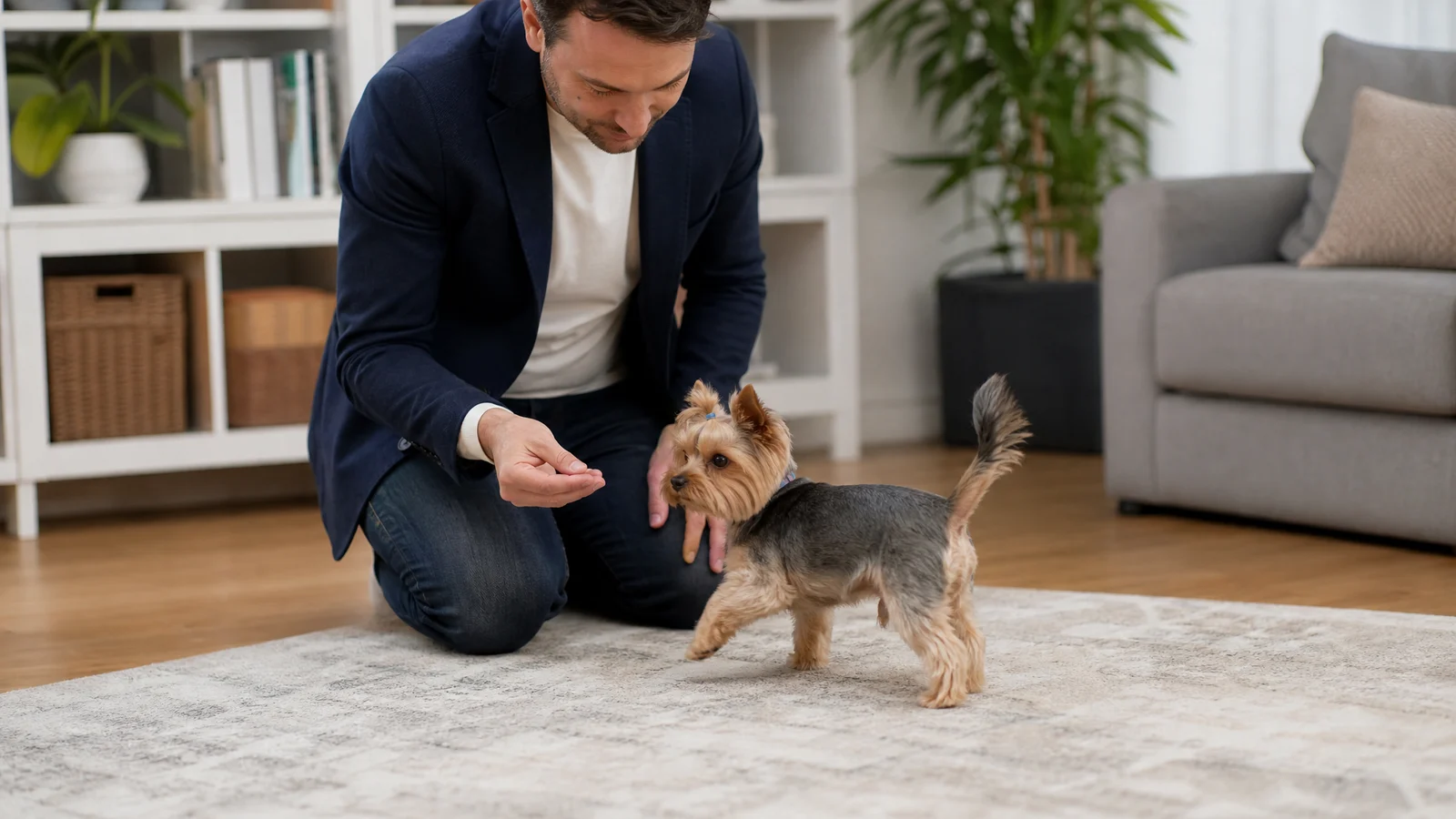 Training basicsAre Yorkies Smart? What Intelligence Means for Training
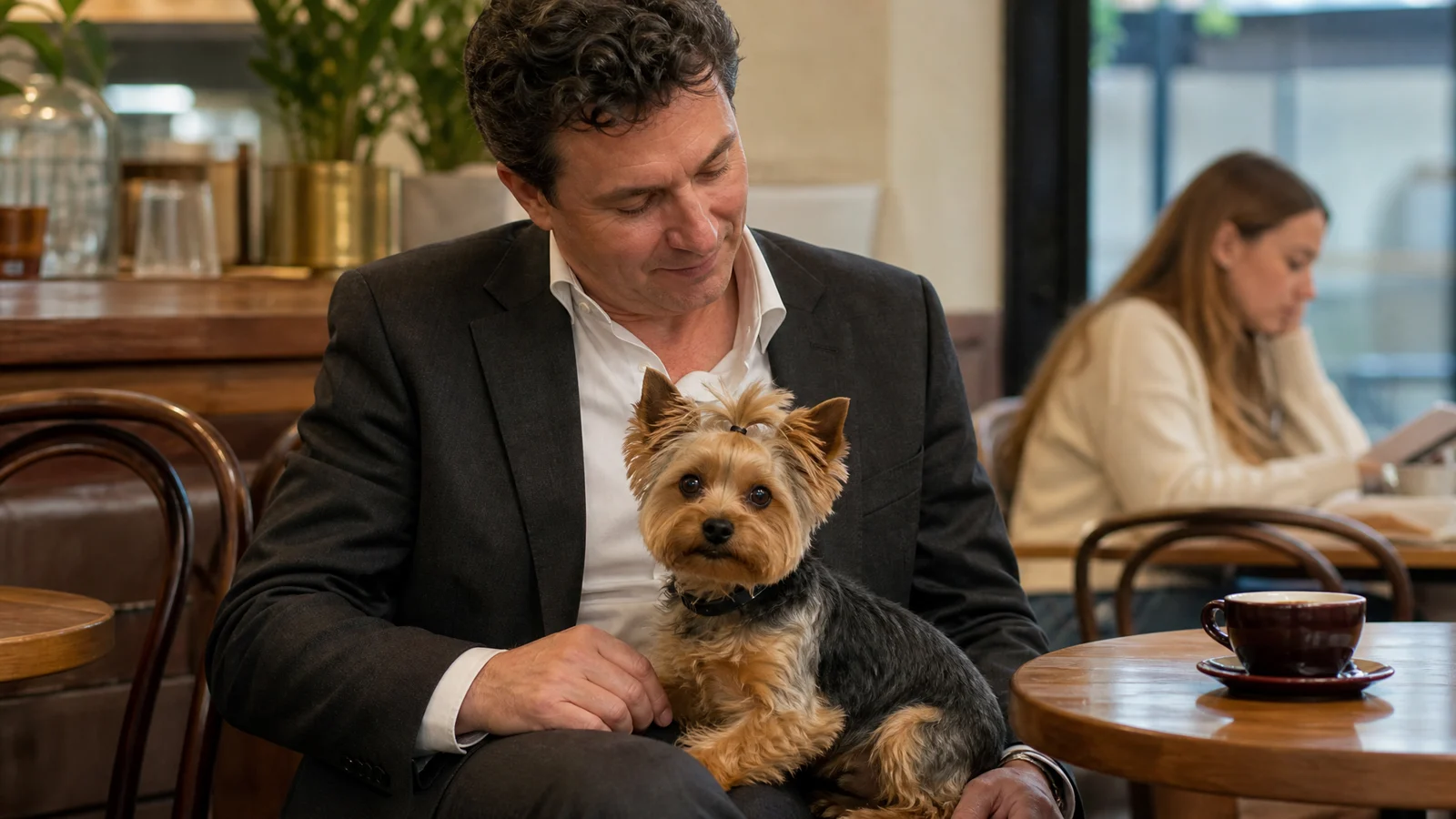 Exercise and jobsCan a Yorkie Be a Service Dog?
 House trainingPotty Training a Yorkie Puppy Without the Setbacks